On this page
- Solution Overview
- Who Needs a Secure Place to Store Things in a Hospital
- A Zone-by-Zone Plan: Locker Type, Access Method and Who Manages It
- Cabinet Materials and Cleaning: What We Can and Cannot Provide
- Connecting the Lockers to Hospital Systems
- What We Do Not Offer
- Procurement Checklist Before You Request a Quote
- Frequently Asked Questions
- Key Takeaways
- About Linqu

A hospital has at least four groups of people who need somewhere to put things: staff starting a shift, patients going into an examination or theatre, relatives and visitors waiting for hours, and outpatients waiting for a prescription. Linqu is a smart locker manufacturer headquartered in Zhengzhou, China, with its factory in Luoyang, and we design and build smart lockers for hospitals and healthcare facilities. This page plans a healthcare locker system zone by zone: for each area of the building it answers which locker to use, how people open it, and who manages it. It ends with a procurement checklist and a plain list of what we do not offer, so you can rule things out before a tender or quote.
Solution Overview
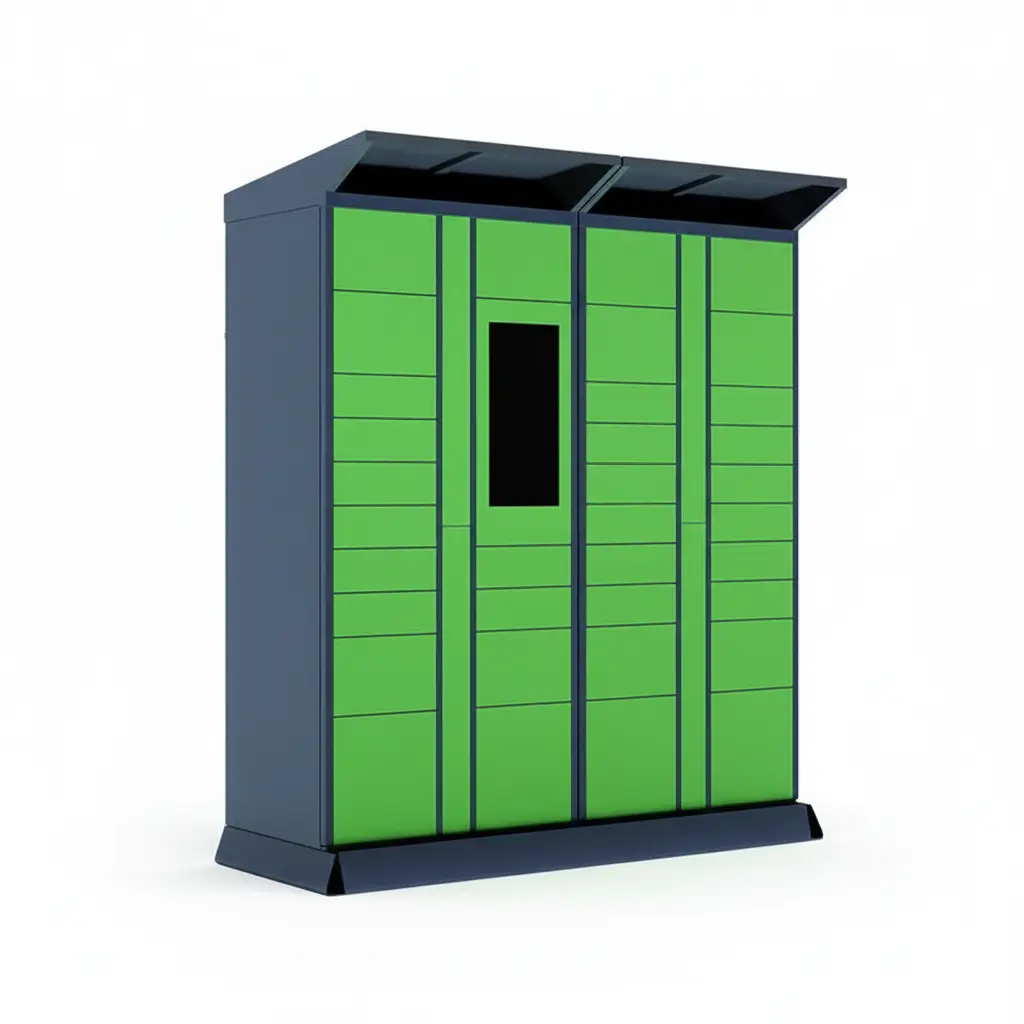
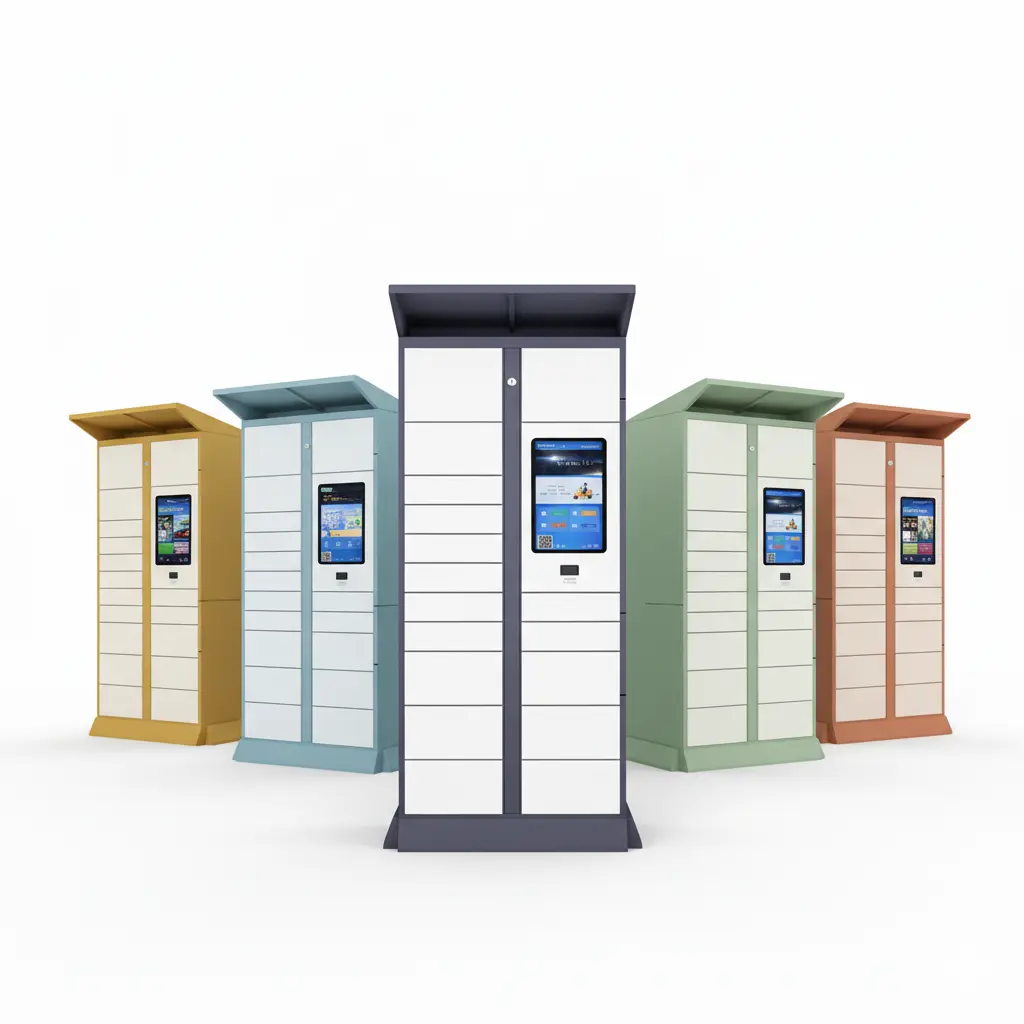
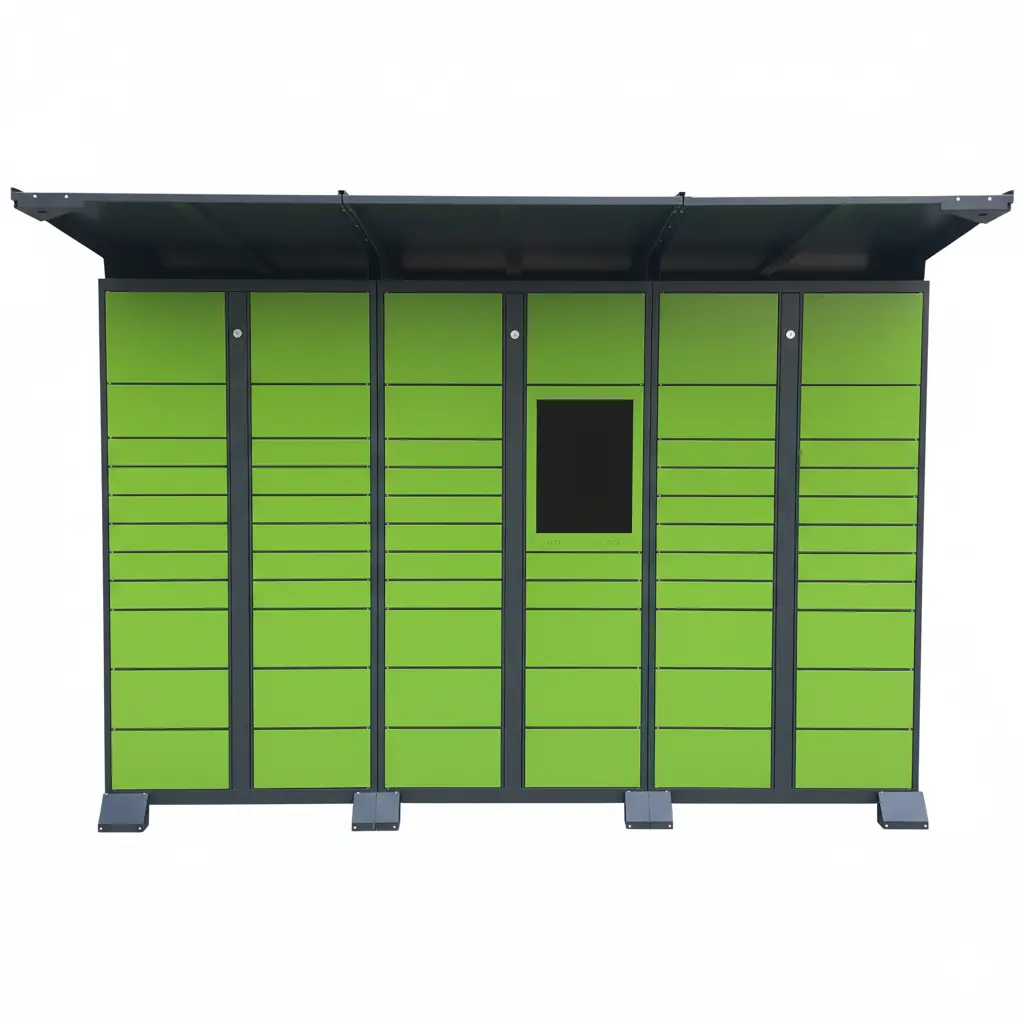
Hardware: staff and visitor storage lockers, uniform and linen exchange lockers, and pharmacy pickup lockers, with compartment sizes and cabinet colours built to order.
Access: PIN, one-time pickup codes, optional staff RFID badge readers, and QR codes on the linen exchange locker.
Software: a cloud back office with remote opening, compartment status and an operation log for every opening.
Integration: an open API, with the scope agreed per project; SMS notifications are standard.
Deployment: indoor installation, AC 110–240V power, WiFi, wired network or 4G, starting from a single-unit pilot.
Who Needs a Secure Place to Store Things in a Hospital
Before choosing a model, list the people who will use the lockers. Their needs differ more than most buyers expect.
Clinical and support staff need to store phones, wallets and bags during a shift. Staff turnover is high and rotas change often, so physical keys get lost or taken home.
Inpatients and outpatients need a short-term secure place for valuables before an examination, a scan or surgery.
Relatives and visitors may wait for hours, often with luggage or shopping that cannot be taken onto the ward.
Outpatients collecting medication have prescriptions that are already prepared, yet they still queue at the pharmacy window, and some can only come after work.
Together these needs make up a mix of storage, short-term deposit, handover and pickup. That is why the first step is not choosing a model. It is dividing the facility into zones.
A Zone-by-Zone Plan: Locker Type, Access Method and Who Manages It
The table below summarises the four zones. The sections after it explain each one.
Zone | Locker | How it opens | Who manages it |
|---|---|---|---|
Staff changing and personal storage | Hospital storage locker | Staff RFID badge (optional) or PIN | Facilities or nursing administration |
Patient and visitor storage | Hospital storage locker, deposit set-up | One-time code or PIN | Facilities, with remote opening for exceptions |
Uniform and linen exchange | Linen exchange locker | Staff card (RFID/NFC), PIN or QR code | Laundry team or laundry contractor |
Outpatient pharmacy pickup | Pharmacy pickup locker | SMS pickup code | Pharmacy staff |
Zone 1: Staff Changing and Personal Storage
Locker: our hospital storage locker, with compartments sized for bags and coats.
Access: staff RFID badge (optional reader) or PIN. If the hospital already issues staff cards, we can assess whether they can be reused; send us sample cards first so we can test reader compatibility.
Allocation: give each employee a fixed compartment, or let staff take a compartment at the start of a shift and release it at the end. Shift-based allocation saves space in departments with more staff than compartments.
Management: an administrator in facilities or nursing administration can open compartments remotely from the back office, for example when someone forgets their card or leaves the hospital. Every opening is logged.
Zone 2: Patient and Visitor Storage
Locker: the same hospital storage locker in a deposit set-up, placed in waiting areas and at the entrance to examination areas.
Access: when an item is stored, the system issues a one-time code or PIN. Once the item is collected, the compartment is released automatically. There are no physical keys to issue or recover.
Note: these lockers are used by the public, so confirm the interface languages, font size and signage before ordering. Screens are available in 7, 10 and 21.5 inches.
Patient storage is a "user deposits, user collects" workflow, while pharmacy pickup is "staff deposits, user collects". The difference is explained in staff deposit vs customer deposit locker workflows.
Zone 3: Uniform and Linen Exchange

Locker: our hospital linen and uniform exchange locker.
Access: staff card (RFID/NFC), PIN or QR code.
Workflow: staff drop used uniforms into a return compartment; the in-house laundry or an outside laundry contractor places clean uniforms into assigned compartments; staff collect them by identifying themselves. Compartments can be fixed per person or assigned dynamically.
Benefit: the exchange no longer depends on one person being present, and there is a record of who returned what, who collected it and when.
Zone 4: Outpatient Pharmacy Pickup

Locker: our pharmacy prescription pickup locker.
Workflow: pharmacy staff prepare the order and place it in a compartment; the system sends the patient an SMS pickup code; the patient enters the code at the locker and collects the medication without queuing at the window.
Orders that need counselling: a pharmacist can flag an order so that the patient cannot open the compartment until a staff member unlocks it. Advice that must be given in person is still given in person.
Records: every compartment has an audit log of who loaded it, who collected and when, exportable as CSV.
Temperature: for room-temperature medication only; the operating temperature of the pharmacy locker is 5–35°C. Medication that needs refrigeration should not go into this locker.
Cabinet Materials and Cleaning: What We Can and Cannot Provide
Hospitals clean more often and more aggressively than offices, so this section comes early to avoid misunderstandings.

Standard cabinets: cold-rolled or galvanised steel with a powder-coated finish, suitable for most indoor areas. Colours can match your zone colours and wayfinding, and most colours add no cost or lead time.
Stainless steel option: we offer 304 stainless steel at 0.7mm only. We do not make 316 stainless cabinets. Door gaps, hinges and handles use our standard construction; there is no special seamless easy-clean design and no sealed design.
Disinfectant warning: 304 stainless steel is not resistant to every chlorine-based disinfectant. After wiping with a chlorine disinfectant, do not leave it on the surface; wipe it off with clean water and dry it. If your infection-control policy requires long soaking or high-concentration chlorine products, tell us when you request a quote and we will say honestly whether the cabinet is suitable.
For tamper resistance and cabinet security details, see our smart locker security and tamper-resistance guide.
Connecting the Lockers to Hospital Systems
We provide an open API. It can pass data such as opening records and compartment status to hospital systems, and receive information such as pharmacy pickup orders. What is connected, and how far the integration goes, is agreed per project. We do not have a ready-made HIS connector and we do not promise an out-of-the-box connection.
Notifications are sent by SMS as standard. WhatsApp or the hospital's own app is custom development and is assessed separately.
The lockers support WiFi, wired network and 4G, with AC 110–240V power. Site wiring and network points are covered in smart locker installation: power and network preparation.
Questions to ask before an integration project are listed in our locker API integration guide.
What We Do Not Offer
Stating this clearly saves time for both sides.
Cold chain: no refrigerated medication lockers and no refrigerated meal lockers.
Medical device certification: the lockers are not medical devices. We provide CE and RoHS documents (see which CE and RoHS documents importers need) and hold no medical device certification.
Privacy compliance decisions: we do not certify compliance with patient-data regulations on the hospital's behalf. How patient information is stored, and for how long, is decided by the hospital's own systems and policies; the locker only handles the minimum information needed to open a compartment.
316 stainless steel or fully sealed cabinets: not offered.
Ready-made HIS integration: not offered. There is an open API, with the scope agreed per project.
Procurement Checklist Before You Request a Quote
List the zones to cover (staff storage, patient storage, uniform exchange, pharmacy pickup) and the approximate number of compartments in each.
Choose the access method per zone: staff badge, PIN, one-time code or QR code. If you want to reuse staff cards, send sample cards first.
Choose the cabinet material, powder-coated steel or 304 stainless, together with the disinfection method used by your infection-control team.
Confirm notifications: SMS is standard; other channels are assessed as custom development.
Agree the integration scope: which data flows into and out of hospital systems, decided jointly by hospital IT and our team.
Check site conditions: power, network, location and floor. For the division of installation and acceptance work, see installation and deployment services: scope and acceptance.
Start with a pilot: minimum order is one unit, a paid sample takes 7–14 days, and batch production takes about 20 days. Details are in ordering from the manufacturer: MOQ, samples and lead time. What to check in the first week with a sample is covered in our sample evaluation checklist.
Frequently Asked Questions
Can staff open lockers with our existing hospital ID cards?
We can assess it. Staff-zone lockers can be fitted with an optional RFID reader, but card types vary, so please send sample cards and we will confirm compatibility after testing.
Can the lockers hold refrigerated medication?
No. We only make room-temperature lockers, and the pharmacy pickup locker operates at 5–35°C. Medication that needs refrigeration should stay in the pharmacy's cold-chain process.
Can stainless steel cabinets be cleaned with chlorine disinfectant?
Yes, but wipe off any residue promptly and do not leave disinfectant on the surface. Our stainless option is 304, not 316, and it has no special sealed construction. If your disinfection requirements are strict, tell us when you request a quote.
Can the lockers connect to our HIS or pharmacy system?
We provide an open API, and the integration scope is agreed per project. There is no ready-made HIS connector, so the interface is defined together with your hospital IT team.
How do patients know where to collect their medication?
By default they receive an SMS with the pickup code and collection instructions. WhatsApp or a hospital app is custom development.
Are the lockers certified as medical devices?
No. The lockers are not medical devices; we provide CE and RoHS documents.
What is the minimum order and how long does delivery take?
One unit. A paid sample takes 7–14 days and batch production about 20 days, plus shipping time.
Key Takeaways
Plan healthcare lockers by zone, not by unit count: staff storage, patient storage, uniform exchange and pharmacy pickup each need different access methods and permissions.
In staff areas, badge access (optional RFID) can reuse existing hospital cards once sample cards have been tested.
Patient and visitor lockers use one-time codes or PINs, with no physical keys, and release the compartment automatically after use.
Outpatient pharmacy pickup works as "pharmacy staff deposit, patient collects with an SMS code", and orders that need counselling can stay locked until staff release them.
Cabinets come in powder-coated steel or 304 stainless steel (0.7mm); lockers are for room temperature only, with no cold chain.
Integration with hospital systems is through an open API with the scope agreed per project; there is no ready-made HIS connector.
Minimum order is one unit, so you can pilot in one department before expanding zone by zone.
About Linqu
Linqu is a smart locker manufacturer founded in 2018, headquartered in Zhengzhou, China, with its factory in Luoyang. We design our own cabinets, lock control and software platform. For healthcare facilities we supply staff and visitor storage lockers, uniform and linen exchange lockers, and pharmacy pickup lockers, with compartment sizes, colours and access methods customised by zone and a minimum order of one unit so you can pilot in one department first. The system offers an open API, with the integration scope agreed per project. Payment is by T/T or Alibaba Trade Assurance, and our website is available in 12 languages. More about the company and factory is on our about Linqu page.
Get a hospital locker proposal within 24 hours. Tell us which zones you want to cover, roughly how many compartments each zone needs, what staff cards you use and how your infection-control team disinfects surfaces. We will send a zone-by-zone configuration and state clearly what we can and cannot provide. Contact us to request a quote.