Smart locker projects rarely fail on the cabinet. They stall in the weeks after the shipment lands, because nobody wrote down who pulls the mains circuit to the site, who fixes the units to the floor, and what "working" means at sign-off. By then the budget is closed and the argument is expensive.
Linqu is a smart locker manufacturer based in Zhengzhou, China, with a 20,000 sqm factory in Luoyang, producing smart parcel, luggage, laundry, vending and phone charging lockers for B2B buyers worldwide since 2018. This page is the procurement-side view of deployment: what we ship, what we commission remotely, what your site has to provide, and the checklist that closes the project. If you are looking for the engineering background instead — how much power a locker draws, what network it needs, how much floor space it occupies — that is covered in our smart locker installation guide for power and network.
Deployment Overview: What Ships, What We Commission, What You Provide
A standard Linqu deployment has six moving parts. Confirming all six before the purchase order is the single most reliable way to avoid a stalled project.
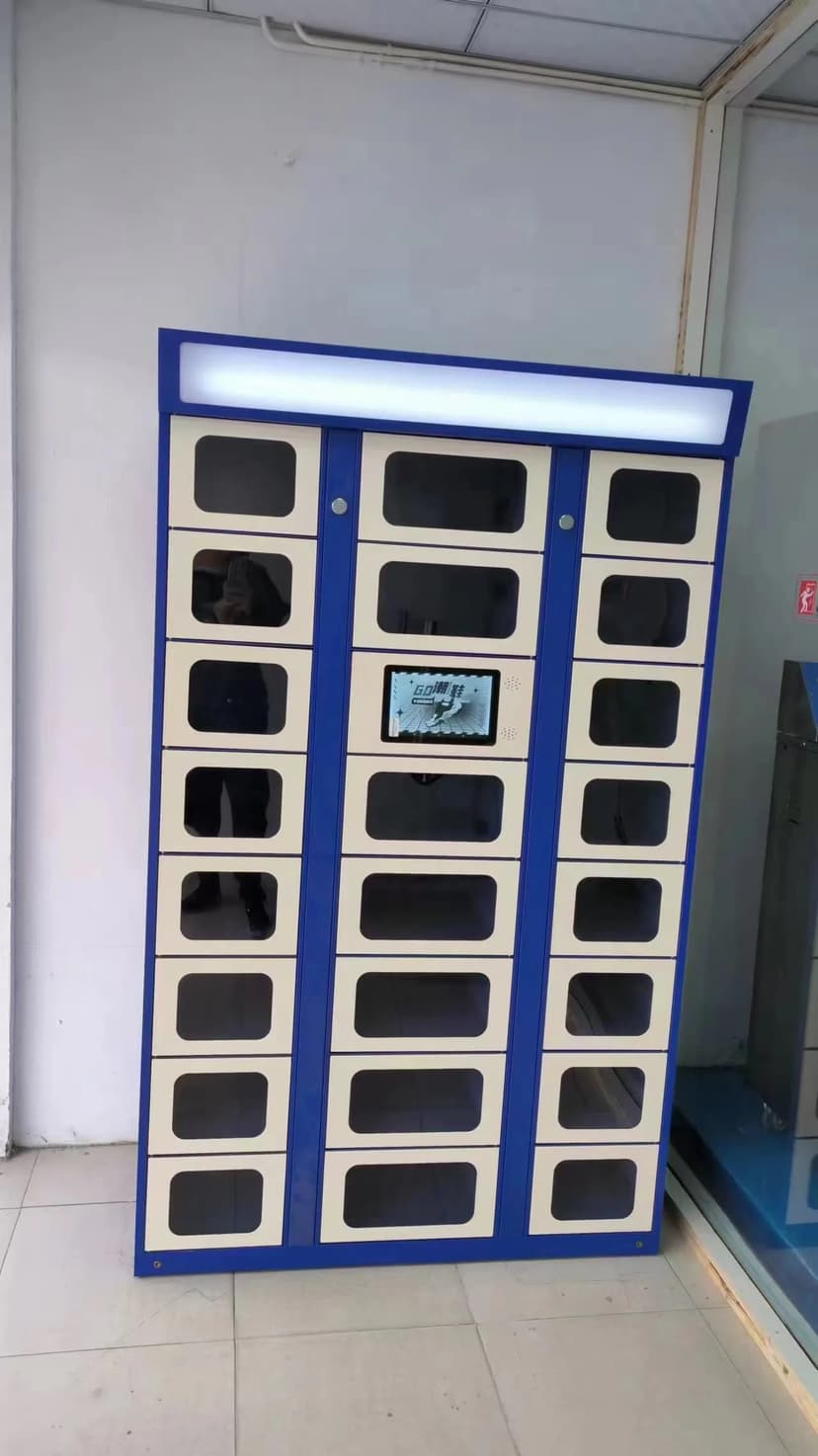
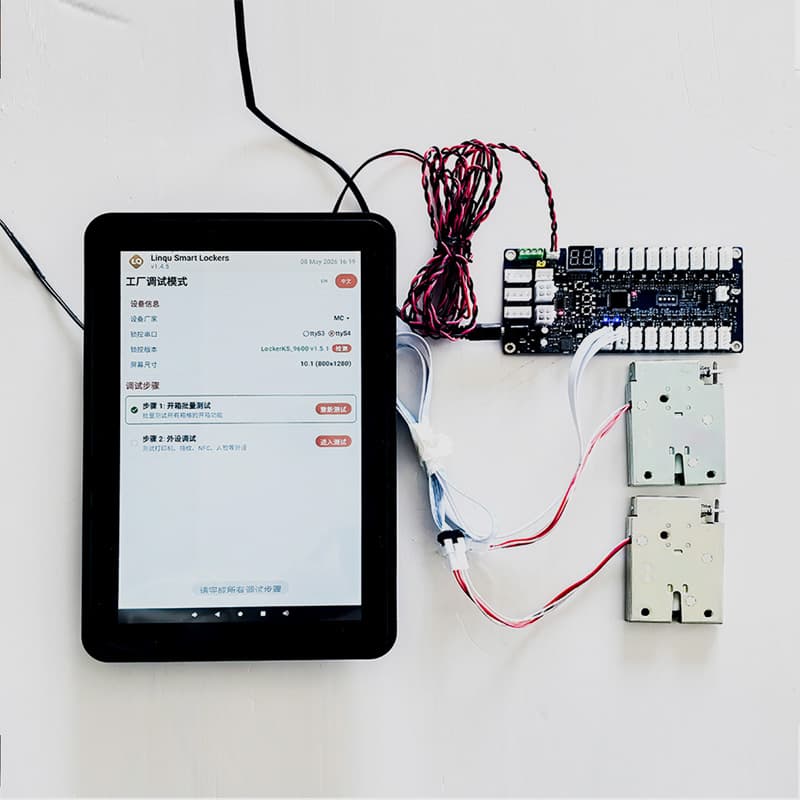
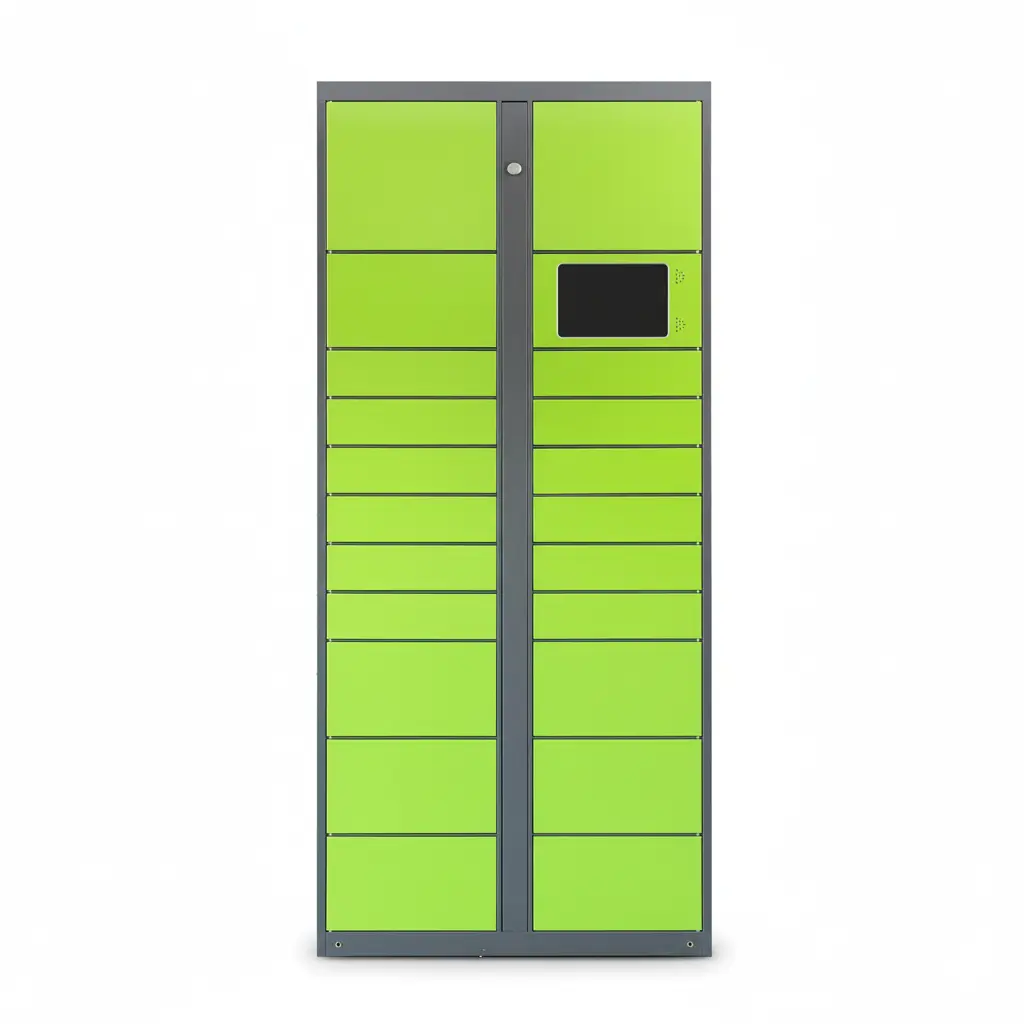
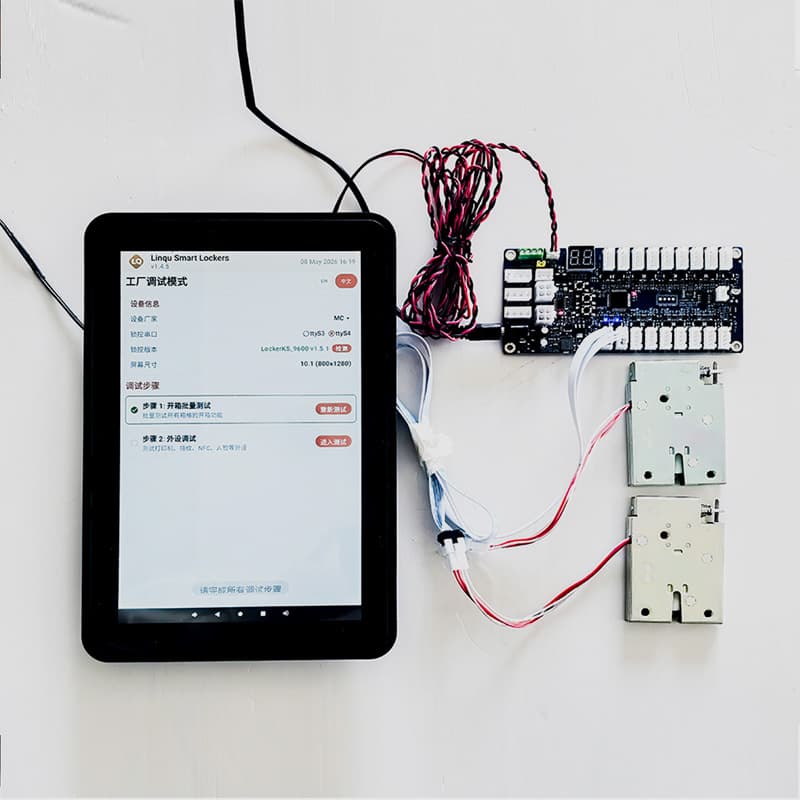
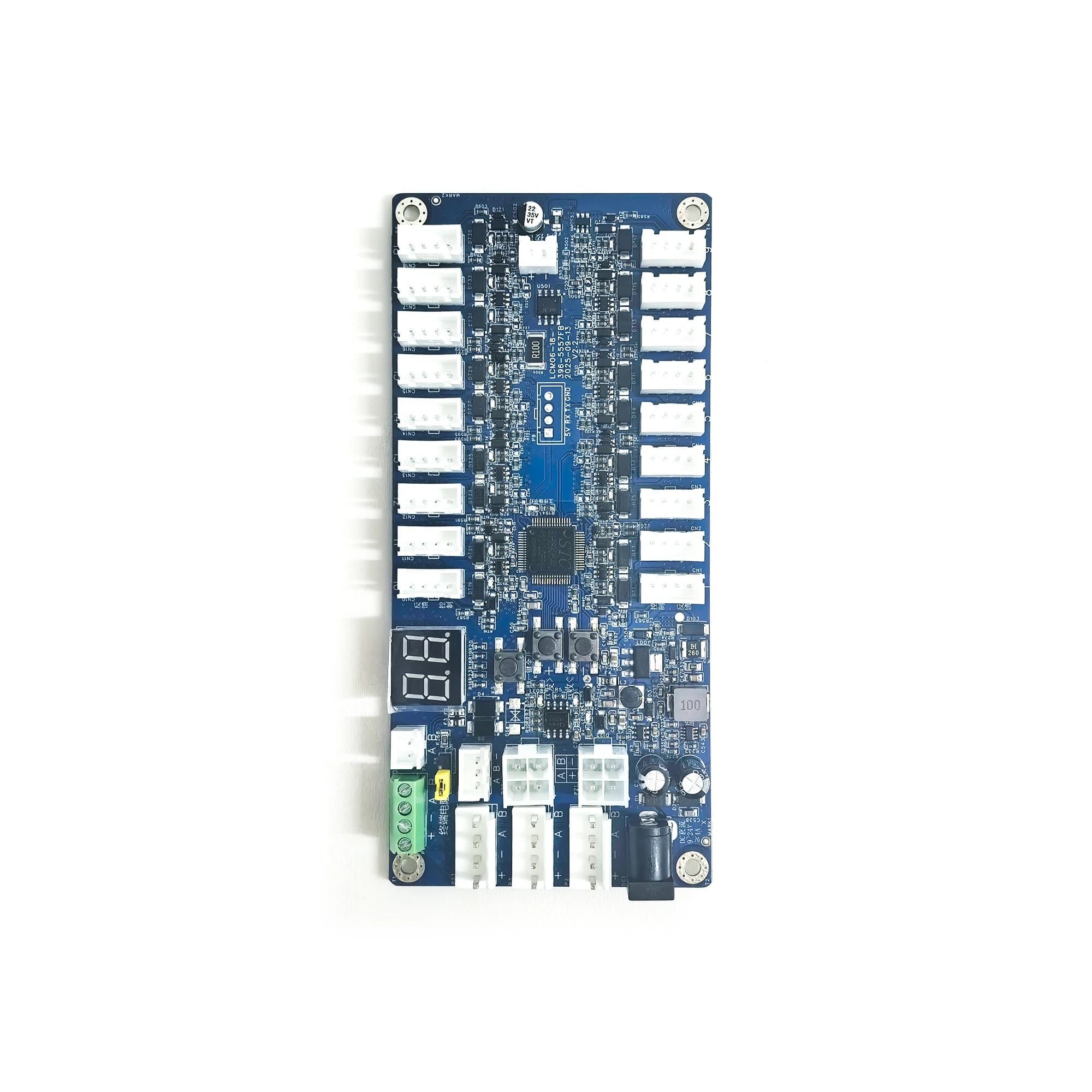
- Hardware — cabinet, compartment mix, locks, control boards and touchscreen terminal, factory-tested as a complete unit before packing.
- Software — cloud management platform, administrator and staff roles, operation logs, data export, multi-cabinet views.
- Integration — open REST API and SDK for order events, compartment control and status query, scoped per project.
- Deployment support — written and video work instructions for positioning and fixing, plus remote commissioning once the unit is powered and online.
- Power and connectivity modules — AC 110V/240V input, optional UPS backup, optional solar supply, and Ethernet, WiFi or 4G LTE connectivity.
- After-sales — 1-year hardware warranty with free remote software support.
The standard commercial package is equipment plus remote deployment support. On-site labour by our own engineers is quoted separately per project and is not assumed to be inside the equipment price. Stating that plainly at quotation stage is deliberate: it is the assumption that most often breaks a budget after delivery.
Scope of Supply and Where Responsibility Changes Hands
This is the table to agree before contract. Every row that is left implied becomes a dispute later.
| Stage | Linqu | Buyer / site |
|---|---|---|
| Cabinet design and compartment configuration | Yes | Confirms sizing brief |
| Manufacturing and pre-shipment testing | Yes — powered test, lock-by-lock test, software commissioning | — |
| Packing and international freight | Yes, per agreed trade terms | Destination customs clearance |
| Mains supply brought to the installation point | — | Yes |
| Network drop or SIM provisioning at the point | — | Yes |
| Unpacking, positioning, levelling, fixing | Remote guidance, written and video work instructions | Yes — executes |
| Power-up self-test and network commissioning | Yes — remote support | On-site assistance during the session |
| Platform accounts and configuration | Yes | Supplies administrator list |
| Operator training | Yes — remote | Assembles the attendees |

Site Readiness Confirmed at Quotation, Not at Delivery
Three site facts belong in the quotation file, not in a post-delivery email thread.
Power feed
The site provides one mains feed to the installation point. Internal distribution is handled by the cabinet's own power module, so no in-cabinet electrical design is required from the buyer.
| Item | Specification |
|---|---|
| Input voltage | AC 110V / 240V, globally adaptable |
| Touchscreen supply | DC 12V / 5A or 24V / 3A |
| Lock supply | 9–18V, unlocking current under 3A |
| Optional | UPS backup supply; solar power supply |
Connectivity
Pick one of three at the point: wired Ethernet (preferred where available), WiFi, or a 4G LTE module for sites with no cable run. Basic deposit-and-collect logic runs locally on the device, so a short outage does not lock the cabinet out of service — but remote management, order synchronisation and pickup-code delivery all require connectivity. Decide this during evaluation, because it sets the expectation for what the back office can actually do.
Footprint and fixing
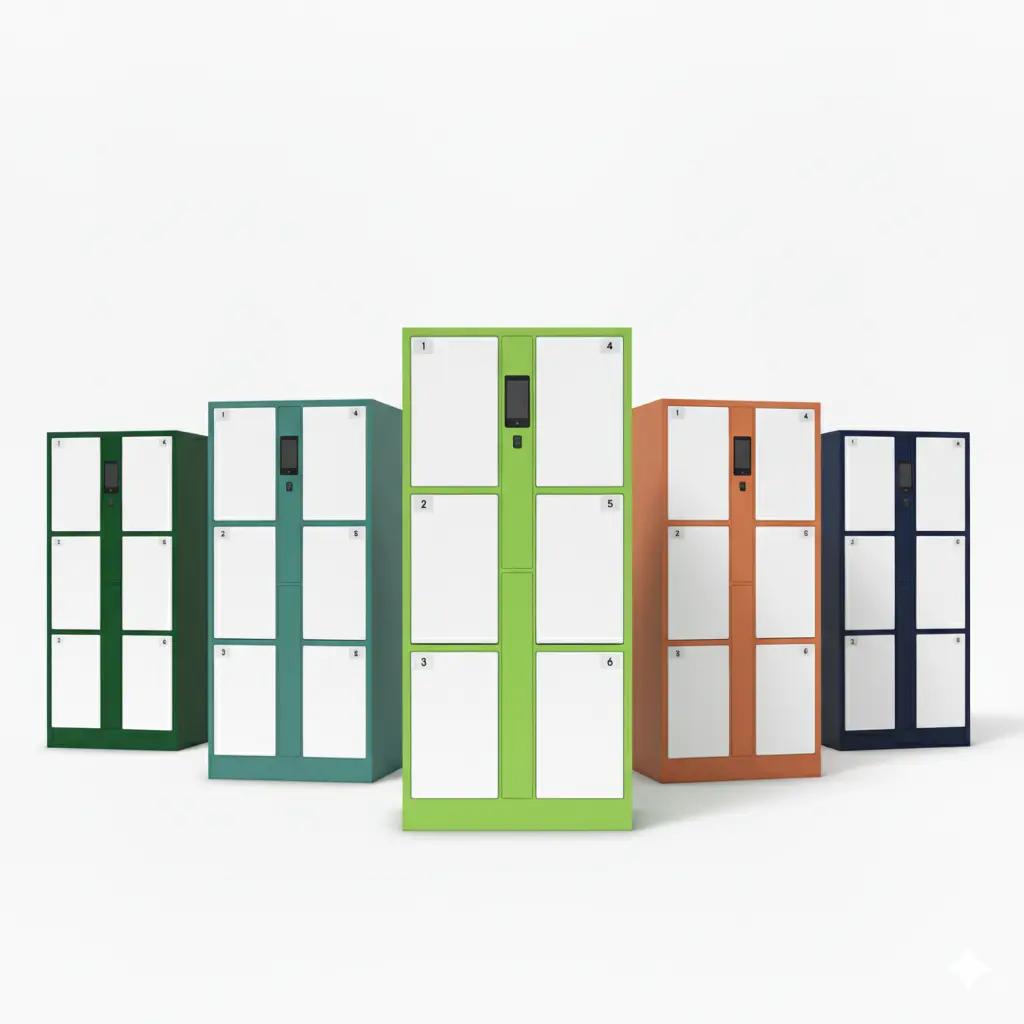
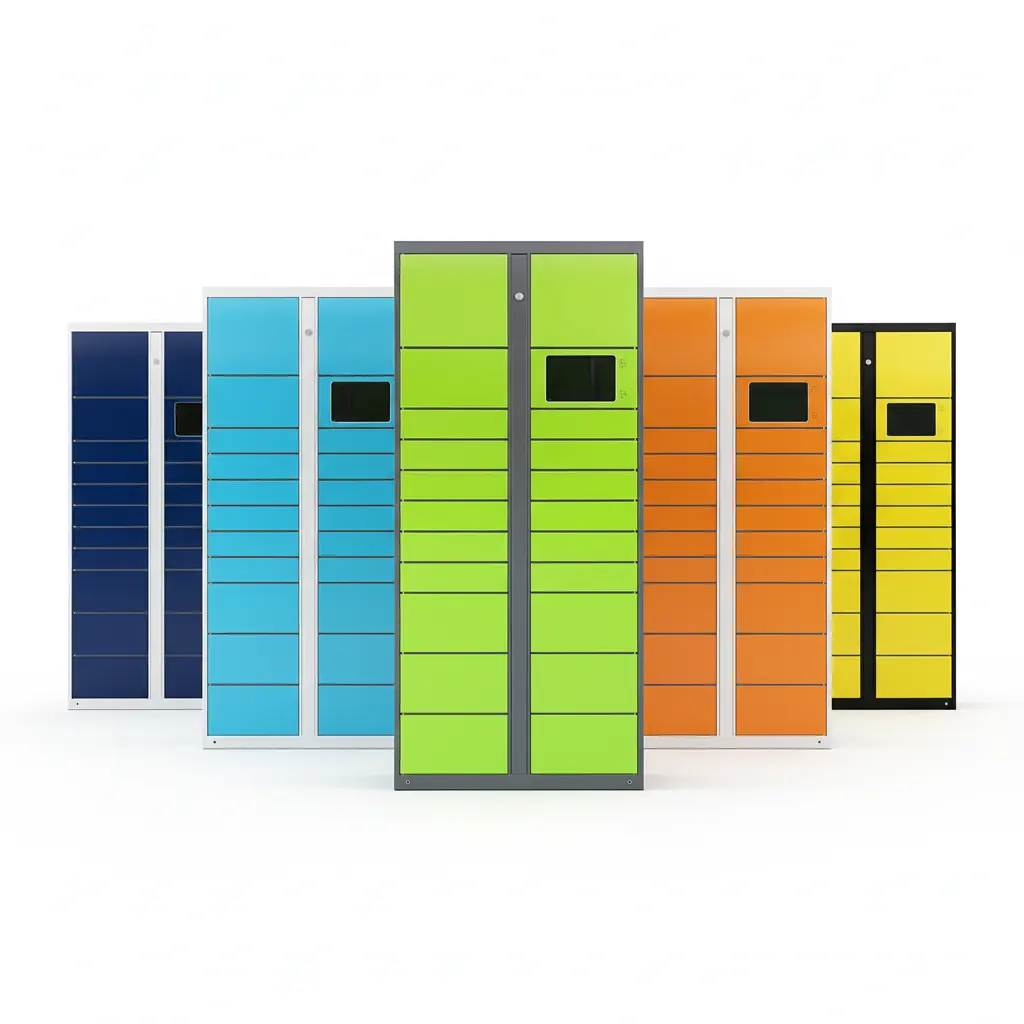
- Overall height, width and depth are customisable, and cabinets can be modularly joined into a continuous bank.
- Bodies are galvanised or cold-rolled steel, typically 0.6–1.2mm, with anti-pry construction.
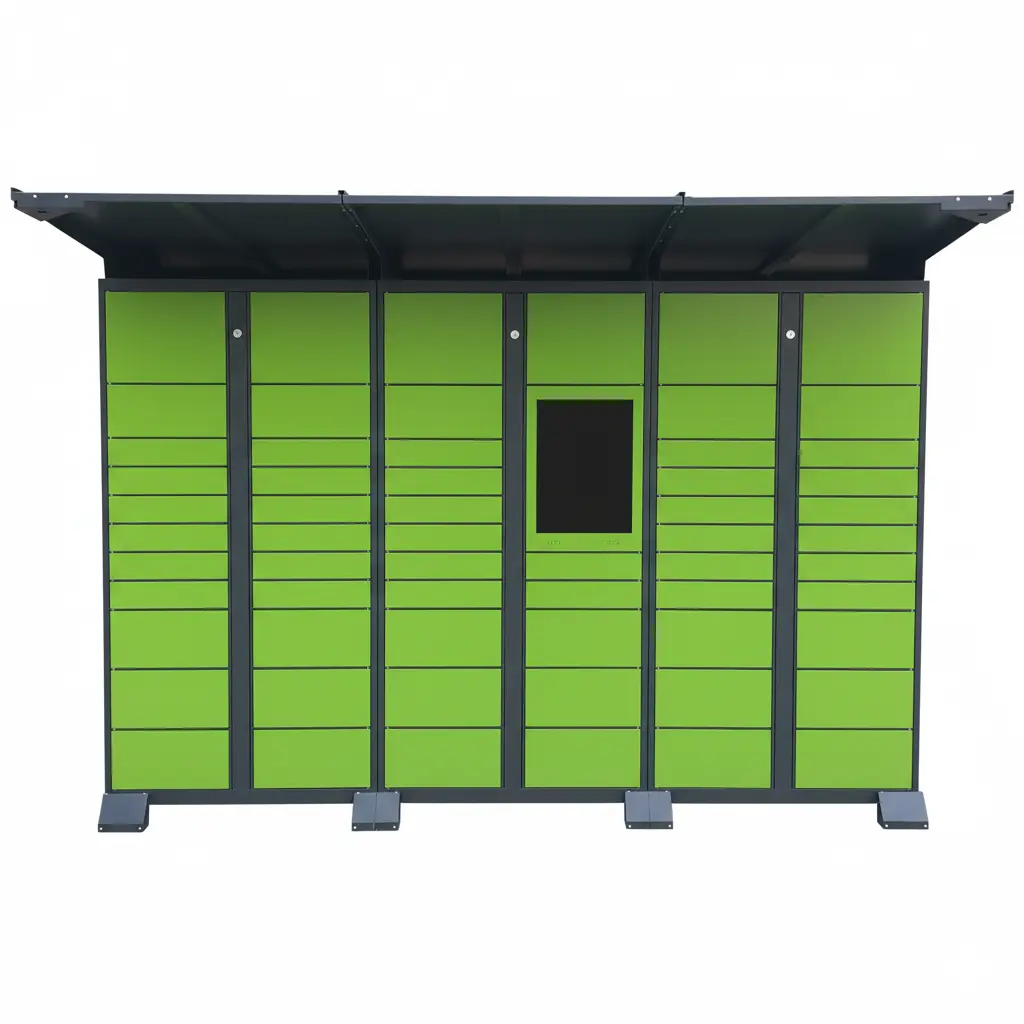
- Indoor, semi-outdoor and outdoor placements are all supported; outdoor points add weatherproof construction, a rain canopy, and dust and moisture protection.
- What the site must confirm: floor flatness, usable width and depth, whether the bank is wall-fixed, and whether there is overhead shelter.
Cross-Border Deployment: Voltage, Plugs, Payment and Certification
Every export project passes through the same gate. Get it wrong and the units arrive unusable.
| Market | Power | Payment | Certification |
|---|---|---|---|
| European Union | Local plug type supplied | Card payment (Nayax) | CE, EU authorised representative, German EPR |
| United States | 110–120V / 60Hz, Type A / B | Card payment (Nayax) | — |
| Malaysia | 220–240V / 50Hz, Type G | Aggregated local payment | — |
| Singapore | 230V / 50Hz, Type G | PayNow | — |
| Hong Kong | 220V / 50Hz, Type G | YedPay / EFT Pay | — |
| Kenya | 110–240V, Type G | M-Pesa | — |
RoHS is also held, and certificate originals can be supplied on request. Two limits are worth stating in writing rather than discovering later: local payment methods not listed above are handled through the open API on a per-project basis, and there are no pre-built connectors for retail POS, ERP or hotel PMS systems. Where a system needs to be joined up, the interface scope and effort are confirmed during the solution phase — the mechanics of that are set out in our parcel locker API integration guide.

Phased Delivery from Specification Sign-Off to Handover
- Specification confirmation — site conditions, compartment mix, interface languages, payment method, certification requirements.
- Sample or first-article approval where required. MOQ is 1 unit, so a pilot cabinet can be built and approved before a batch is committed.
- Production and factory testing — powered whole-unit test, lock-by-lock compartment test, software commissioning.
- Shipment — T/T with Alibaba Trade Assurance available.
- Positioning on site — executed by the buyer using our work instructions.
- Power-up and remote commissioning — connectivity established, cabinet bound to the management platform.
- Acceptance — signed off item by item against the checklist below.
- Training and handover — administrator accounts, operation log walkthrough, data export demonstration.
The 13-Point Acceptance Checklist
Take this to site. A project is finished when all thirteen are ticked, not when the truck leaves.
Hardware
- Every compartment opens on command, and the manual emergency release lever works on each one.
- The bank is securely fixed, door gaps are even, and anti-pry structures are undeformed.
- The screen lights, touch response is correct, and there are no dead pixels.
- Outdoor points: weatherproof construction and shelter are in place.
Software and connectivity
- The cabinet shows online in the platform with live status.
- The full cycle runs end to end: assign compartment, generate pickup code, open on collection.
- SMS and email pickup-code delivery arrive — these are the standard notification channels.
- Interface language switching works and local currency displays correctly.
- Paid scenarios: payment callback succeeds and order amounts are correct.
Administration and audit
- Administrator and staff roles carry the right permissions.
- Operation logs are auditable down to an individual deposit or collection.
- Data export works.
- Multi-cabinet projects: all units are visible in one back office.

Where Deployment Projects Stall
| Failure | How it is avoided |
|---|---|
| Units arrive and the point has no mains supply | Confirm the power feed at solution stage, never after delivery |
| No cable run and weak 4G signal at the point | Test signal at the point in advance; switch to wired or move the point |
| Outdoor point without shelter takes on water | Weatherproof construction and canopy assessed by default on outdoor projects |
| Buyer expects "unbox and use" but site work is needed | Agree the responsibility table above before contract |
| Buyer expects a drop-in link to an existing PMS or POS | No pre-built connectors exist; scope the open API work during the solution phase |
For a site that is being fitted with cabinets rather than components, our outdoor weatherproof parcel locker and cloud-managed office parcel locker are the two most commonly deployed starting points. If you already build your own cabinets and only need the control layer, see the smart locker hardware package and API solution instead.
Key Takeaways
- Standard Linqu delivery is equipment plus remote deployment support; on-site labour by our engineers is quoted separately and is not inside the equipment price.
- The site provides one mains feed and one network path; internal power distribution is handled by the cabinet.
- Basic deposit and collection runs locally, but remote management, order sync and pickup codes need connectivity — decide this during evaluation.
- Cross-border projects must clear voltage, plug type, payment method and certification before production. EU projects need CE, an EU authorised representative and German EPR.
- There are no pre-built POS, ERP or PMS connectors. Integration runs through the open REST API with scope confirmed per project.
- A project closes on a 13-point acceptance sign-off covering hardware, software and connectivity, and audit — not on delivery.
- MOQ is 1 unit, so a site can be proven with a single pilot cabinet before a rollout is committed.
About Linqu
Linqu has manufactured smart lockers since 2018 from a 20,000 sqm factory in Luoyang, Henan, with headquarters in Zhengzhou. We supply finished lockers and OEM components to B2B buyers worldwide, with OEM/ODM customisation, an open REST API, MOQ of 1 unit for pilots, and a 24-hour quote turnaround. For deployment projects specifically, we provide written and video work instructions, remote commissioning, and platform training as standard.
Send us photos of the point, its power and network conditions, and the destination country, and we will return a deployment plan covering site prerequisites and scope of supply within 24 hours. Email service@linqubox.com or use the contact form — drawings, compartment sizing and API questions are all welcome at enquiry stage.