"How secure is it?" is the second question every B2B buyer asks about smart lockers, right after price. The answer depends on three layers most procurement teams evaluate separately and then forget to integrate: the physical hardware, the software access flow, and the surveillance overlay. This guide walks through what real-world smart locker security looks like in 2026 — what to specify, what to verify, and what to skip.
It is written for property managers, corporate IT and security leads, and procurement teams evaluating smart locker security, tamper-resistance, and parcel lockers with integrated cameras for the first time. The goal is to give you a concrete checklist and the ability to push back when a vendor's spec sheet glosses over a critical detail.

Smart Locker Security — What B2B Buyers Actually Worry About
The threats that show up in real RFP conversations are not what amateur reviewers focus on. The buyer's actual worry list:
Theft of high-value contents. A laptop dropped in an office locker, a $400 prescription in a pharmacy locker, a meal kit with a $200 weekly subscription. A locker that loses contents costs the operator more than the cabinet itself.
Liability for wrong handoffs. If the locker hands a package to the wrong recipient, the operator owns it. The audit trail needs to defend the handoff in any dispute.
Tamper events without alerts. A locker pried open at 3 AM that the operator only discovers the next morning is worse than a locker that survived a tamper attempt and triggered a 2 AM alert. The detection-to-alert pipeline matters more than the steel gauge.
Insider misuse. Operator-side staff with admin access can grant themselves pickup codes. Without role-based access and audit logging, the locker becomes the favorite tool of bad-actor associates.
Compliance failure. SOC 2, HIPAA-adjacent (pharmacy), GDPR, and tenant-specific contracts all impose audit and data-retention requirements. A locker that does not pass these dies in legal review before it ever ships.
Hardware that survives a sledgehammer is useful. Hardware that survives a sledgehammer and alerts the operator within 60 seconds and creates a defensible audit trail is what you actually need.
Physical Security — Steel Gauge, Locks, and Anti-Pry Design (≥150kg Pull Strength)
The physical spec sheet for a serious B2B locker:
Cabinet steel: 0.8–1.0 mm cold-rolled steel for indoor lockers, 1.0–1.2 mm galvanized steel for outdoor. Anything thinner than 0.6 mm is a residential-only product mislabeled for commercial use.
Door pull strength: ≥150 kg (≈330 lb) on every compartment. This is the bid-spec threshold for commercial deployments. Lockers under 100 kg pull strength fail in the first attempted pry attack.
Anti-pry edge design: Recessed door edges and reinforced hinges prevent crowbar leverage. Look for vendors who publish a tool-test video, not just a marketing photo.
Lock type: Industrial-grade electronic lock with mechanical override (key) for emergencies. The override key is held in a vendor-controlled key safe, not in the building manager's drawer.
Hinge security: Concealed hinges that cannot be popped from the outside. External hinges with exposed pins are a 30-second defeat for any motivated attacker.
Frame welding: Continuous-weld frame, not spot-weld. Spot welds split open under pry attack and turn the cabinet into a single-use product.
Software Security — Encrypted PIN, Time-Bound Access, and Audit Logs
The software side is what auditors and security teams actually scrutinize. The non-negotiables:
One-time PIN with time bound. Each pickup code is valid only for a specified window (typically 4–72 hours) and only for the assigned compartment. PIN reuse must be rejected. PIN brute-force must be rate-limited.
Encrypted at rest and in transit. All PINs, audit logs, and personal data encrypted with AES-256 at rest and TLS 1.2+ in transit. Vendors who cannot answer "what cipher" in technical pre-sales should be cut from the shortlist.
Role-based access control (RBAC). Property staff, tenant admins, courier partners, and recipient roles must be separated. Property admin should not be able to grant themselves a recipient PIN without leaving an audit trail.
Audit log retention. Every event — drop, pickup, alarm, tamper, admin login, PIN generation — logged with user ID, timestamp, and outcome. Retention 12–24 months minimum, exportable to the operator's SIEM or compliance system.
SOC 2 / ISO 27001 vendor compliance. Ask for the most recent SOC 2 Type II report. Vendors without one are not serious about enterprise procurement.
SSO / SAML integration. Operator admin login through the operator's identity provider (Okta, Azure AD, Google Workspace) with MFA enforced.
Camera Integration — When and How to Use
Cameras are useful, but more often misused than not. The decision tree:
| Scenario | Use Camera? | Why |
|---|---|---|
| Outdoor parcel locker, public street | Yes, integrated wide-angle | Tamper deterrence + dispute evidence |
| Indoor office lobby with security cameras already | No, leverage existing | Building cameras already cover the locker |
| Pharmacy with regulated handoffs | Yes, per-compartment door cam | Audit trail on every controlled-substance pickup |
| Residential multifamily lobby | Optional, integrated wide-angle | Tenant privacy concerns can outweigh value |
| Indoor retail BOPIS pickup | No, leverage store cameras | Store CCTV already covers the area |
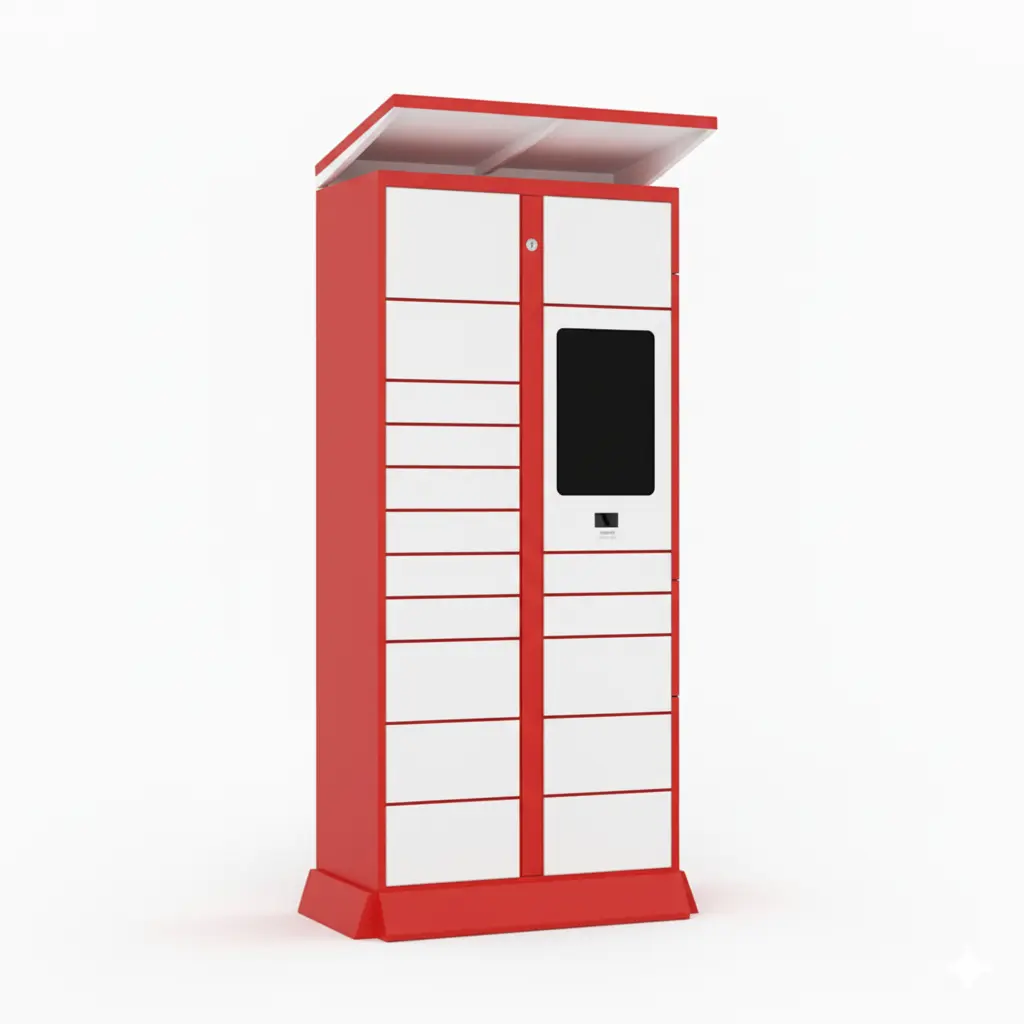
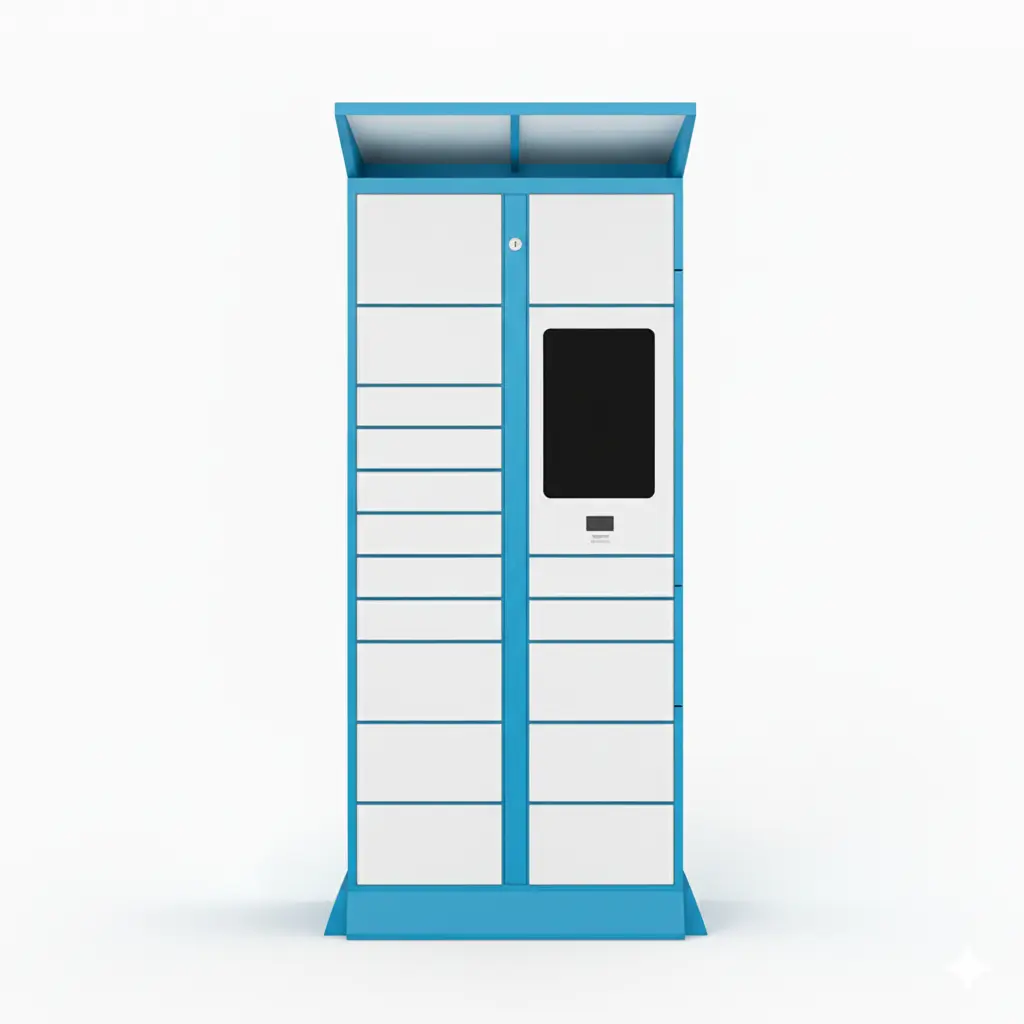
When you specify cameras, specify resolution (1080p minimum, 4K for forensic-grade), frame rate (15 fps minimum), low-light performance (IR illumination for outdoor), and retention period (30–90 days standard). For outdoor deployments where camera integration is critical, our outdoor parcel locker with camera ships with a built-in 1080p wide-angle module aligned to the touchscreen.
Tamper-Detection Sensors and Alarm Workflow
Tamper detection is what turns hardware from passive to active security. The sensor stack:
Door open-state sensors. Every compartment reports open/closed state in real time. Doors opened outside an authorized PIN trigger an immediate alarm.
Cabinet vibration sensors. Accelerometers detect impact, drilling, or sustained pry attempts. Calibrated to ignore wind/door slams but flag deliberate attack patterns.
Cabinet integrity sensors. Sensors at hinge points and frame seams flag any structural deformation.
Power-loss detection. A locker that unexpectedly loses power triggers a tamper alert (because cutting power is a common pre-attack step).
The alert workflow:
Sensor triggers within 1 second of event.
Cloud platform receives event within 5 seconds (with 60-second fallback if connection is slow).
On-call operator receives SMS, email, and push within 60 seconds total.
Camera (if equipped) starts continuous recording for 10 minutes from the trigger.
Audit log captures the event, sensor type, time, and disposition.
Indoor vs Outdoor Security Considerations
The threat profile differs sharply:
Indoor lockers face mostly insider misuse and casual theft. Physical attacks are rare because attackers must enter the building. Software access controls and RBAC matter more than steel gauge.
Outdoor lockers face the full range — physical pry attacks, drill attacks, sledgehammer attacks, vehicle ram attacks (for the worst cases), plus weather-driven failures that look like attacks. IP65 weatherproofing, anchor-bolt-to-foundation mounting, and integrated cameras become non-negotiable.
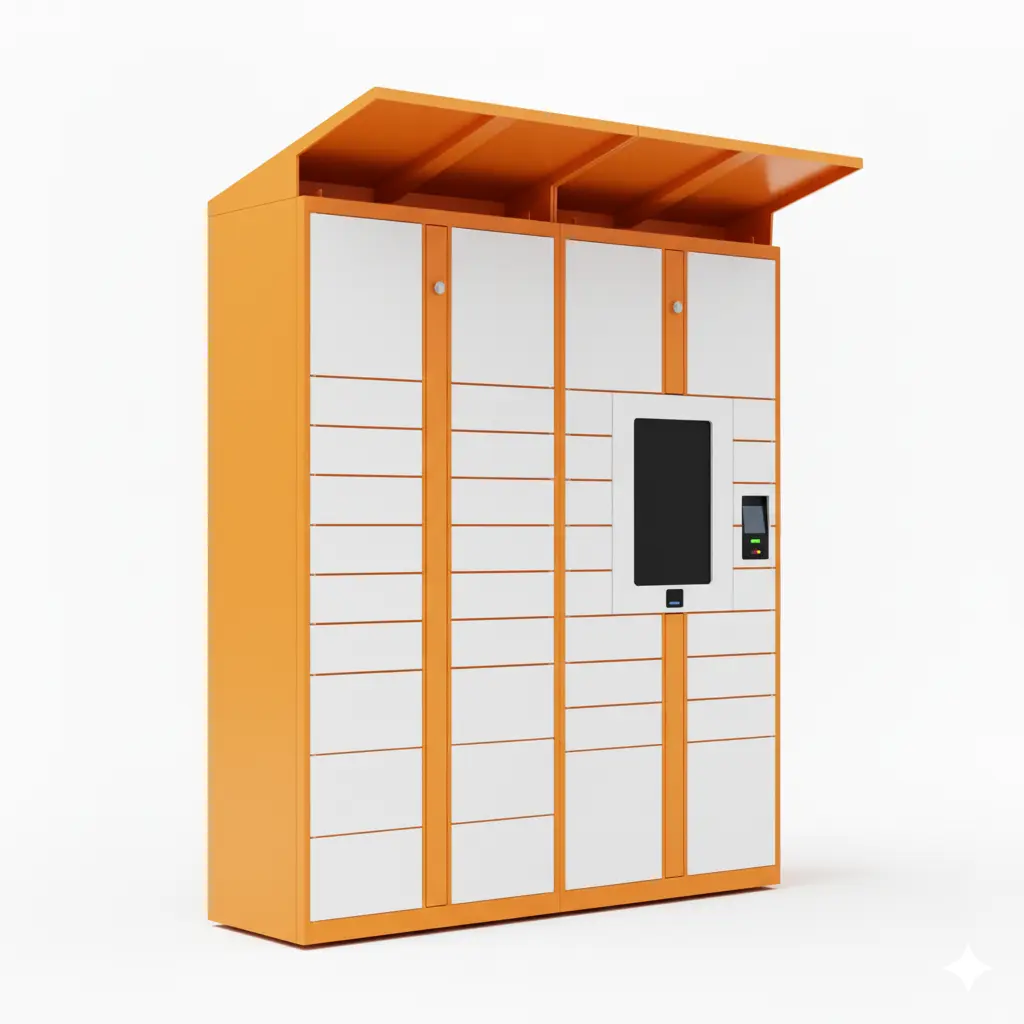
For deployments split across indoor and outdoor zones, the same management platform should handle both — without forcing the operator to learn two control panels. Our outdoor weatherproof parcel locker with IP65 shares the cloud backend with our indoor units, and the security event flow is unified across both. For deeper context on the indoor/outdoor decision, see our outdoor vs indoor smart locker guide.

Compliance and Insurance Implications
The compliance and insurance dimensions that frequently surprise buyers late in procurement:
Building insurance. Adding an outdoor locker can shift the building's liability profile. Coordinate with the building insurer before installation. Some carriers require documented camera coverage and specific lock specs.
Tenant SLA contracts. Multi-tenant buildings with anchor tenants in finance, legal, or healthcare often need contractually-guaranteed audit log retention, encryption standards, and breach notification timelines. Your locker vendor must commit to these in writing.
Cyber insurance. The locker is now a connected device on the building network. Cyber insurance underwriters are starting to ask about IoT device security as part of renewal questionnaires.
Regional data residency. EU deployments need GDPR-compliant data residency (audit logs and personal data hosted in EU). Some healthcare deployments need HIPAA-aligned data handling. Confirm vendor's data hosting before signing.

Smart locker security in 2026 is a layered discipline. The hardware spec, the software access flow, the surveillance overlay, and the compliance framework all need to be evaluated together. Vendors who cannot speak fluently about all four — and back the answers with documentation — are not ready for serious B2B procurement. Vendors who can are the ones worth shortlisting.