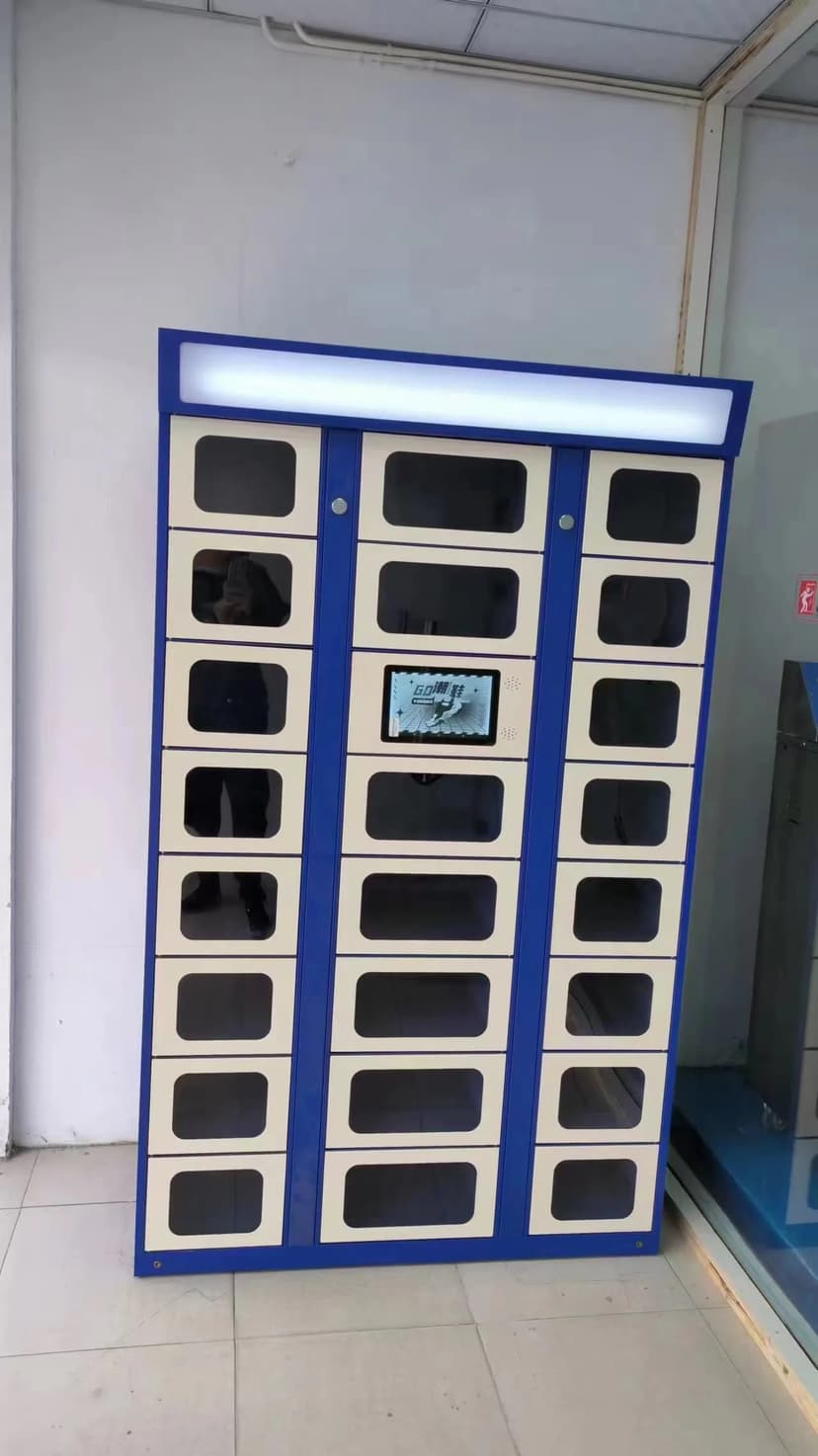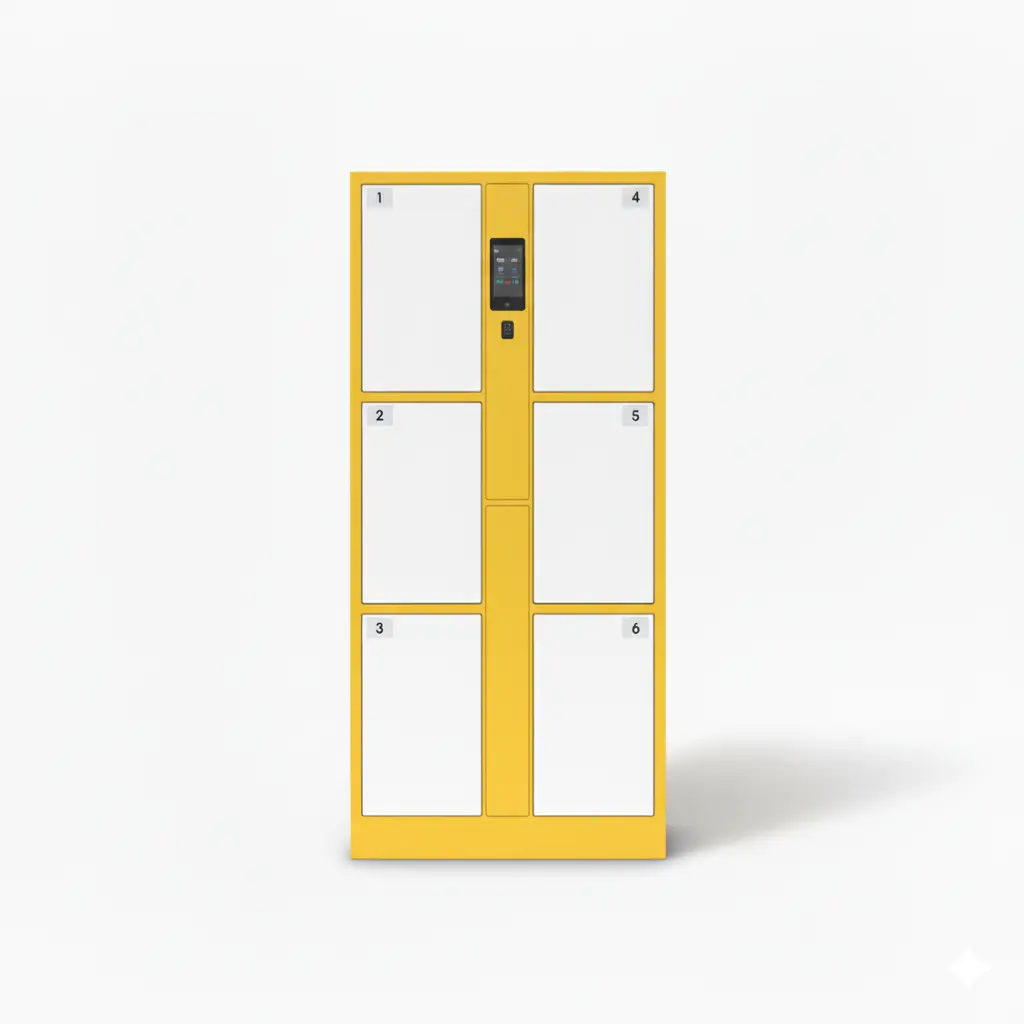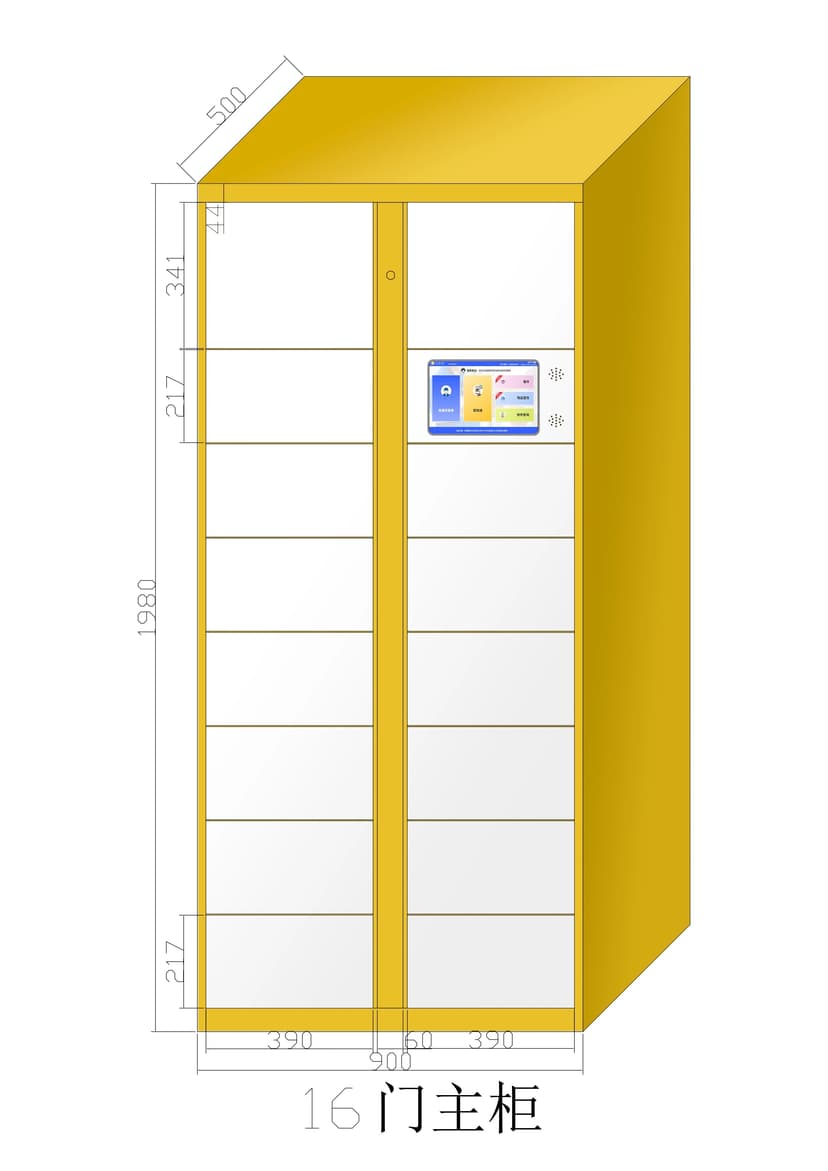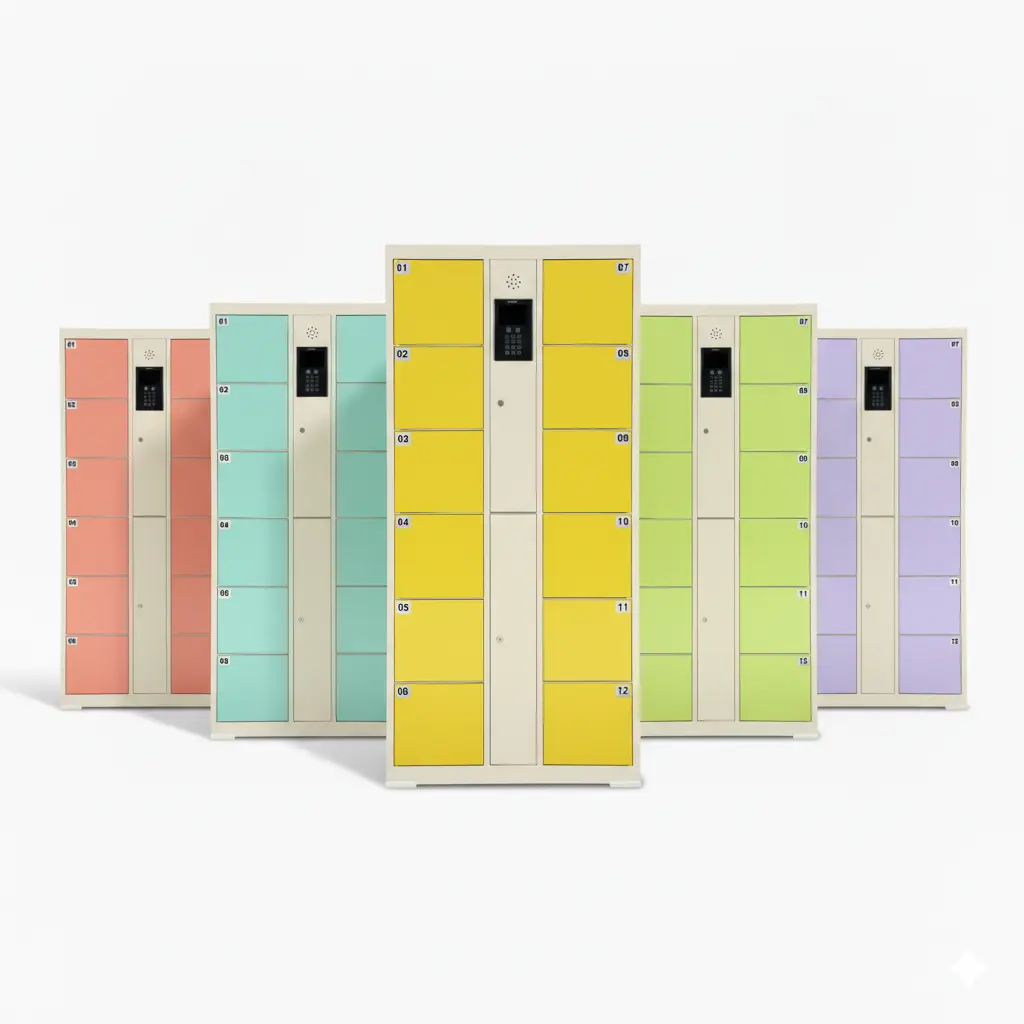
Deciding where to place your smart locker system sounds simple, but the outdoor-vs-indoor choice shapes everything downstream: hardware specifications, installation cost, maintenance schedule, and even user adoption. Get it wrong and you face premature corrosion, unreliable connectivity, or a locker bank that residents and employees simply avoid.
This guide breaks down the five factors that separate a successful deployment from an expensive lesson.
Do Smart Lockers Require Electrical Work?
Yes — all smart lockers require a standard AC power connection (110V–240V). Indoor installations are usually straightforward: most building lobbies and mailrooms already have accessible outlets within a few meters. No specialized electrical work is needed beyond plugging in and, in some cases, adding a dedicated circuit breaker.
Outdoor installations typically require more planning. If no power outlet exists at the deployment site, a licensed electrician will need to run a dedicated electrical line from the nearest panel. This may involve trenching conduit underground or routing cable through exterior walls. The cost varies by distance — runs under 15 meters are usually minor, while runs over 30 meters may need heavier gauge wiring.
Key electrical considerations before deployment:
Indoor: Confirm a grounded outlet within 3 meters of the locker position. A dedicated 15A circuit is recommended for units with screens and heating elements.
Outdoor: Budget for a weatherproof electrical connection with GFCI (ground fault) protection. Surge protectors are strongly recommended in lightning-prone areas.
Solar option: For remote outdoor locations without grid power, solar-powered locker systems with battery backup are available — see our solar-powered locker solution.
Beyond electrical, smart lockers also need network connectivity (WiFi, Ethernet, or 4G) — covered in detail below.
1. Weather Protection and Material Durability
Indoor lockers operate in a controlled climate. Standard cold-rolled steel with powder coating is sufficient, and you can focus your budget on screen size, compartment layout, or software features.
Outdoor installations face rain, humidity, UV exposure, temperature swings, and — in coastal areas — salt air. The baseline requirements jump significantly:
IP65 or higher ingress protection to prevent water and dust penetration into the control board and lock mechanisms.
Galvanized steel with anti-rust powder coating (minimum 0.8–1.0 mm thickness) to resist corrosion over a 5–10 year lifespan.
Sealed cable entries and drainage channels so standing water never reaches internal electronics.
Optional rain canopy or shelter structure for sites without overhead coverage.
If your site is semi-outdoor — a covered walkway, parking garage, or building overhang — you may not need full IP65, but you still need rust-resistant materials and sealed electronics. Always evaluate the worst-case weather scenario for your location, not the average.

2. Power Supply and Backup Strategy
Both indoor and outdoor lockers run on standard AC 110V–240V, but the reliability equation differs:
Indoor advantages:
Stable, building-managed power with existing outlets nearby.
Lower risk of power surges from lightning or grid fluctuations.
UPS backup is optional — building power rarely drops without warning.
Outdoor challenges:
Dedicated electrical runs may be required, adding installation cost.
Surge protectors are strongly recommended in areas prone to electrical storms.
UPS backup becomes essential for sites without redundant power — an unexpected outage locks all compartments and blocks pickups until power returns.
Timer-based power management (auto sleep during off-peak hours) can reduce energy costs by 20–30% for 24/7 outdoor units.
During site planning, confirm the distance from the nearest power panel to the locker position. Runs over 30 meters may require heavier gauge wiring or a dedicated circuit breaker. Learn more about smart locker power system design and safety.
3. Network Connectivity Options
Smart lockers need a reliable network connection for real-time notifications, remote management, and payment processing. The environment dictates which connectivity option works best:
| Factor | Indoor | Outdoor |
|---|---|---|
| WiFi | Usually available from building network | Often weak or unavailable — walls, distance, interference |
| Ethernet | Easy to run from server room or switch | Requires conduit and weatherproof cable runs |
| 4G / LTE | Rarely needed | Recommended default — no dependency on building infrastructure |
| Failover | WiFi + Ethernet redundancy | 4G primary + WiFi fallback where available |
For outdoor deployments, 4G LTE is the safest default. It eliminates dependency on building WiFi range and avoids the cost of trenching Ethernet cable. Most smart locker platforms (including LinQu) offer optional 4G modules that plug directly into the main control board.
For indoor deployments in large buildings, test WiFi signal strength at the planned locker location before committing. Lockers placed in basements, underground parking, or metal-framed rooms often need a dedicated access point or wired connection.

4. Physical Security and Tamper Resistance
Security requirements scale with how exposed and unmonitored the locker location is:
Indoor (lower risk):
Building access control (key card, lobby guard) provides a first layer of security.
Standard industrial electronic locks with ≥150 kg tensile strength are sufficient.
Camera coverage from existing building CCTV usually covers the locker area.
Outdoor (higher risk):
Anti-pry door frames and reinforced hinges are essential — the locker is the only barrier between contents and unauthorized access.
Floor anchoring bolts prevent the entire unit from being physically removed.
Tamper detection sensors can trigger alerts to the cloud management dashboard if someone attempts forced entry.
Dedicated lighting and visible camera positioning act as deterrents.
A common mistake is deploying an indoor-spec locker in an outdoor or semi-public location. The lock mechanism may be identical, but the cabinet structure, hinge design, and mounting method need to be outdoor-rated. Explore our outdoor weatherproof parcel locker with IP65 protection for a purpose-built example.
5. User Accessibility and 24/7 Operation
The final factor is often the most overlooked: when and how easily can users actually reach the locker?
Indoor lockers are constrained by building hours. If the lobby closes at 10 PM, evening pickups are impossible — a dealbreaker for apartment residents receiving after-hours deliveries. Solutions include placing lockers in 24/7-accessible areas (mailrooms with keycard entry, ground-floor alcoves) or choosing a semi-outdoor position.
Outdoor lockers offer true 24/7 availability but introduce new UX considerations:
Screen visibility in direct sunlight — a 7-inch screen may be unreadable outdoors. Consider a high-brightness display or a sun shade.
Touchscreen usability in rain — capacitive screens can misread wet fingers. QR code scanning (phone-based) becomes the more reliable access method.
ADA / accessibility compliance — outdoor installations may fall under different local regulations for wheelchair access, signage height, and path clearance.
The best deployments match locker placement to user behavior patterns. If 60% of pickups happen between 6–9 PM, the locker must be accessible and well-lit during those hours — regardless of whether it is indoor or outdoor.
Best Outdoor Smart Lockers — What to Look For
Once you have decided that an outdoor deployment is the right fit, the next question buyers ask is: which outdoor smart locker is actually best for the site? The honest answer is that there is no single "best" model — the right cabinet depends on climate, package profile, and security context. But there is a consistent shortlist of specs that separate a serious commercial outdoor locker from a residential cabinet repackaged for outdoor use.
- IP65 weather rating, minimum. IP65 keeps out wind-driven rain, dust, and most splashback. For tropical or coastal climates, push to IP66 with stainless or zinc-coated hardware to resist salt corrosion.
- 1.0–1.2 mm galvanized steel cabinet. Anything thinner is a residential product. Look for continuous-weld frames, not spot welds, and concealed hinges that cannot be popped from the outside.
- ≥150 kg door pull strength. This is the bid-spec threshold for commercial deployments. Residential lockers typically test around 80 kg and fail in the first attempted pry attack.
- Operating temperature −20°C to +60°C. Cold-start protection matters in northern climates; high-ambient compressor protection matters in deserts and tropical zones.
- 4G/LTE fallback connectivity. A cabinet that goes offline when WiFi drops is unusable outdoors. Best-in-class units include 4G as a built-in fallback, not an aftermarket add-on.
- Anchor-bolt-to-foundation mounting. Free-standing outdoor units are vehicle-ram targets. Specify a mounting plate that ties into a poured concrete pad or paved surface.
- Surge protection and UPS. Outdoor electrical environments see lightning surges and brownouts. A built-in surge protector and battery-backed UPS that gives 30+ minutes of run time during outages prevent data loss and lock failures.
- Manufacturer-direct procurement. Resellers add 25–40% margin and slow down customization. Buy direct from the factory if outdoor is your primary use case — color, silkscreen, compartment mix, and surface finish should all be customizable.
For deployments that need outdoor parcel handling, our outdoor weatherproof parcel locker with IP65 protection ships standard with 4G/LTE, anchor mounting, and the −20 to +60°C operating range described above. For sites that need camera coverage at the same cabinet, the outdoor parcel locker with integrated camera adds a 1080p wide-angle module aligned to the touchscreen.
Making the Decision: A Quick Evaluation Checklist
Before finalizing your deployment plan, walk through these questions:
Is the location fully covered, semi-covered, or fully exposed? This determines the IP rating and material spec you need.
Is building power within 30 meters? If not, factor in electrical installation costs for outdoor units.
Is building WiFi reliable at the planned spot? If signal is below -70 dBm, plan for 4G or Ethernet.
Is the area monitored by CCTV or security staff? If not, upgrade to tamper-resistant outdoor cabinets.
Can users access the location 24/7? If building hours restrict access, consider repositioning to a more open area.
At LinQu, we manufacture both indoor and outdoor smart locker configurations with the same cloud management platform and software stack. Whether you need a commercial indoor locker for a shopping mall or a fully weatherproof outdoor unit with 4G and floor anchoring, the system architecture remains consistent — only the hardware spec changes to match your site.
Need help evaluating your site? Contact our team for a deployment consultation.