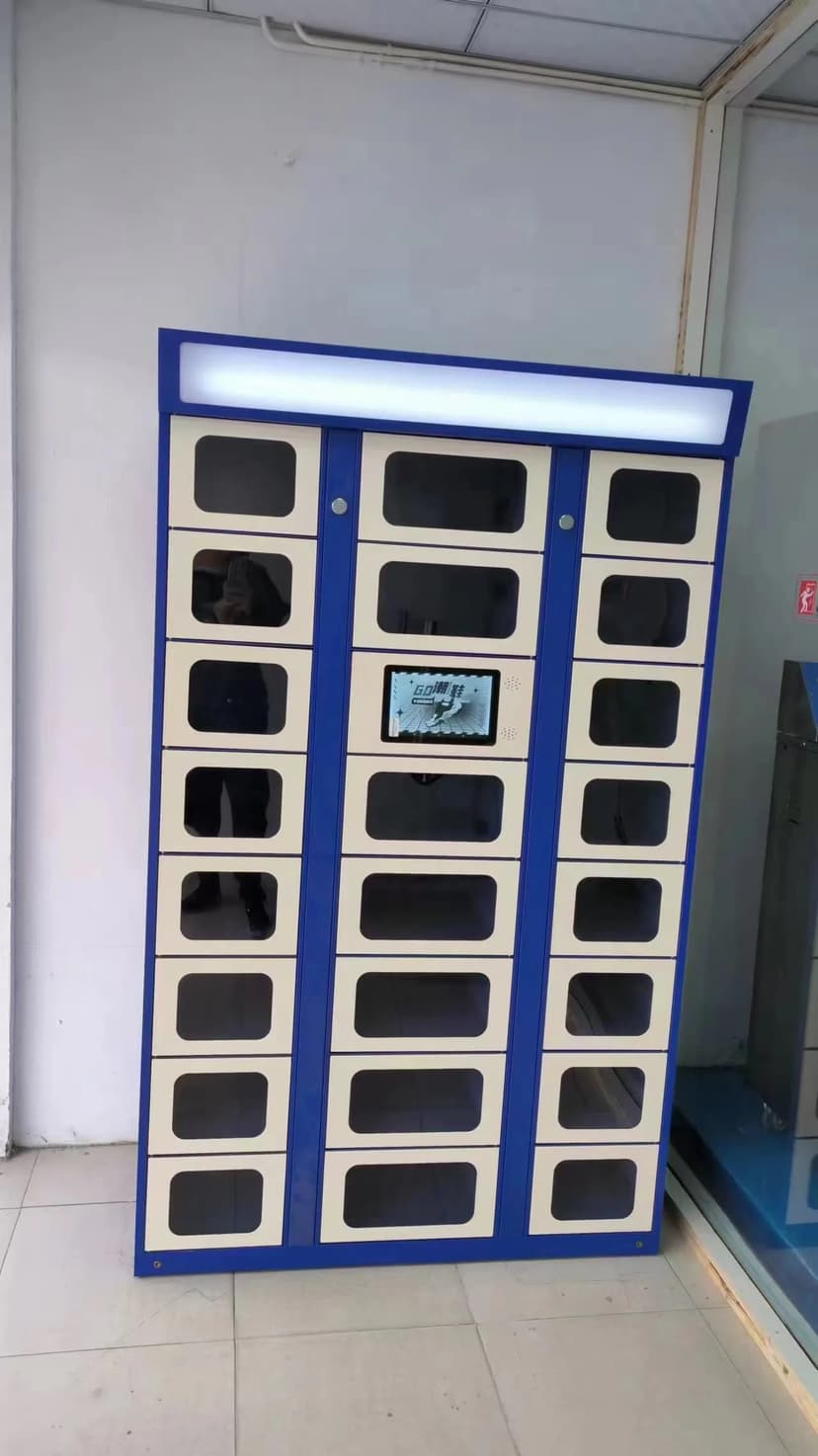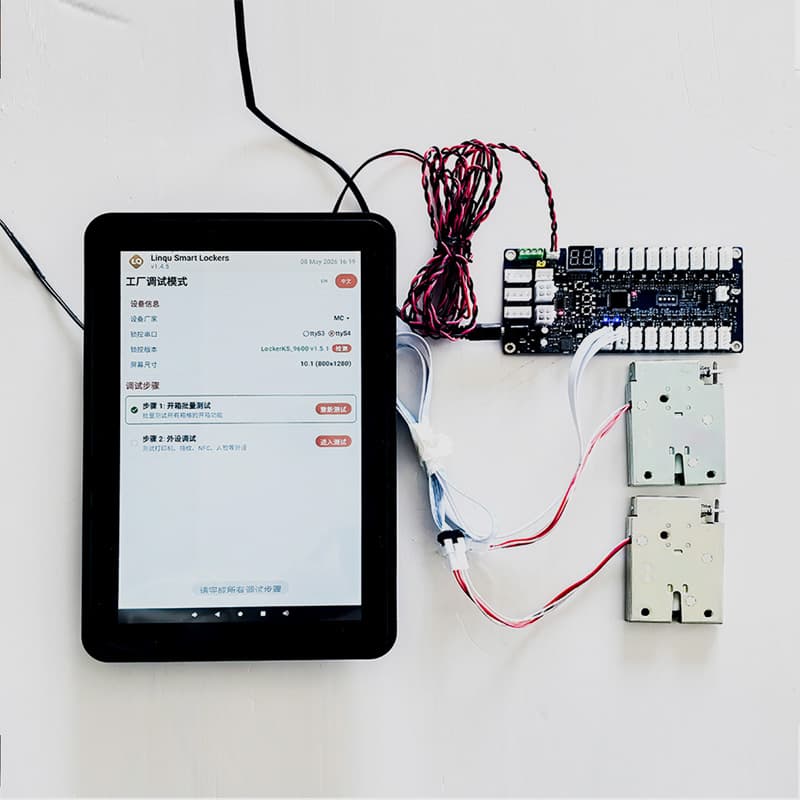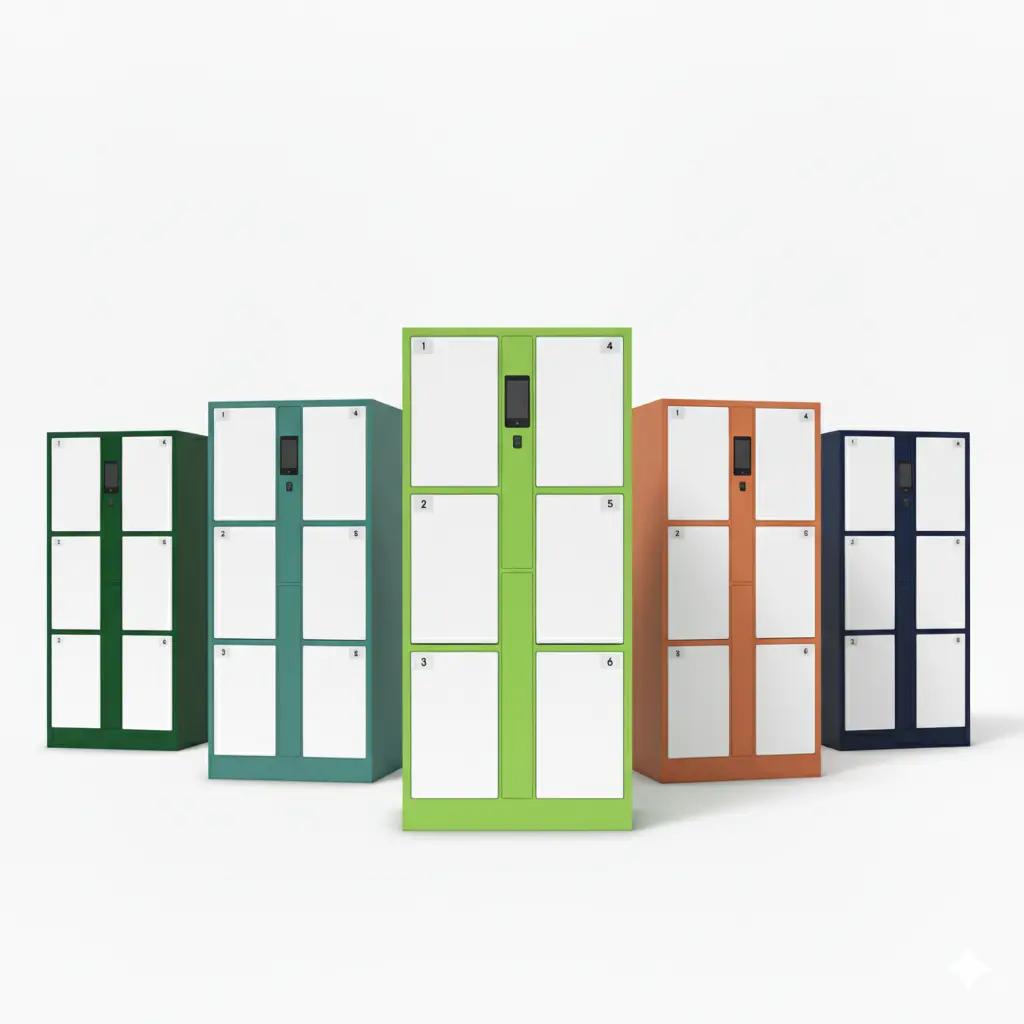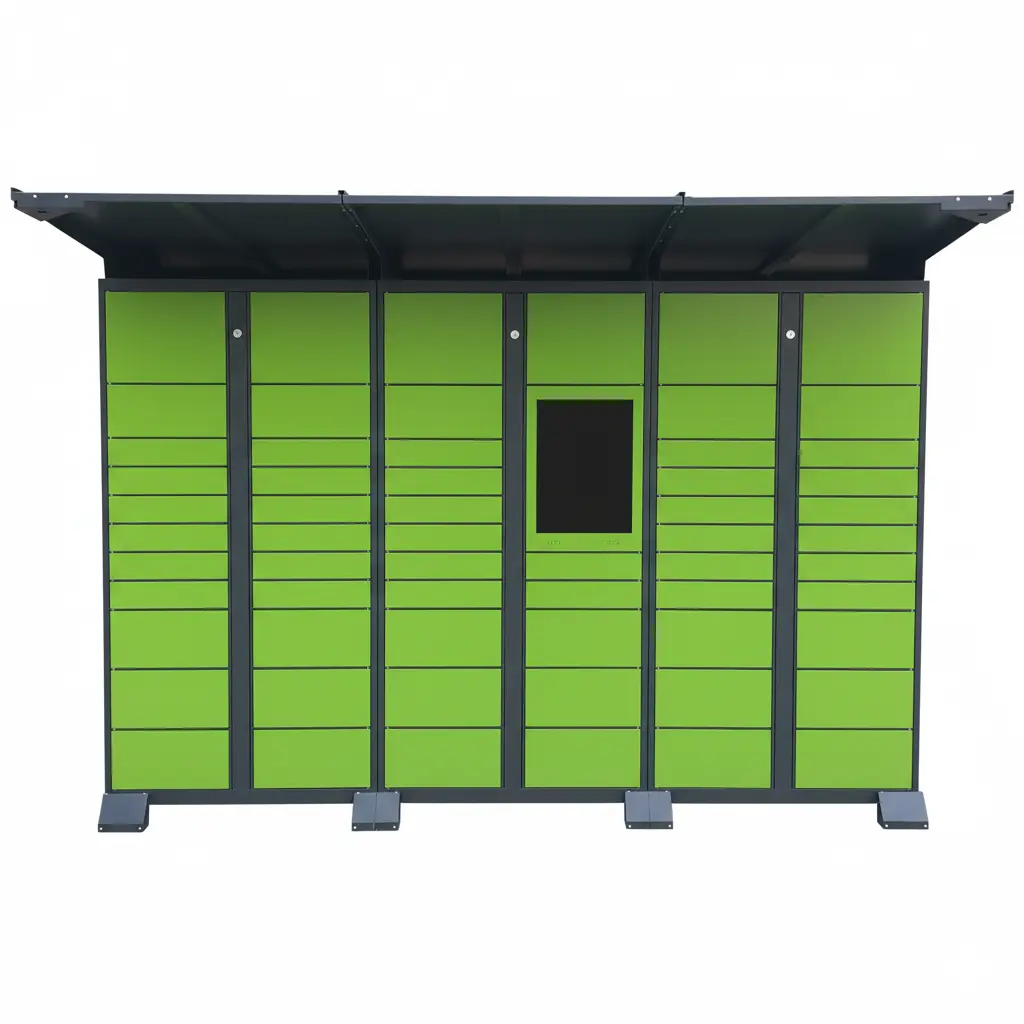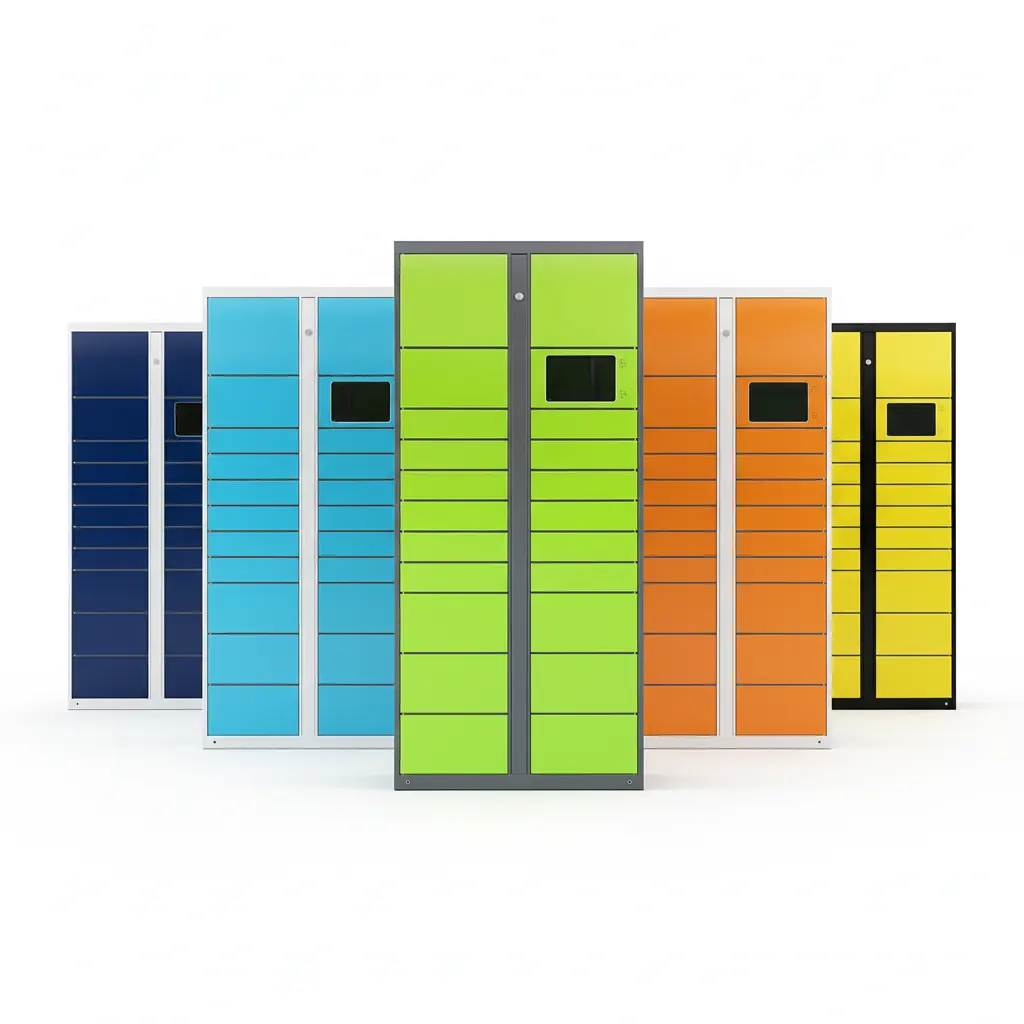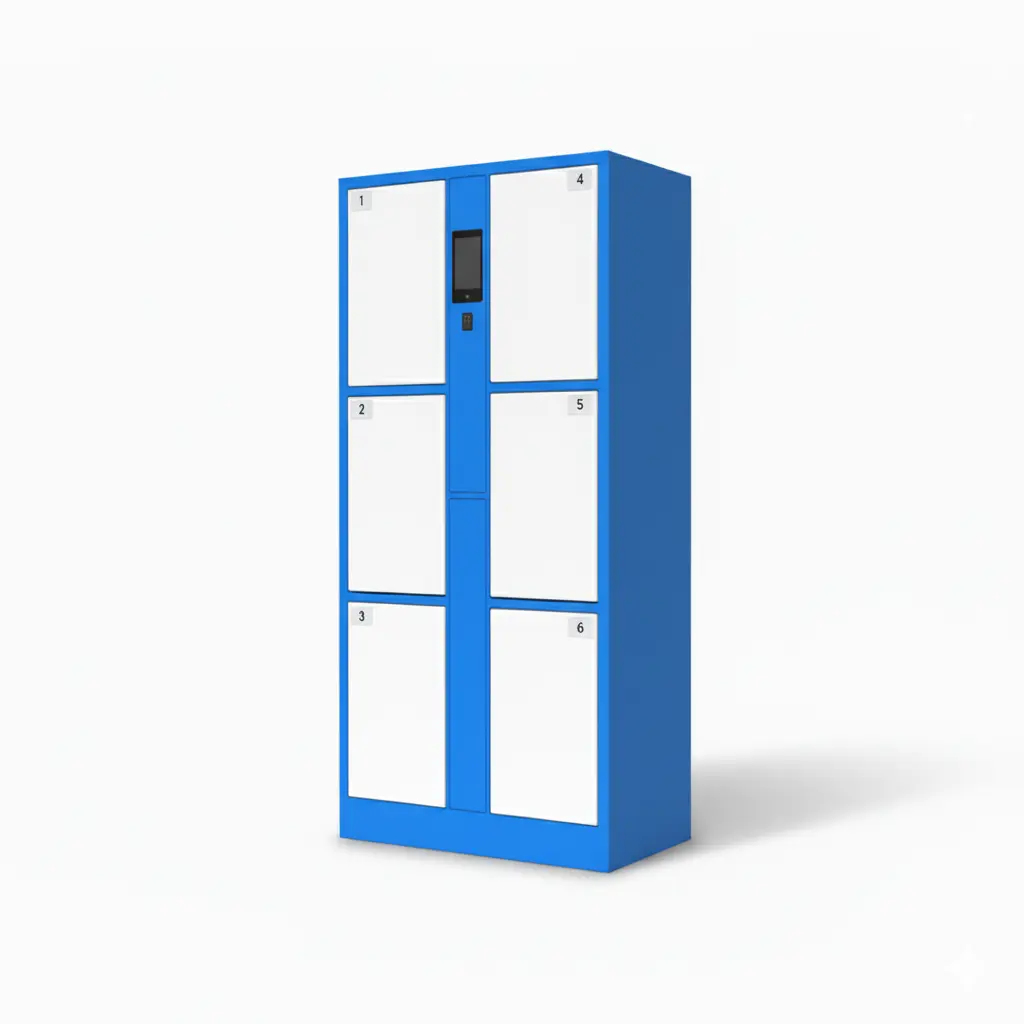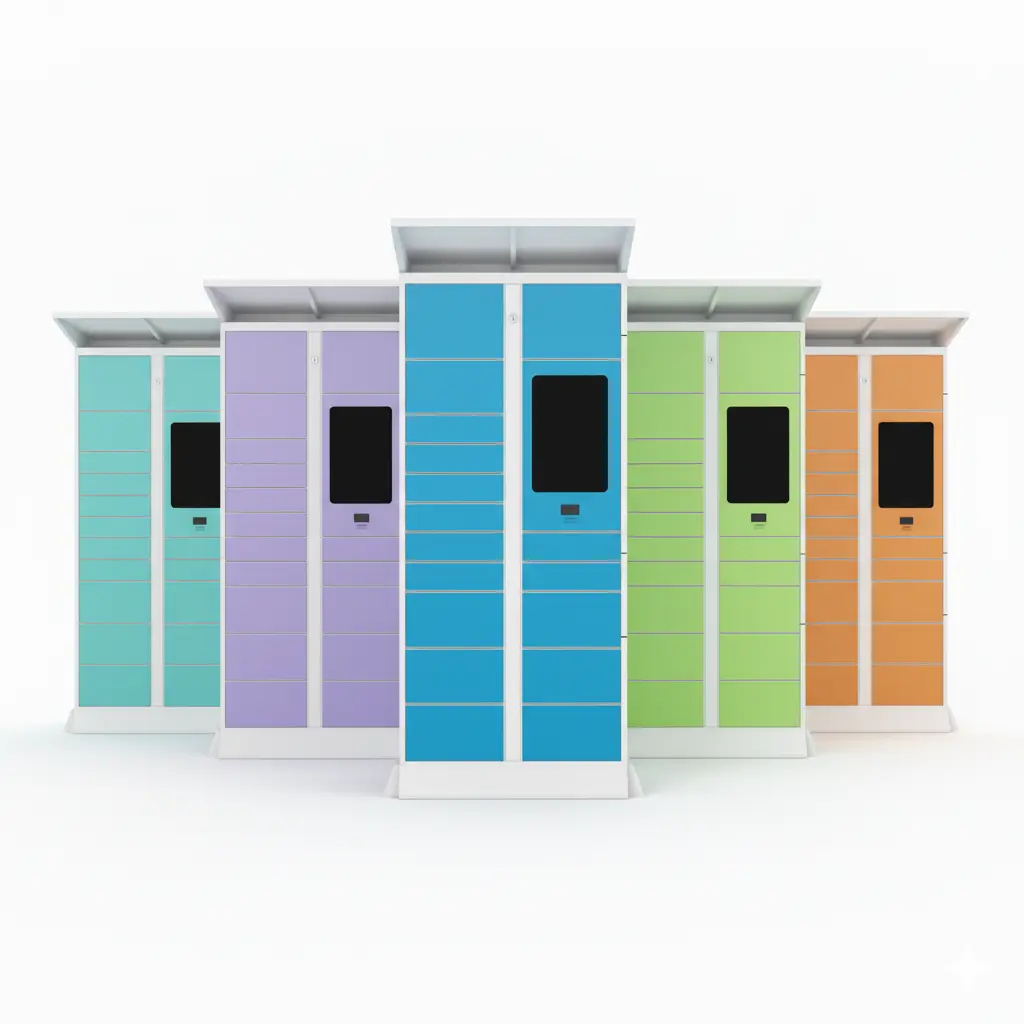
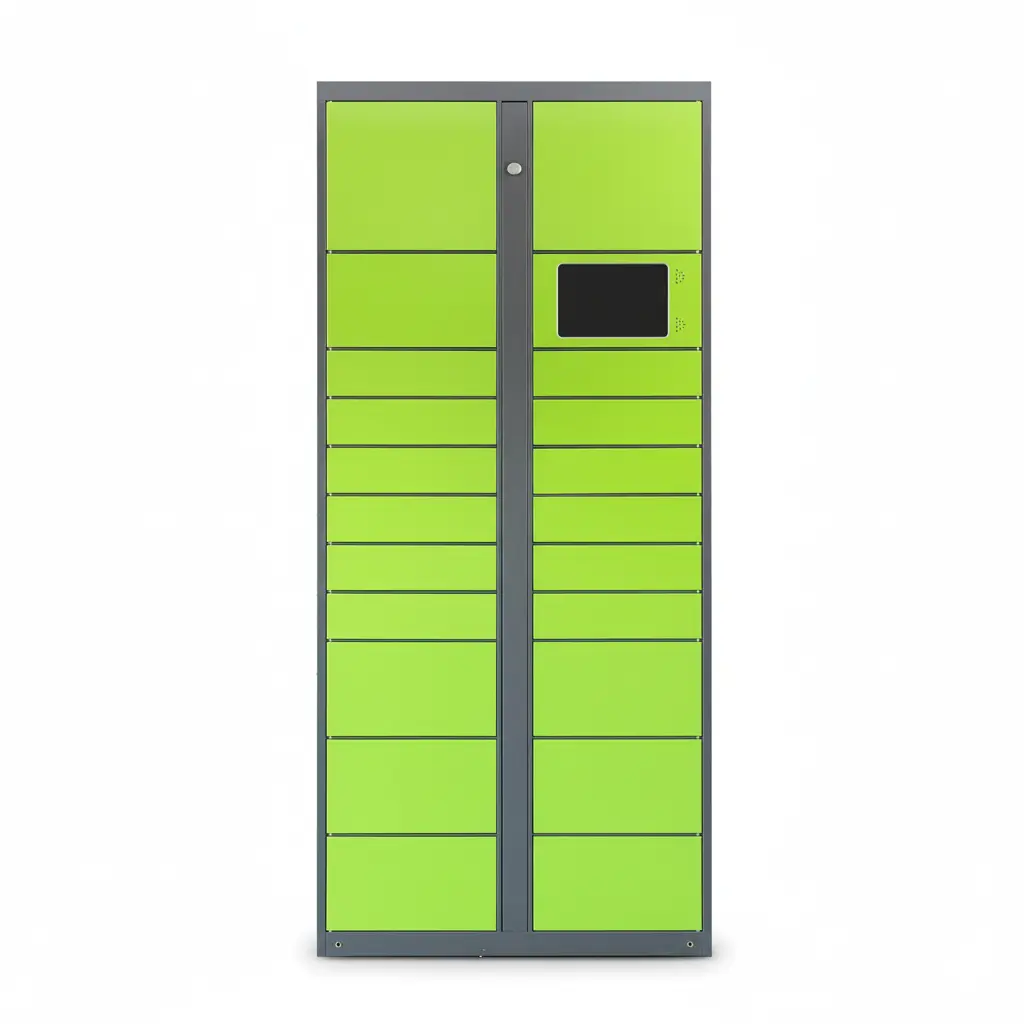
No office reception desk has "run the mailroom" in its job description, yet that is what most of them do all day. Reception signs for the whole building, sorts boxes by company, hunts for the right parcel when someone comes down, chases people who never collect, and takes the blame when something goes missing. As e-commerce and direct procurement of office supplies push parcel volume up, the rest of the reception job gets cut into fragments.
Linqu is a smart locker manufacturer based in Zhengzhou, China, founded in 2018. We build multi-carrier parcel lockers for office buildings with cloud management, and this page is about one thing: replacing the manual handover at reception with a self-service loop, and sizing the cabinet from your own building's numbers rather than a vendor's guess.
Solution overview
- Cabinet — lobby, loading dock, or existing mailroom; length, compartment count, colour and finish configured to the site.
- Software — cloud dashboard, arrival notifications, expiry reminders, occupancy view across sites.
- Access — QR code or one-time pickup PIN as standard; RFID card, fingerprint or facial recognition available where the building wants access-control-grade pickup.
- Courier side — multiple carriers share one cabinet bank, each with independent accounts and separate drop-off records.
- Deployment and support — standard mains power plus Wi-Fi or 4G, open API, drawings and a quote within 24 hours.
Key Takeaways
- The buying problem in an office building is not "do we want lockers" — it is how many compartments, in what mix, and who does what when something goes wrong.
- Reception moves from handling every parcel to handling only exceptions; the dashboard shows occupancy, overdue items, and flagged parcels.
- Couriers drop off without finding a person, which removes the failed-delivery and re-delivery loop that today gets pushed back onto the building.
- Size the cabinet from peak daily volume, average dwell time, and turns per compartment — not from headcount alone. A 200-person office with slow collection needs more compartments than a 400-person office where everyone collects the same evening.
- Multi-carrier drop-off works out of the box; connecting locker events to a carrier's own tracking system requires the open API, not a pre-built connector.
- Exception rules — uncollected, oversized, wrong recipient, returns, full bank — should be written down before the cabinet is ordered, not after.
- Three siting options change the project: lobby, loading dock, or converting the existing mailroom into a self-service room.
Where an Office Mailroom Actually Breaks
It rarely breaks because of the cabinet. It breaks at five specific points in the manual workflow.
- Accountability is vague. Reception signs on behalf of everyone. When a parcel goes missing there is no retrievable record of who handed what to whom, so the dispute is settled from memory.
- Reception's day is fragmented. Every drop-off and every collection interrupts whatever else is happening at the desk. Over lunch and after hours the service stops entirely.
- Parcels take floor space. Boxes stacked in a corner of the lobby occupy room and undercut the impression the lobby is supposed to make.
- Nobody owns the leftovers. Parcels for staff who left, parcels addressed wrongly, parcels for visitors — they sit for weeks because clearing them is nobody's job.
- Couriers wait. Several carriers arrive at different times. If reception is away the courier waits or reschedules, and the cost of that second attempt lands back on the building as a later delivery.

The Three Journeys: Courier, Reception, and Employee
A locker project only works if all three journeys are designed, not just the employee's. This is the part most office locker specifications leave out.
The courier. Arrives at the building, scans the waybill or enters the tracking number on the cabinet screen, and the system allocates a compartment by parcel size. Drop the parcel in, close the door, delivery complete — no signature hunt, no waiting for reception. Several carriers share the same bank, each with independent credentials, and neither can see the other's drop-offs. The carrier-agnostic multi-carrier cabinet is the configuration behind this.
The employee. Gets an arrival notification with a pickup code — SMS is the standard channel, and WhatsApp notification can be built as project-level custom development if the market needs it. Opens the compartment with the code at any hour, and the system logs the collection. Visitors and one-off parcels use the same code flow, so nobody has to install an app. Where the building wants pickup tied to identity rather than a code, fingerprint and facial recognition access can be specified instead.
Reception and facilities. Steps back from handling every parcel to handling only exceptions. The dashboard shows occupancy, overdue parcels, and anything flagged. Everything else happens without them.
How Many Compartments Does a 200-Person Office Need?
Headcount alone does not answer this. A 200-person office where parcels sit for two days needs more compartments than a 400-person office where everyone collects the same evening. The variable that decides cabinet size is not how many people work in the building — it is how fast a compartment frees up.
Work it out from four numbers your own building already has:
- Average daily parcels. Reception's logbook or the facilities record already contains this.
- Peak daily parcels. Use your own highest day from the last three months — sale periods and end-of-quarter procurement spike hard. Do not use an industry average.
- Average dwell time. How long a parcel waits before it is collected. This is what decides whether one compartment serves one parcel a day or two.
- Turns per compartment per day. Derived from dwell time; a bank where most parcels leave the same evening turns faster than one where they sit overnight.
Then:
Compartments needed ≈ peak daily parcels × average dwell (days) ÷ turns per compartment per day
Fill this in with your own figures before asking anyone for a quote:
| Input | Where to get it | Your figure |
|---|---|---|
| Headcount on site | HR or building register | |
| Average daily parcels | Reception logbook | |
| Peak daily parcels (last 3 months) | Reception logbook | |
| Average dwell time (days) | Observed, or estimated from collection habits | |
| Turns per compartment per day | 1 if parcels sit overnight, up to 2 if same-day collection is normal | |
| Compartments needed | peak × dwell ÷ turns |
Size mix is a separate question and depends on what your parcels actually look like — mostly envelopes and small boxes in some buildings, mostly bulky supply orders in others. Base it on your own parcel profile over the last three months. Our parcel locker capacity planning solution covers the general compartment-mix method, and the compartment size guide goes into dimensions.

Which Package Tracking and Courier Integrations Matter?
Two things are commonly confused here, and the distinction decides your integration budget.
Multi-carrier drop-off works without any integration. Several carriers using one cabinet bank, each with their own account and their own separate drop-off records, is a configuration — not a development project.
Connecting locker events to another system is where integration work starts. The cabinet records two events: parcel arrived in compartment, parcel collected. A carrier's own waybill history lives in the carrier's system. Joining those two views together requires an API.
To be direct about what we do and do not offer: we do not provide a pre-built connector for any specific carrier system, office OA platform, or mailroom management software. We provide an open API, so arrival and collection events can be pushed into a system you already run. If integration matters to your project, request the API documentation during vendor selection and have the effort assessed before you commit — not after the cabinets ship.
Exception Handling: Uncollected, Oversized, Wrong Recipient, Returns
Write these rules before you order. Every office locker deployment that becomes a headache became one at an exception nobody had defined.
| Exception | How it is handled |
|---|---|
| Uncollected past the deadline | Automatic reminder at expiry, a second reminder, then the parcel is flagged for clearing; an administrator opens the compartment remotely and removes it. |
| Oversized or odd-shaped | Anything beyond the largest compartment goes to a manual holding spot. Keep a small staging area beside the bank — a cabinet does not need to cover 100% of parcels to be worth installing. |
| Wrong recipient or the person has left | Reassign or return from the dashboard, with the action logged. |
| Outbound returns | The reverse flow: employee deposits, courier collects. |
| Bank is full | Occupancy alerts in the dashboard, plus a written fallback rule — where overflow parcels go and who gets told. Decide this before go-live. |
Multi-Tenant Buildings: What Changes
In a building with several tenant companies, the workflow itself barely changes — the allocation and notification layer does.
- Compartments are zoned by tenant, or permissions are separated by tenant, depending on how the building is managed.
- Arrival notifications follow each tenant's own directory rather than one building-wide list.
- Reception's exception queue is per tenant, so overdue parcels are chased by the right party.
Tenant-level billing and per-tenant reporting are a separate topic with their own requirements, and they are covered in our office and workplace smart locker solution alongside building-access and workplace-tool integration.

Where to Put It: Lobby, Loading Dock, or Mailroom
| Location | Suits | What to watch |
|---|---|---|
| Lobby | Buildings where the shortest employee walk matters most | Takes roughly one wall section. The cabinet has to fit the interior — length, colour and finish are configurable for exactly this reason. |
| Loading dock or service corridor | Buildings that would rather couriers never enter the lobby | A semi-outdoor position needs weather protection; the employee walk gets longer, which pushes dwell time up and therefore compartment count up too. |
| The existing mailroom | Buildings that already have a dedicated room | The lightest conversion of the three: the room stays, the staffing goes. Access control on the room itself still applies. |
Where the cabinet sits outside or in an exposed service area, an outdoor weatherproof parcel locker is the right specification rather than an indoor cabinet placed outdoors. For lobbies with a strong design language, cabinet appearance can follow the building — see the OEM custom parcel locker with touchscreen.
Power and connectivity are straightforward in all three cases: standard mains supply plus Wi-Fi or 4G, so the building network does not have to be rebuilt. Our installation guide covering power and network requirements has the detail your facilities team will ask for.
About Linqu
Linqu (linqubox.com) is a smart locker manufacturer based in Zhengzhou, China, founded in 2018, supplying B2B buyers worldwide. For office buildings we produce multi-carrier parcel lockers with cloud management, configurable cabinet dimensions and finishes, code, card and biometric access options, and an open API for connecting locker events to systems you already run. OEM and ODM customization is available, and we support single-building pilots before a portfolio rollout.
Tell us three things — headcount on site, average and peak daily parcel volume, and which position you are considering (lobby, loading dock, or mailroom) — and we will reply within 24 hours with a compartment configuration proposal, cabinet customization options, and a quote. Email service@linqubox.com, message us on WhatsApp, or use the contact page. Drawings and API documentation are available on request.