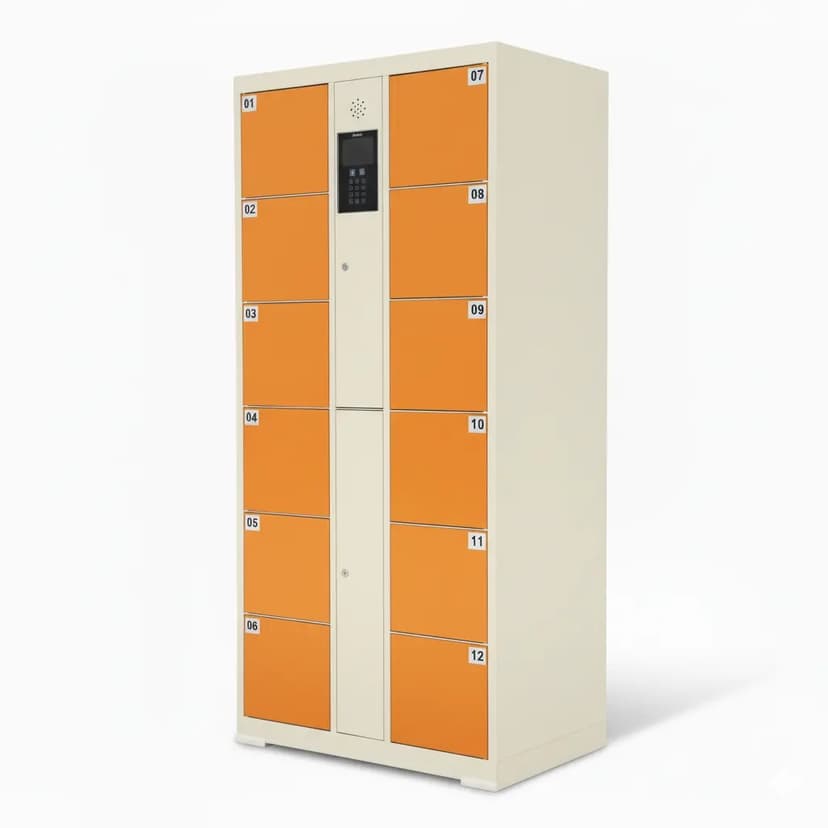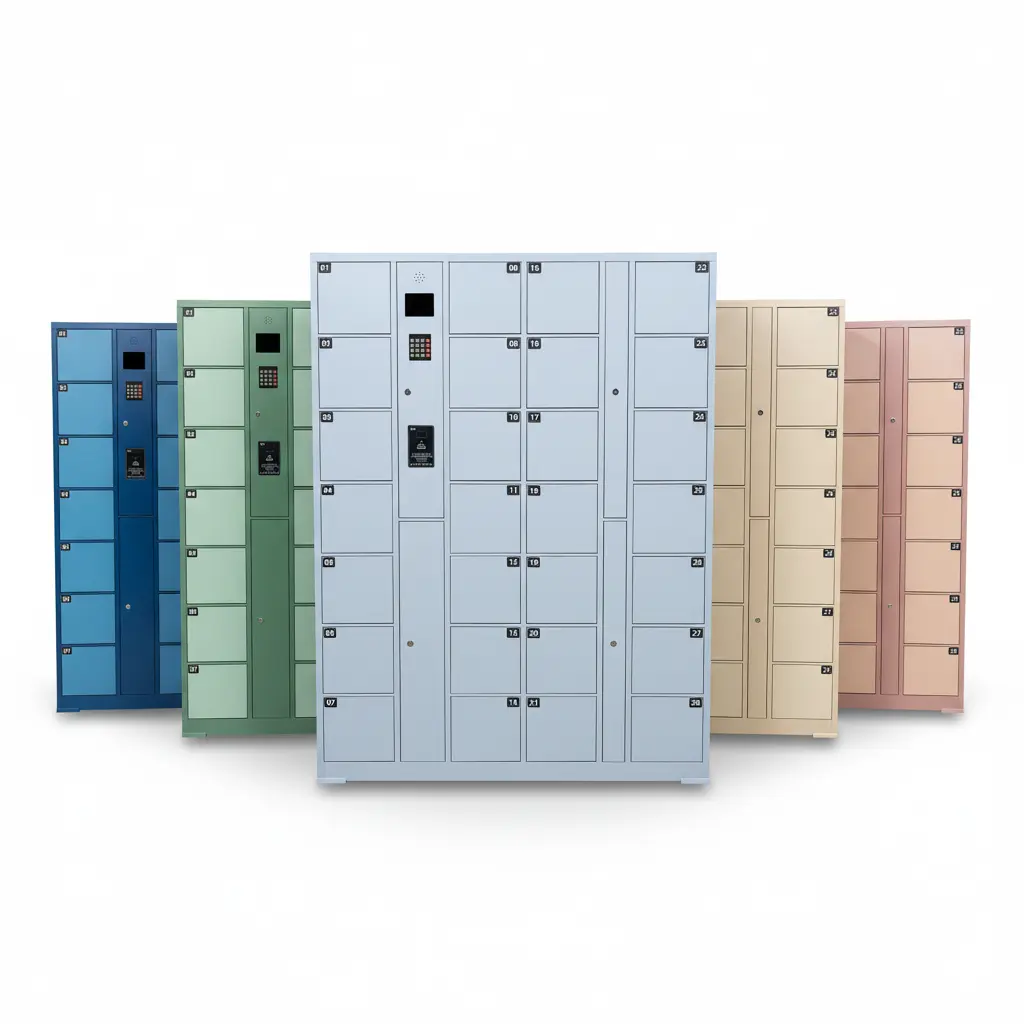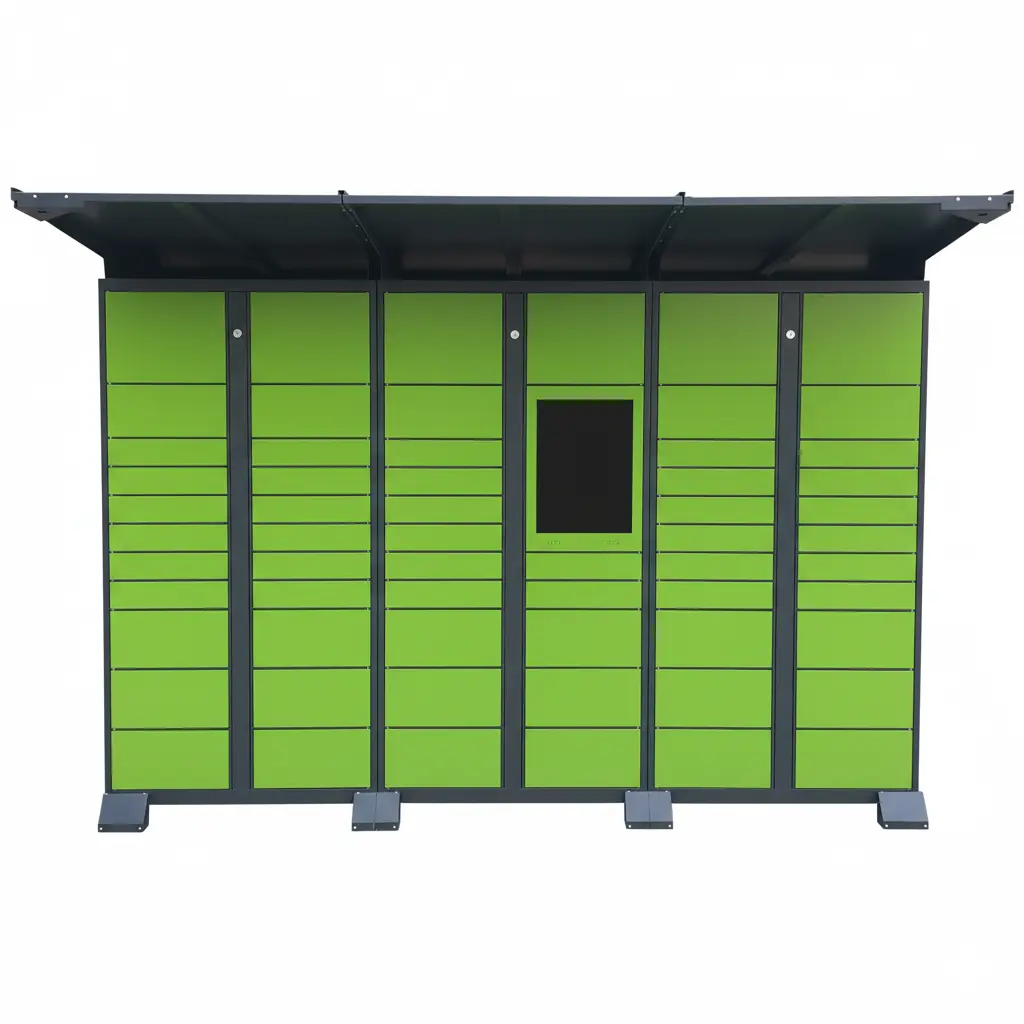
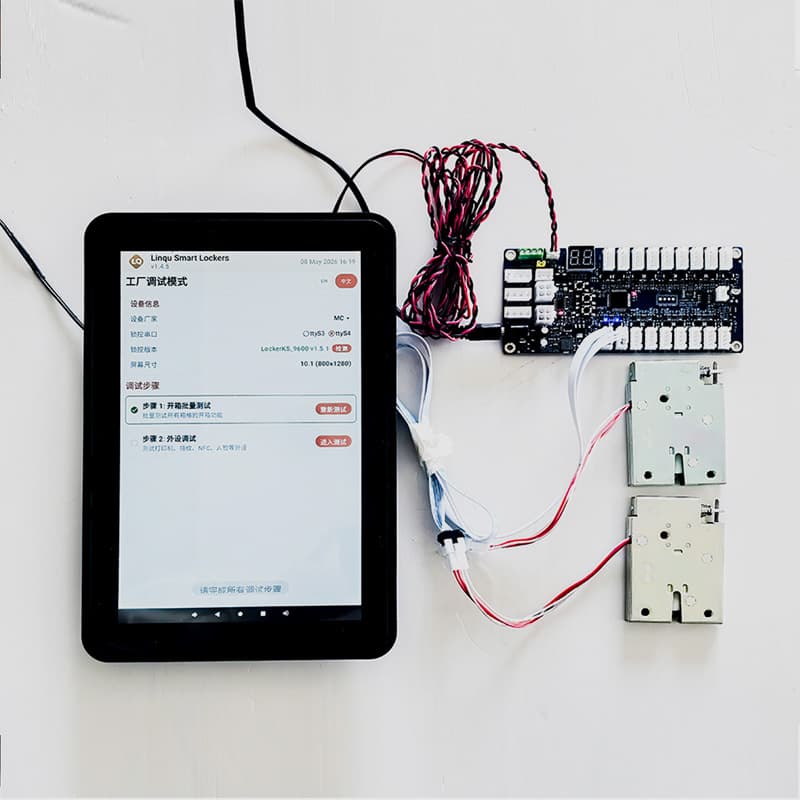
There is a class of buyer who does not need a locker. They already have the cabinet, or they already run their own software platform. What they are missing is the control layer — the board that drives the locks, the terminal the user touches, and the lock itself.
Sourcing that layer is harder than it looks, because component datasheets all read alike. The parameters that actually decide whether a deployment is stable in year three are usually not the ones on page one of the specification. Linqu is a smart locker manufacturer based in Zhengzhou, China, with a 20,000 sqm factory in Luoyang, and we supply these components as OEM parts as well as building finished cabinets. This guide sets out what to check on each of the three component types, and what to ask a supplier before you order. It does not compare brands.
Who Buys Control Components Instead of a Finished Locker
Three buyer profiles dominate this line:
- Cabinet manufacturers and metal fabricators who can build the steel but do not want to develop electronics and firmware.
- Software companies and system integrators who already run a locker platform and need hardware that will accept their commands rather than impose its own.
- Operators retrofitting an existing estate of mechanical or keyed lockers, where the cabinets are sound and only the access layer is being replaced.
All three are making a component decision, not a product decision. That changes what matters: compatibility, protection circuits, documented protocols and cycle life outrank finish and appearance.
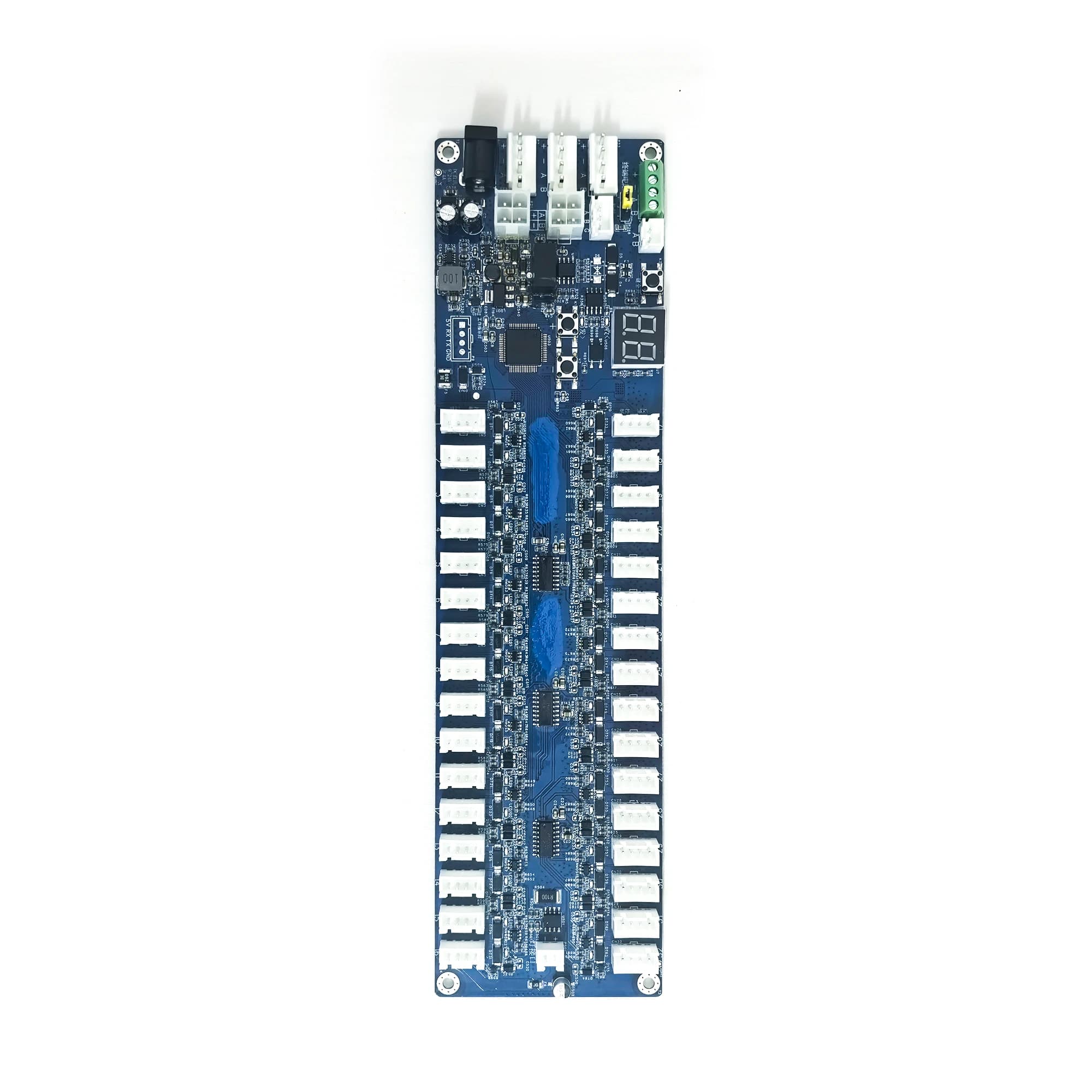
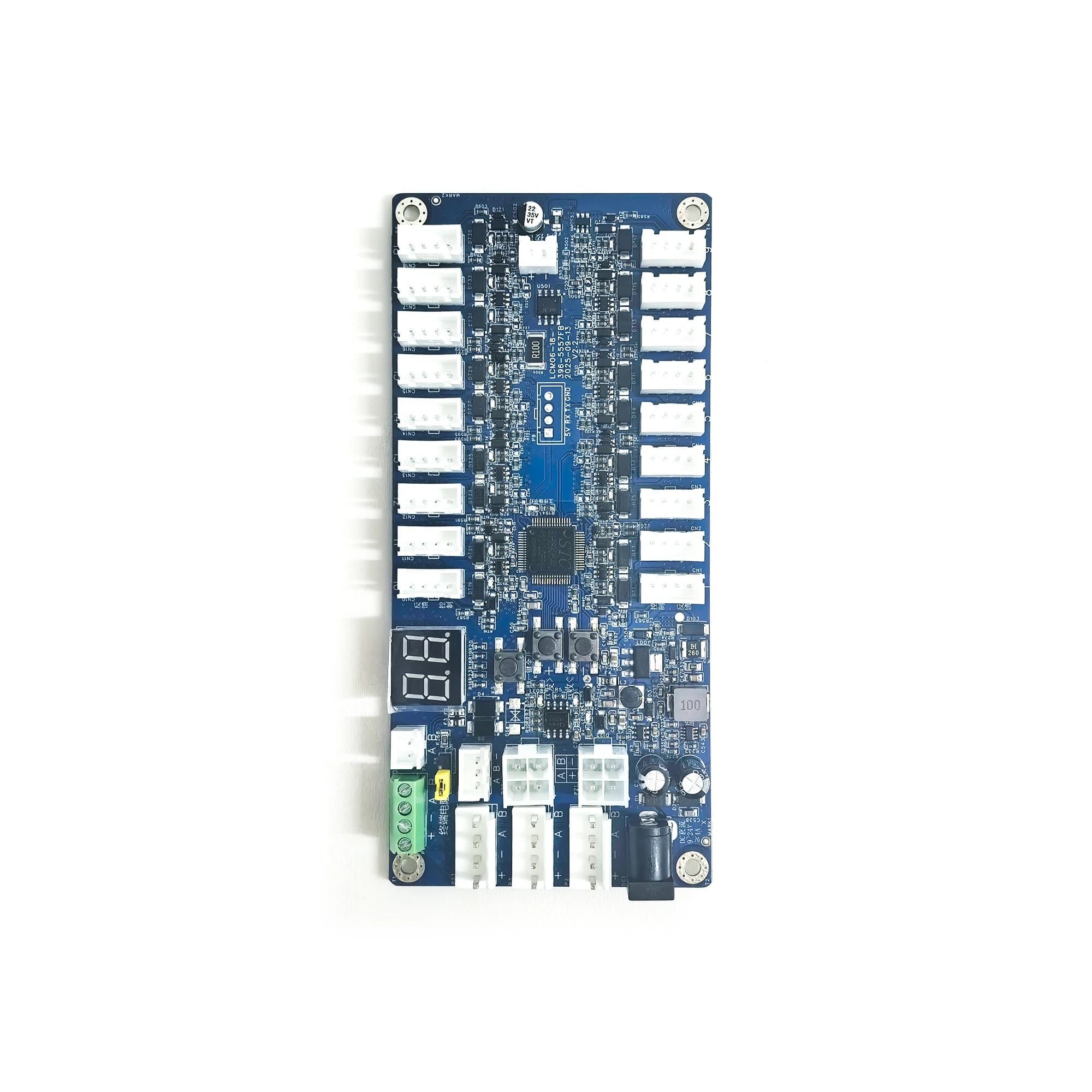
Lock Control Boards: Channel Count First, Protection Circuits Second
Sizing the channel count
Boards are commonly supplied in 18-channel and 32-channel versions. Match the channel count to the door count of the cabinet; where cabinets are cascaded into a bank, size against the total door count of the bank rather than per cabinet.
Electrical parameters
| Parameter | Value |
|---|---|
| Operating voltage | 9–24V |
| Lock voltage | 9–18V |
| Unlocking current | Under 3A |
| Operating temperature | −40°C to 85°C |
Operating temperature is the parameter most often skipped. Outdoor and semi-outdoor points, and unheated warehousing through winter, will sit outside a narrow temperature band for months at a time. A board specified too tightly produces intermittent failures to open — and that class of fault does not reproduce on a bench in a heated lab, which is exactly why it survives acceptance testing and appears in the field.
Protection circuits are where field reliability comes from
This is the group to confirm line by line, because a large share of field faults are wiring faults rather than component failures. What these layers determine is whether a miswire produces an error message or a replacement board:
- Reverse polarity protection — reversed wiring does not destroy the board.
- RS485 miswiring protection — a communication line connected to the wrong terminal does not damage the board.
- Lock short-circuit protection — one shorted lock does not take the whole board down with it.
- Lightning and surge protection — mandatory for outdoor points.
- Electrostatic discharge protection.
- Water and dust ingress protection.
Interfaces
Look for an RS485 communication interface, lock interfaces, relay control and IO control. The last two decide whether you can extend the cabinet later with light strips, sensors or door contacts — a cheap thing to have and an expensive thing to add.

Industrial Android Touchscreens: Standard versus Wide-Temperature Is an Environment Decision
Sizes and supply
Terminals are available at 7", 10" and 21.5", powered from DC 12V / 5A or 24V / 3A.
The two lines are a genuine trade-off
| Item | Standard | Wide-temperature |
|---|---|---|
| Operating temperature | −10°C to 50°C | −20°C to 70°C |
| CPU | RK3568 quad-core | RK3288 quad-core |
| Memory / storage | 2GB / 32GB eMMC | 2GB / 16GB eMMC |
| Operating system | Android 11 | Android 7.1 |
| Brightness | 400 cd/m² | 450 cd/m² (10"), 700 cd/m² (21.5") |
Neither line is simply better. The standard unit has the newer operating system and more storage; the wide-temperature unit has the broader thermal envelope and the higher brightness needed to stay readable in direct sun. Choose on placement, not on budget: indoor points take the standard unit; outdoor, semi-outdoor, high-glare or cold points take the wide-temperature unit. Buyers who choose on price alone tend to discover the constraint in the first summer.
Connectivity and expansion
- Networking: WiFi, wired Ethernet, or an optional 4G LTE module.
- Industrial interfaces: RS232, RS485 and CAN.
- USB 2.0 and 3.0.
- Selected models support WiFi 6 and Bluetooth 5.4.
- Flush mounting into a metal cabinet body is supported, for indoor and semi-outdoor use.
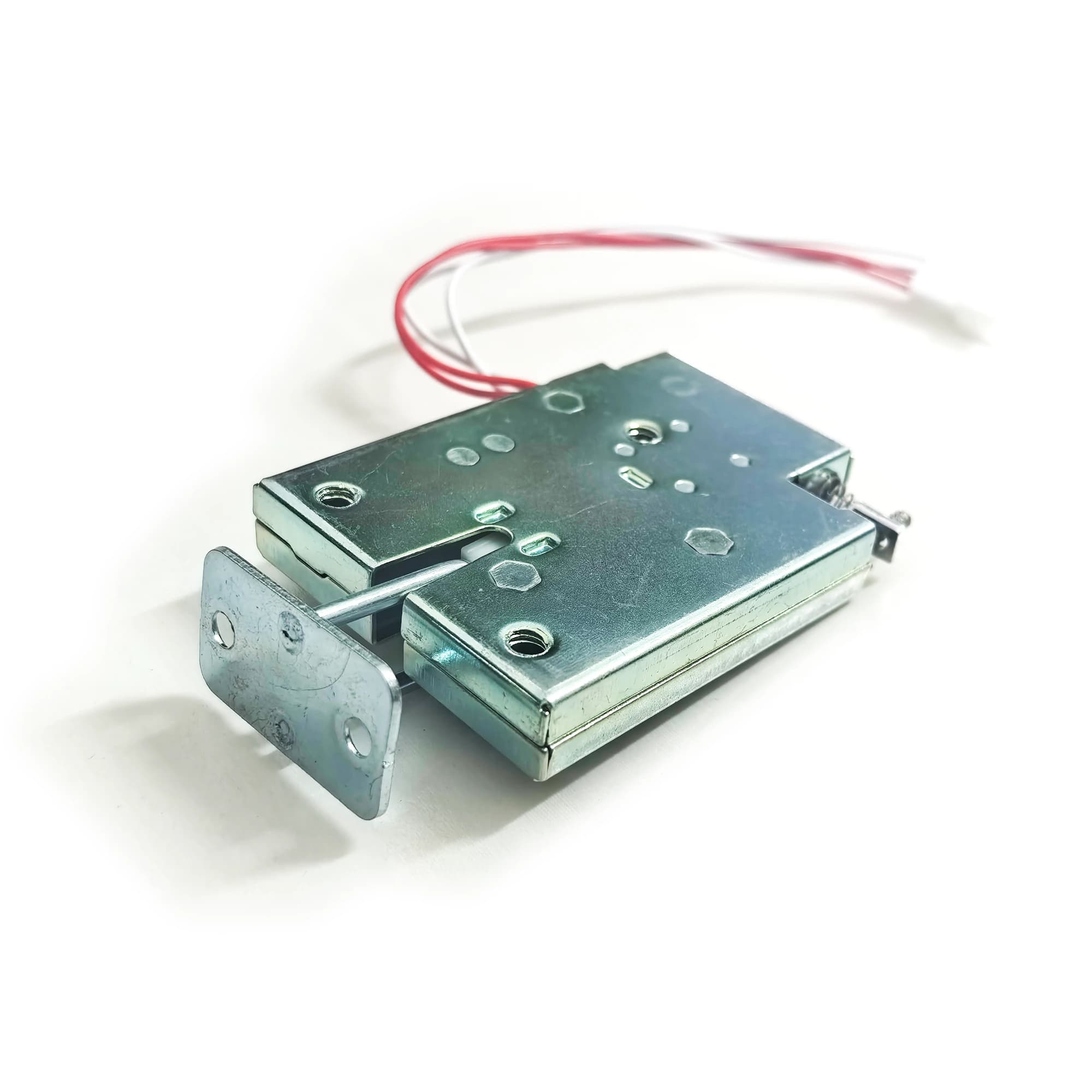
Electromagnetic Locks: Cycle Rating, Spring Force and the Manual Override
Electrical and mechanical parameters
| Parameter | Value |
|---|---|
| Type | Industrial-grade electrically controlled lock |
| Electrical | 12V / 2A or 24V / 1A |
| Control method | Energise to open, plus manual emergency release lever |
| Opening spring force | 2.0–4.5 Kgf |
| Rated cycle life | 50,000 cycles, with a 100,000-cycle option |
Derive the cycle rating from site frequency, not from price. A high-frequency point — a parcel locker on a busy route, a gym changing locker — specified at 50,000 cycles will reach a concentrated replacement window within a few years, and replacing locks across a whole estate at once is far more expensive than specifying up front. The arithmetic is simple: expected service years = rated cycles ÷ (daily openings × 365). At 40 openings a day, a 50,000-cycle lock reaches its rating in about three and a half years; a 100,000-cycle lock reaches it in about seven.
A manual emergency release is not optional. If power is lost or a board fails and there is no mechanical way to open a door, the contents are stranded. Of all the failure modes in locker operations, this is the one operators refuse to accept.
Housing and durability
- Lock body: fully enclosed 0.8mm SPCC cold-rolled steel, with 0.005mm blue zinc plating.
- Internal plastics: PC with 30% glass fibre, flame retardant.
- Resistant to water, oil and organic solvents, for installation inside the cabinet body.

Reading a Component Specification Sheet
Datasheets are written to be flattering. Four habits make them useful:
- Read the temperature range before the headline features. It is the parameter that silently disqualifies a component for your site.
- Treat a missing protection list as an answer. Suppliers who have the circuits list them; suppliers who do not, describe quality instead.
- Convert cycle ratings into years using your own volume before comparing prices, so you are comparing service life rather than unit cost.
- Ask for the protocol document before the sample, not after. If the command set is not documented, integration effort is unknowable and every later change is a support ticket.
Nine Questions to Send a Component Supplier
- What is the operating temperature range of the lock control board, and does it cover our site conditions?
- Are all six protection layers present — reverse polarity, RS485 miswiring, lock short circuit, lightning surge, ESD, and water and dust ingress?
- Is the screen a standard or wide-temperature unit? What is its brightness, and will it stay readable in direct sun at our points?
- What is the rated opening cycle count of the electromagnetic lock, and is a 100,000-cycle version available?
- Is there a manual emergency release?
- Can the channel count be configured to our door count, and how are cascaded cabinets wired?
- Is a communication protocol document provided, and can the components be driven by our existing software?
- What is the minimum order quantity, and what is the sampling policy?
- Does certification cover our market — CE, EU authorised representative, and EPR for Germany?

When to Buy the Set Instead of the Parts
Sourcing a board from one supplier, a screen from another and locks from a third is workable, but it moves three risks onto the buyer: electrical compatibility, commissioning time, and after-sales responsibility when a fault sits between two vendors. Buying a matched set removes the last one, which is usually the expensive one.
Our component pages carry the full specifications: the 18-channel RS485 lock control board for standard cabinets, the Android touchscreen terminal in 7", 10" and 21.5", and the 12V electromagnetic lock rated for high-frequency use. If you want the whole control layer supplied and commissioned together, see our smart locker hardware package and API solution; if the decision point is how the components join your existing platform, the parcel locker API integration guide covers what to ask before ordering.
Key Takeaways
- Match lock control board channel count to door count, and size against the whole bank where cabinets are cascaded.
- Operating temperature (−40°C to 85°C on the boards) is the most commonly overlooked parameter and the hardest fault class to reproduce in testing.
- Six protection circuits — reverse polarity, RS485 miswiring, lock short circuit, surge, ESD, and ingress — decide whether a wiring mistake is an error or a replacement.
- Standard and wide-temperature touchscreens are an environment choice: newer OS and more storage versus a wider thermal range and higher brightness.
- Convert lock cycle ratings into years at your own daily volume before comparing prices; a 100,000-cycle option exists for high-frequency points.
- A manual emergency release is mandatory — without it, a power or board failure strands the contents.
- Ask for the protocol document before the sample; undocumented command sets make integration effort unknowable.
About Linqu
Linqu is a smart locker manufacturer based in Zhengzhou, China, producing both finished lockers and OEM control components from a 20,000 sqm factory in Luoyang since 2018. Components are supplied as a matched set — touchscreen, lock control board and locks — with an open REST API and SDK, so compatibility and after-sales responsibility sit with one supplier. MOQ is 1 unit and components can be sampled first.
Send us your door count, site environment and existing software stack, and we will come back within 24 hours with a component specification and quote. Email service@linqubox.com — protocol documents, wiring diagrams and samples are all available at enquiry stage.