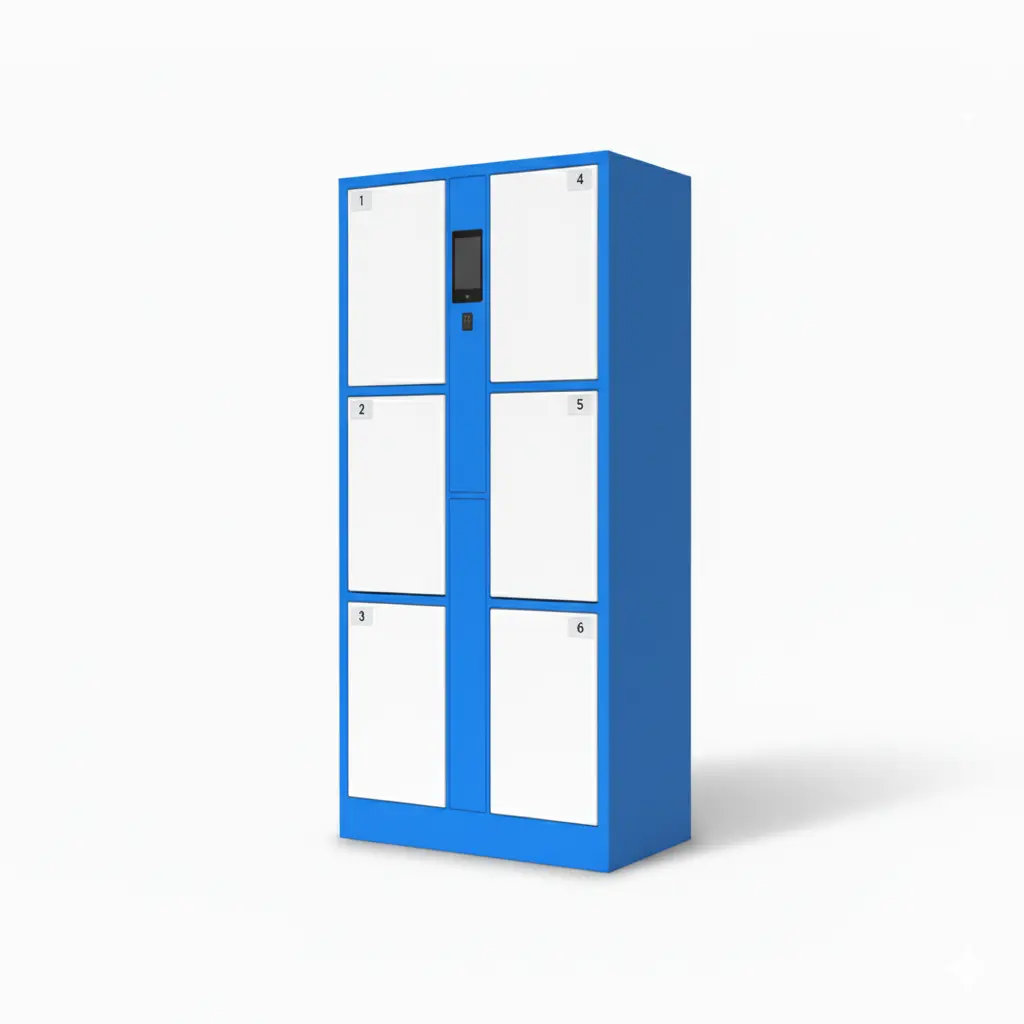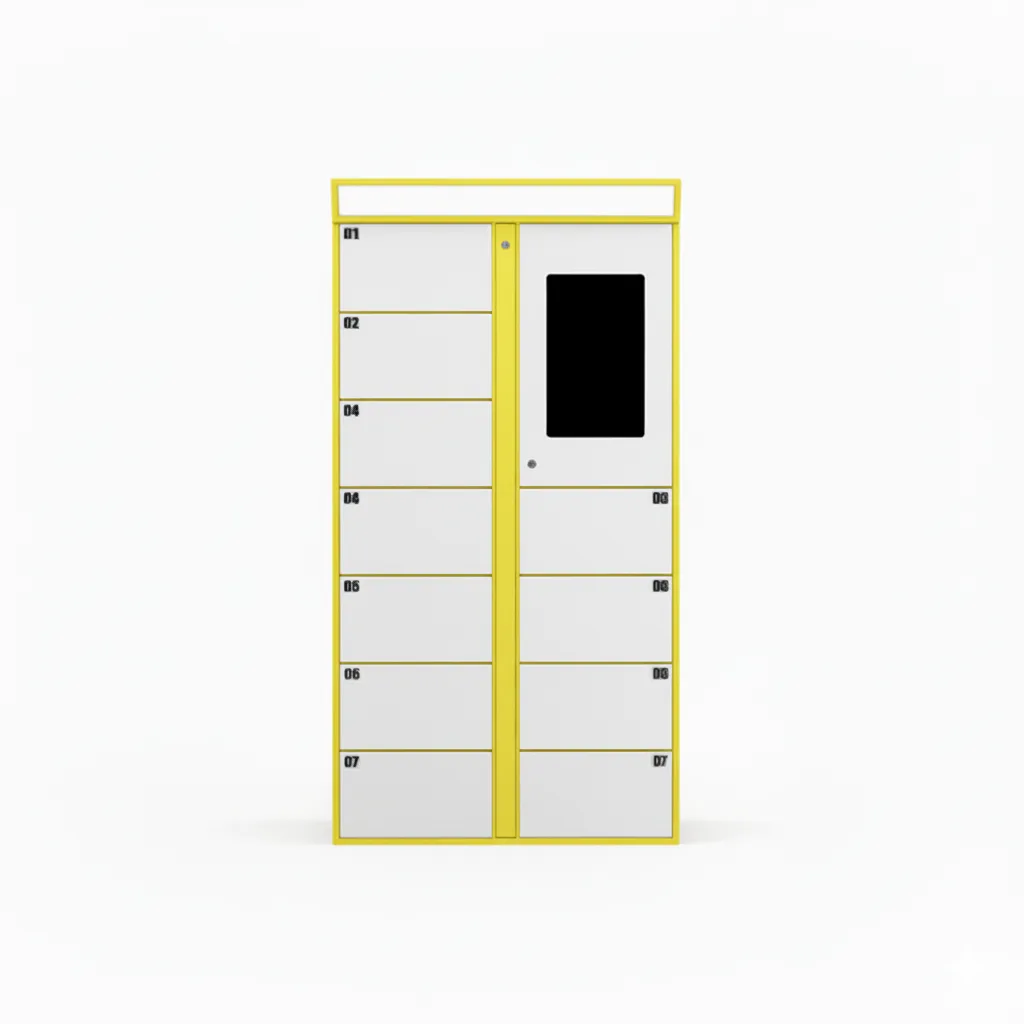
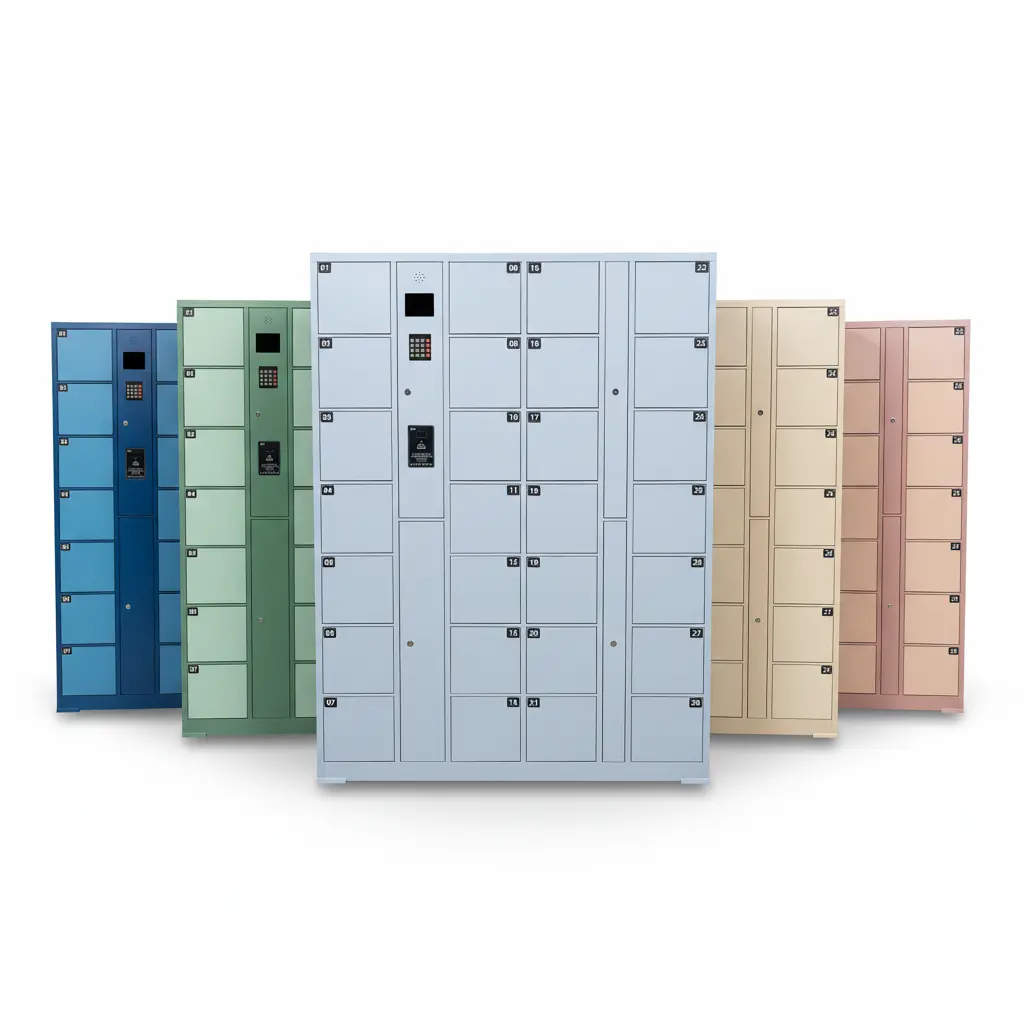
Linqu Smart Lockers is a smart locker manufacturer based in Zhengzhou, China, designing pickup locker systems for retailers, dry cleaners, pharmacies, print shops, campus services and OEM customers worldwide. Short answer: an SMS pickup code locker is a self-service pickup locker that lets staff place a purchased order into a secure compartment, enter the customer's phone number, and automatically send a one-time pickup code by SMS. The customer can then visit the locker after business hours, enter the code on the touchscreen, and collect the item without waiting for staff.
This workflow is becoming important for retailers, dry cleaners, repair shops, pharmacies, print shops, campus services, and local service businesses that need a simple way to hand over completed orders when the counter is busy or closed. It is not the same as a courier parcel locker, and it is not the same as a vending machine. The key use case is controlled order handover: the business already knows who the item belongs to, staff load the item into the locker, and the customer receives a secure pickup credential.
What Is an SMS Pickup Code Locker?
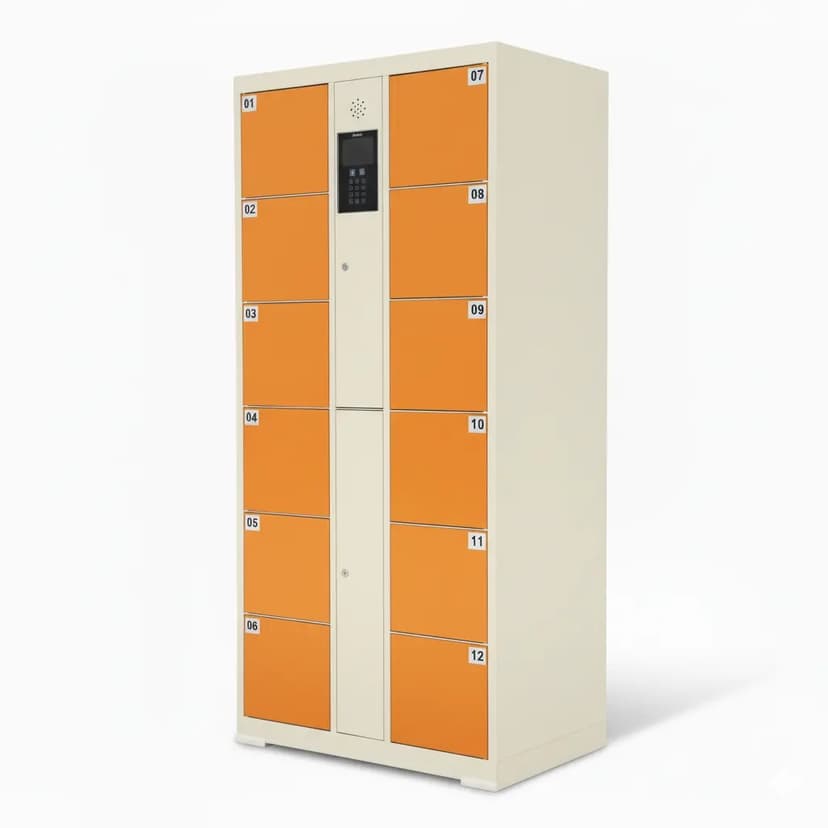
An SMS pickup code locker is a smart locker system designed for self-service order pickup. It includes a cabinet with electronic locks, a touchscreen or control terminal, locker management software, and a notification workflow that sends a pickup code to the customer by SMS. Depending on the project, the locker can also support QR codes, email, WhatsApp, app notifications, barcode scanning, or API integration with an online store, POS, OMS, ERP, or service management system.
For many businesses, SMS remains the simplest access method because the customer does not need to download an app. Staff only need the customer's phone number, and the system generates a one-time PIN code for the exact compartment that contains that customer's order.
How the Pickup Workflow Works
The standard workflow is straightforward and works well for stores that want to extend pickup hours without adding counter staff.

The customer places an order. The order may come from an online store, phone order, in-store purchase, service appointment, dry cleaning ticket, shoe cleaning order, print job, pharmacy order, or internal company request.
Staff prepare the item. The business packs the purchased item, finished service item, document, sample, part, or garment and marks it ready for pickup.
Staff load the locker. A staff member opens an available compartment from the locker screen or management dashboard, places the item inside, and closes the door.
Staff enter the customer's phone number. The system links that phone number to the selected compartment and generates a pickup code.
The system sends an SMS pickup code. The customer receives a text message with the pickup code, locker location, and pickup instruction.
The customer collects the item. The customer arrives at a convenient time, enters the code on the touchscreen, and the correct door opens automatically.
The system records the pickup. The backend logs the compartment, code status, pickup time, door event, and operator record for traceability.
This is why the product is often called a self-service pickup locker, order pickup locker, customer pickup locker, or after-hours pickup locker. The locker is not just storage hardware. It is part of the order handover process.
Why Businesses Use Pickup Lockers Instead of Counter Pickup
Counter pickup is simple when order volume is low and customers arrive during normal business hours. The problem starts when customers arrive at the same time, staff are busy with new sales, or customers cannot arrive before closing. A self-service pickup locker solves this operational gap by separating order preparation from customer pickup time.
For the business, staff can batch-load completed orders before shift change or store closing. For the customer, pickup becomes available in the evening, on weekends, or during lunch breaks without calling the store. For the operator, every door opening and pickup event can be logged in the management system.
Common Use Cases for Self-Service Pickup Lockers

Retail and BOPIS
Retailers can use pickup lockers for BOPIS, click and collect, online order pickup, and store pickup. Instead of asking customers to queue at the service desk, staff load paid orders into assigned compartments and send the pickup code automatically. This is useful for electronics, cosmetics, accessories, spare parts, custom products, and small boxed orders.
Dry Cleaning, Laundry, and Shoe Care
Laundry shops, dry cleaners, shoe cleaning stores, and alteration services often finish orders before the customer is available. A pickup locker lets staff place cleaned garments, shoes, or service items into the locker and notify the customer by SMS. The customer can collect the finished order after work without depending on staff availability.
Print Shops and Custom Goods
Print shops, design studios, photo labs, and custom product stores can use pickup lockers for completed documents, samples, packages, prototypes, and made-to-order products. The workflow reduces repeated counter handovers and gives customers a secure pickup option outside peak service times.
Pharmacy and Healthcare Pickup
Pharmacies, clinics, and hospital outpatient services can use pickup lockers for eligible prepared orders where local compliance allows self-service handover. Depending on the project, the system can add ID verification, audit logs, refrigerated compartments, restricted access rules, and backend integration.
Office, Campus, and Internal Distribution
Companies, universities, and service teams can use pickup lockers to distribute documents, devices, uniforms, samples, repair parts, tools, and employee orders. This is especially useful when the sender and receiver work on different schedules.
Pickup Locker vs Parcel Locker vs Vending Locker
Many buyers use the word "locker" broadly, but the business logic is different. Understanding the distinction helps buyers choose the right software workflow.
Self-service pickup locker — used by store staff for known customer orders. Workflow: staff load an already purchased item, enter phone number, system sends pickup code. Best fit: retail pickup, laundry pickup, service order pickup, after-hours handover.
Parcel locker — used by couriers, property managers, residents and recipients. Workflow: courier deposits packages for recipients, often in multi-carrier delivery environments. Best fit: apartments, offices, campuses, logistics, community package delivery.
Vending locker — used by customers buying on site or remotely. Workflow: customer selects or pays for an item, locker opens for product retrieval. Best fit: retail vending, food vending, unattended sales, product dispensing.
The difference is not only the cabinet. It is the process. A pickup locker is built around known-order handover, while a parcel locker is built around delivery receiving, and a vending locker is built around product sale and dispensing.
Key Features Buyers Should Check
When comparing self-service pickup locker systems, buyers should look beyond the cabinet size and check whether the system supports the operational workflow they need.
SMS and Multi-Channel Notifications
The system should be able to send pickup codes by SMS and, when required, support email, WhatsApp, app push, or API-triggered notifications. A no-app pickup process is often important for public-facing retail and service businesses.
Touchscreen and Easy Customer Access
A pickup locker normally includes a touchscreen terminal where the customer can enter a PIN code or scan a QR code. Common screen options include 7-inch, 10-inch, and 21.5-inch terminals depending on the cabinet design and user interface requirements.
Cloud Management Dashboard
Operators need to see compartment status, order status, door logs, pickup history, timeout orders, and staff actions. For multi-store operators, remote management and multi-location monitoring are especially important.
Modular Cabinet Design
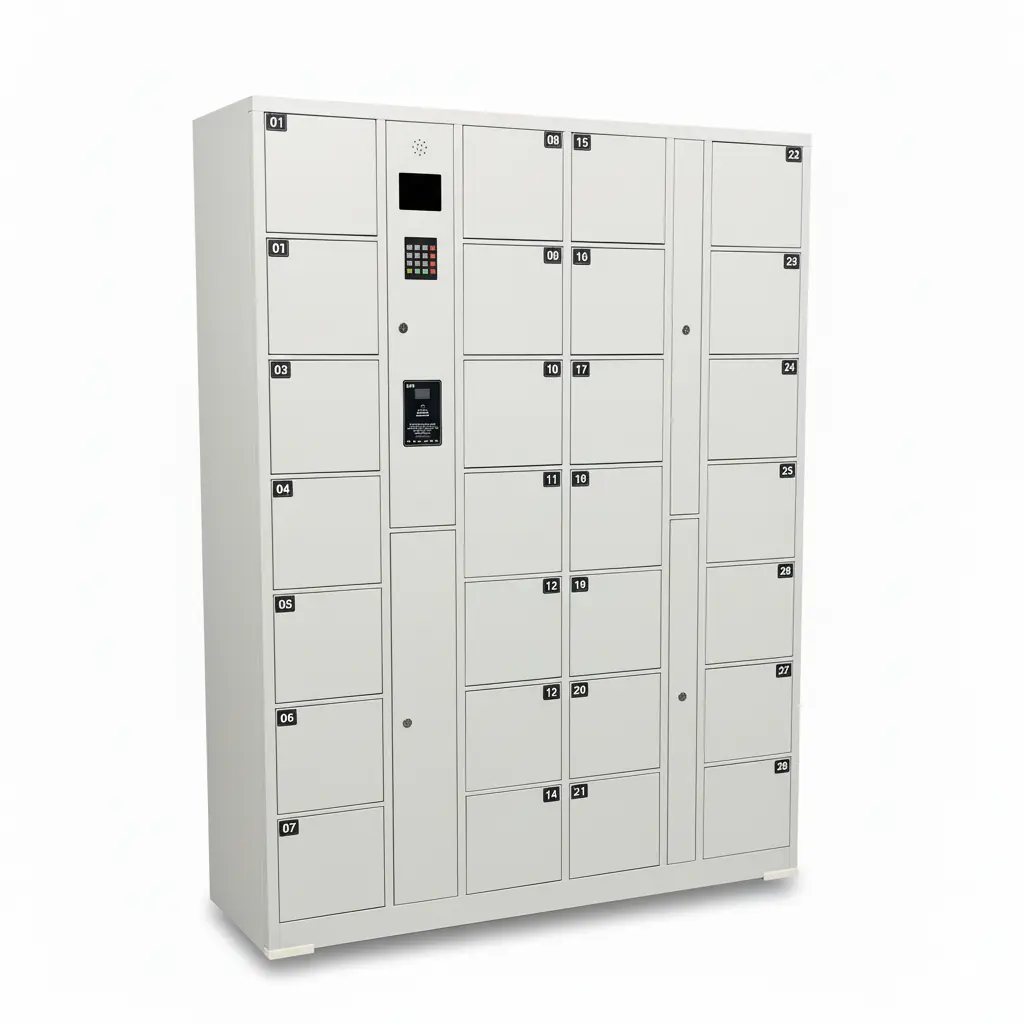
Different businesses need different compartment sizes. A modular master-and-slave cabinet structure allows the system to support small parcels, garments, boxes, documents, pharmacy bags, food orders, or mixed-size pickup needs.
Network Options
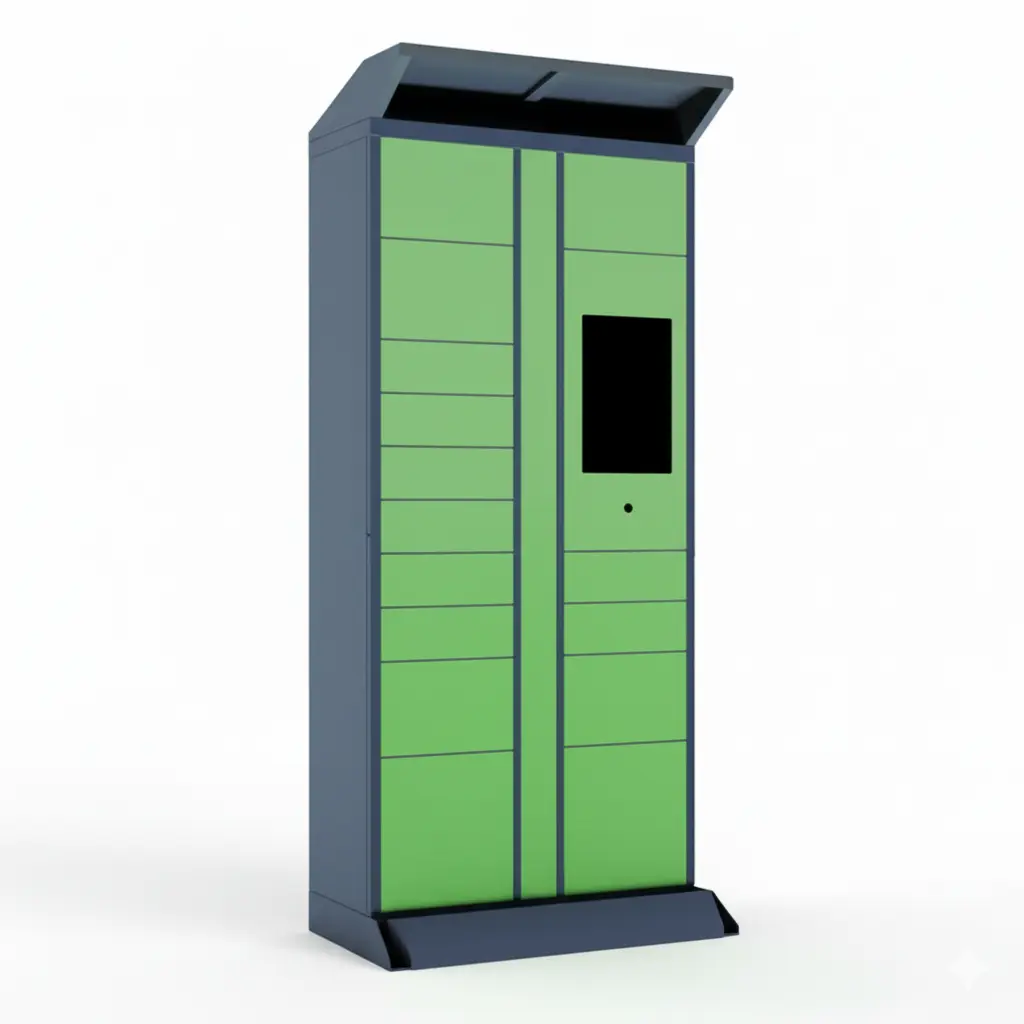
Pickup lockers can use WiFi, LAN, or 4G depending on installation conditions. For outdoor or semi-outdoor deployments, buyers should also check waterproofing, corrosion resistance, ventilation, power supply, and service access.
Integration Capability
For higher-volume operations, pickup lockers can integrate with ecommerce platforms, POS systems, OMS, ERP, membership systems, payment systems, or service ticket systems. Integration allows pickup codes to be generated from the order workflow instead of being manually entered every time.
What Happens If the Customer Does Not Pick Up the Order?
A well-designed pickup locker system supports timeout rules. The operator can set a pickup window, send reminder messages, flag overdue orders, free the compartment after staff retrieval, or apply different rules for food, laundry, pharmacy, retail, or repair items.
This matters because locker capacity is valuable. The system should help staff know which compartments are occupied, which orders are overdue, and which customers may need a reminder.
Why SMS Pickup Code Lockers Are Useful for After-Hours Service
The strongest use case for many service businesses is after-hours pickup. A customer may buy a product online, drop off shoes for cleaning, submit a print order, leave clothes for dry cleaning, or request a repaired item. Staff finish the work during normal hours and place the item in the locker before closing. The customer receives a pickup code and collects the item later without needing the store to stay open.
This model helps businesses extend service availability without keeping staff at the counter. It also gives customers more flexibility, especially in neighborhoods, campuses, office parks, apartment communities, and high-traffic retail locations where customer schedules are unpredictable.
How Linqu Supports Self-Service Pickup Locker Projects
Linqu provides self-service pickup locker systems for retail stores, service businesses, dry cleaners, pharmacies, campuses, offices, and OEM projects. A typical system includes electronic locks, lock control boards, Android touchscreens, cloud management software, the SMS pickup code workflow, modular cabinet design, and custom branding.
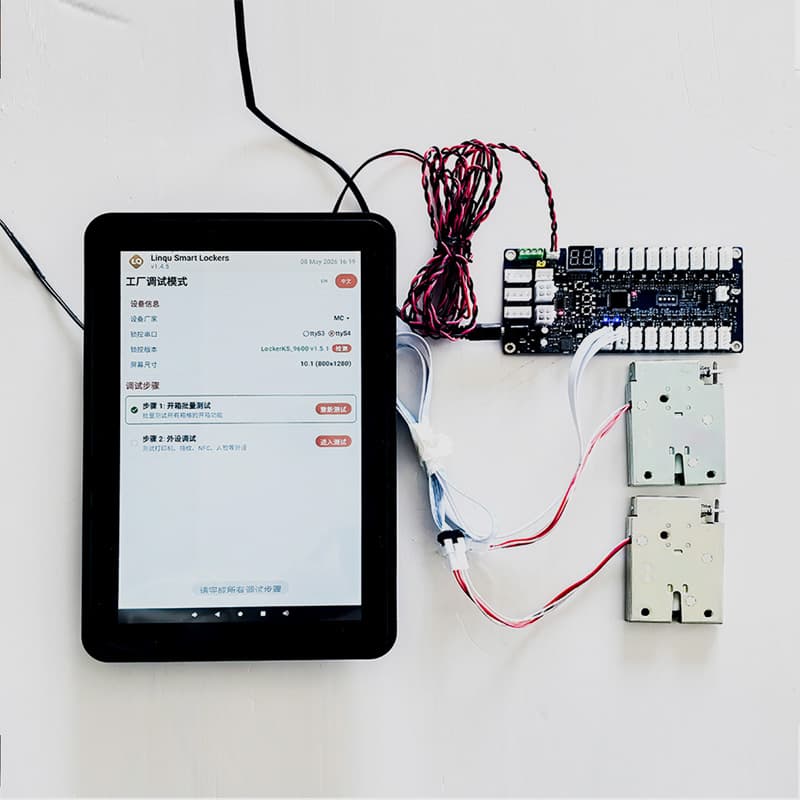
For businesses that want a complete solution, Linqu can supply the full pickup locker system with cabinet, screen, lock control, management software, and configuration support. For OEM customers and system integrators, Linqu can also supply core smart locker components such as touchscreens, electromagnetic locks, and lock control boards for integration into custom cabinet projects.
Available configurations include indoor, semi-outdoor, or outdoor cabinet options; small and large compartments; master and slave cabinet expansion; WiFi, LAN, or 4G networking; and software workflows for staff loading, customer notification, pickup code validation, and pickup record tracking. Linked product pages: after-hours self-service pickup locker, retail BOPIS click-and-collect locker, pharmacy prescription pickup locker, and the operator-level coin laundry & dry cleaning locker solution.
Frequently Asked Questions
What is an SMS pickup code locker? An SMS pickup code locker is a self-service pickup locker where staff place a purchased or prepared item into a secure compartment, enter the customer's phone number, and the system sends a one-time pickup code by SMS.
How does an order pickup locker work? The customer places an order, staff prepare the item, staff load it into a locker compartment, the system sends a pickup code, and the customer enters the code at the locker to open the correct door.
Is a self-service pickup locker the same as a parcel locker? No. A self-service pickup locker is usually used by a business to hand over known customer orders, while a parcel locker is usually used by couriers or property managers for package delivery and receiving.
Is a pickup locker the same as a vending locker? No. A pickup locker is mainly for items that have already been purchased or prepared. A vending locker is mainly for product sale and dispensing.
Do customers need an app to use a pickup locker? Not necessarily. Many pickup locker systems support no-app pickup by sending a PIN code by SMS. QR code, email, WhatsApp, and app-based access can also be supported depending on the project.
What businesses use self-service pickup lockers? Common users include retail stores, ecommerce pickup points, dry cleaners, laundry shops, shoe cleaning stores, pharmacies, print shops, repair shops, offices, campuses, and local service businesses.
Can pickup lockers support after-hours pickup? Yes. After-hours pickup is one of the strongest use cases. Staff load completed orders before closing, and customers can collect them later with a pickup code.
Can pickup lockers integrate with POS or ecommerce systems? Yes. Pickup lockers can integrate with ecommerce, POS, OMS, ERP, membership, payment, or service ticket systems through API or customized software workflows.
Conclusion
An SMS pickup code locker is a practical way to turn a manual order handover into a controlled self-service pickup process. Staff load the purchased or completed item, enter the customer's phone number, and the system sends a pickup code automatically. The customer can collect the item when convenient, while the business keeps a record of the pickup event.
For buyers comparing smart locker options, the most important question is not only "how many doors does the cabinet have?" The better question is: "does the locker support the workflow our business needs?" For retail, laundry, pharmacy, repair, print, office, and local service pickup, a self-service pickup locker with SMS code access is often the most direct path to flexible, low-labor customer handover.
Key Takeaways
An SMS pickup code locker is a self-service pickup locker built around known-order handover — staff load an item, enter the customer's phone number, and the system sends a one-time pickup code by SMS.
The workflow has 7 steps: order → staff prepare → staff load → enter phone → SMS sent → customer pickup → backend log.
Pickup lockers are different from parcel lockers (delivery receiving) and vending lockers (product sale). The business logic, not just the cabinet, defines the category.
The strongest use case is after-hours pickup for retail BOPIS, dry cleaners, pharmacies, print shops, and campus services.
Linqu supplies full pickup locker systems (cabinet + screen + lock control + cloud software + SMS workflow) plus OEM components for integrators — MOQ 1 unit for pilots, free custom quote within 24 hours at linqubox.com/contact.
About Linqu
Linqu (linqubox.com) is a smart locker manufacturer based in Zhengzhou, China. Founded in 2018, we design and produce parcel, luggage, food, laundry, shoe cleaning, pickup, and OEM lockers for B2B customers worldwide. Free custom quote within 24 hours.