Spain's cities generate luggage storage demand almost around the clock: the hours between checkout and a train, an afternoon of sightseeing with a suitcase in tow, an event where nobody wants to carry a bag. The traditional answers are a staffed left-luggage shop or old coin lockers at the station. Linqu (linqubox.com) is a smart locker manufacturer headquartered in Zhengzhou, Henan, China, founded in 2018. This guide is written for the people running storage points, not the travellers using them.
If you run or plan to run smart luggage storage lockers in Spain — what the local market calls a consigna — the questions that decide whether the business scales are narrower than "should we buy lockers": how to implement a new site, how to manage accounts once you have several, and how to price a site so it pays for itself. This article answers those three in order.
Where Spain's luggage storage operators get stuck
Two existing models each hit a ceiling. A staffed shop earns only while somebody is behind the counter, and staff cost is the most rigid line in this business. Old coin lockers need no staff, but they take cash, cannot report whether a compartment is free, leave no record when a customer disputes something, and repeat the same cash-handling overhead at every new site.
What actually blocks expansion is rarely the cabinet. It is three operational questions:
- Implementation — what has to happen between choosing a location and taking the first payment?
- Accounts — once one site becomes five, who can see the data, who can open a door, and how do the numbers reconcile?
- Pricing — what price makes customers use it and still makes the site profitable?
Cabinet specifications and product selection are covered in our general guide to smart luggage lockers; this page stays on the operating side.
How does an unattended luggage storage locker work?
A customer selects a compartment size on the screen, the door opens, they place their bag inside and close it; the system issues a single-use credential, starts timing, takes payment at the terminal, and opens the same door when that credential is presented. No staff member is involved at any step.

- Deposit — the customer picks a compartment size, or the system assigns a suitable free one automatically.
- Credential — QR code, PIN or barcode as standard; card access (IC/NFC) and facial recognition are optional modules configured per site. Credentials are dynamic and single-use, which is the baseline defence against reused codes in an unattended setting.
- Timing — starts when the door closes.
- Payment — handled at the terminal. EU deliveries integrate a Nayax card payment terminal as standard; other local methods connect through the open API.
- Pickup — the customer enters or scans the credential, the door opens, and the compartment returns to "free" for the next cycle.
- Notification — pickup codes go out by SMS or email as standard; overtime reminders and status notifications are supported. WhatsApp notification is custom development, not an out-of-the-box feature.
The mechanics of the code are explained in our pickup code workflow article. The interface supports multiple languages and local currency — for a storage point serving mostly foreign visitors, that is not a nicety but the precondition for the customer completing step one alone.
When one site becomes five: the account problem
With a single site the operator is the administrator and knows everything. By the fifth the questions change: does the part-time attendant get backend access? Can they see revenue? Who pulls the record when a customer disputes a pickup? How do several sites reconcile at month end?
That is what account management solves. The web-based backend provides:
| Capability | What it means for the operator |
|---|---|
| Unified multi-cabinet management | Every site in one backend; no logging into machines one by one |
| Real-time compartment status | See remotely which site runs at low availability and needs more capacity |
| Order records and statistics | Deposit and pickup times, duration, order volume — exportable |
| Revenue statistics | Per-site revenue once payment is connected |
| Multi-role permissions (administrator / staff) | Part-time staff get a staff account without seeing full business data |
| Auditable operation logs | Every door opening is recorded and can be traced during a dispute |
One boundary worth stating plainly: the permission model is two levels — administrator and staff — plus account management, not a freely configurable multi-tier hierarchy. If you need something finer, such as a host site seeing only its own revenue, that is custom development to confirm at the project stage.
If you already run your own system — an in-house app, a mini program, an ERP or CRM — a standard open API is available covering order management, door control, payment callbacks and status queries. The cabinet can act purely as the execution terminal while your own system holds the business logic.
Implementing a new site: from location to first payment

1. Location decides everything else. What matters is whether the footfall is footfall carrying luggage — stations, attraction entrances, pedestrian old-town edges, venue surroundings — plus power, indoor or exposed, and whether the space is yours or needs a partner.
2. Cabinet configuration, set per site:
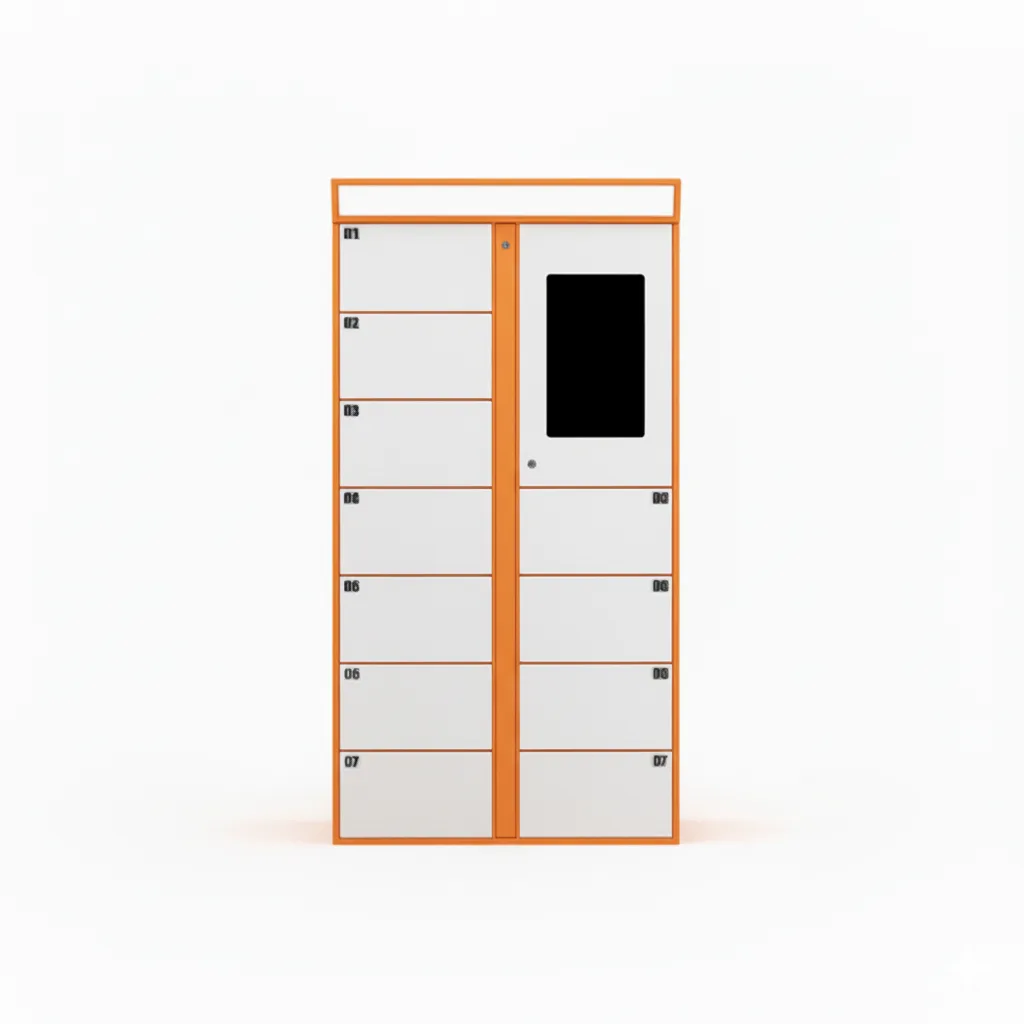
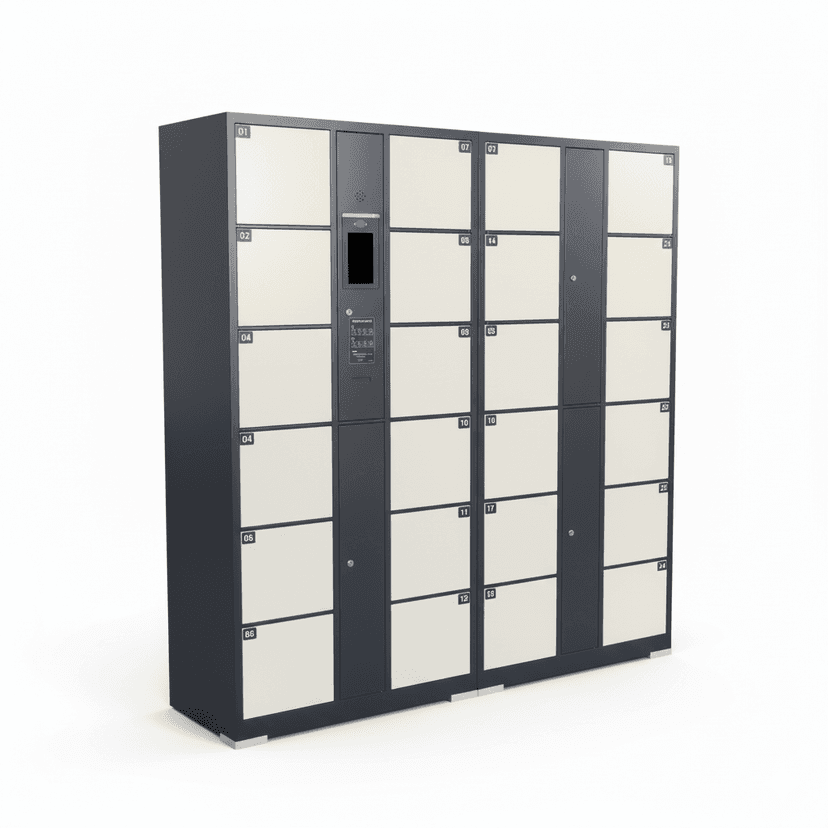
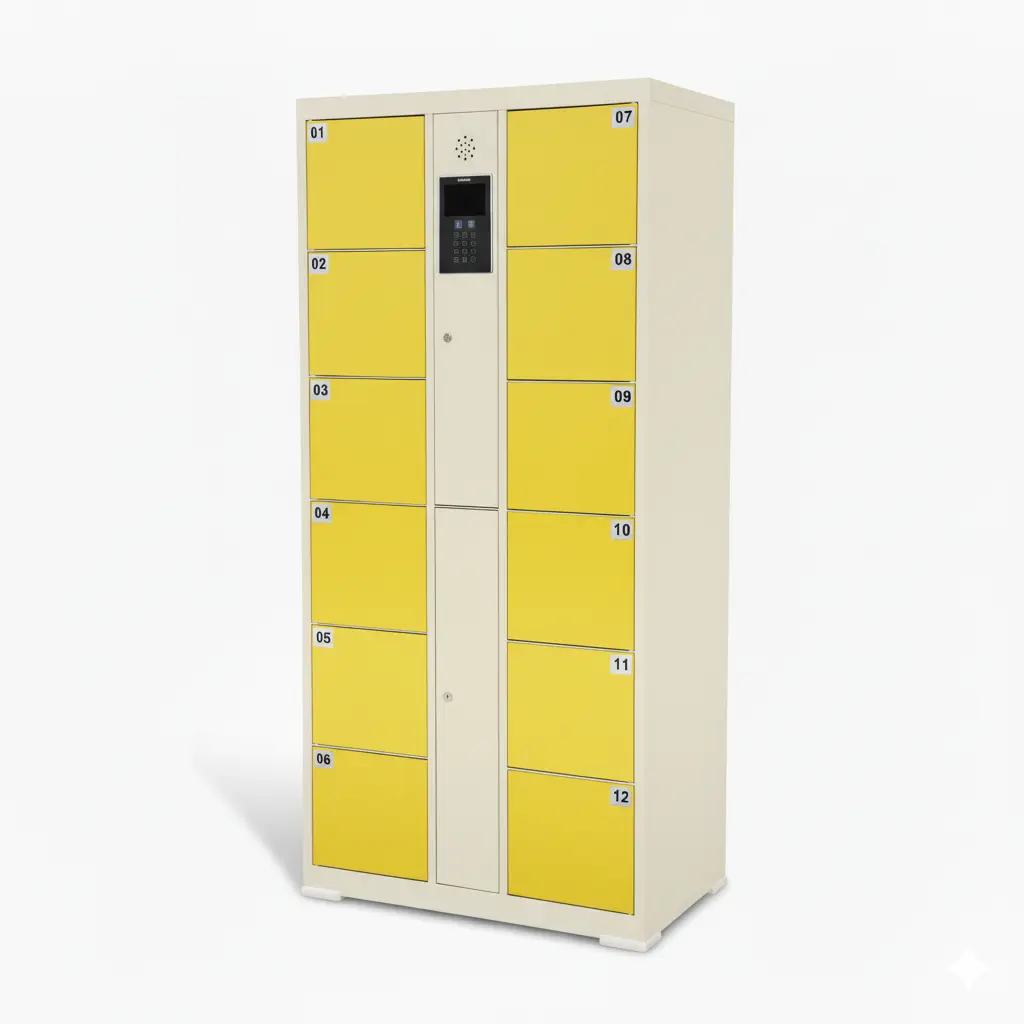
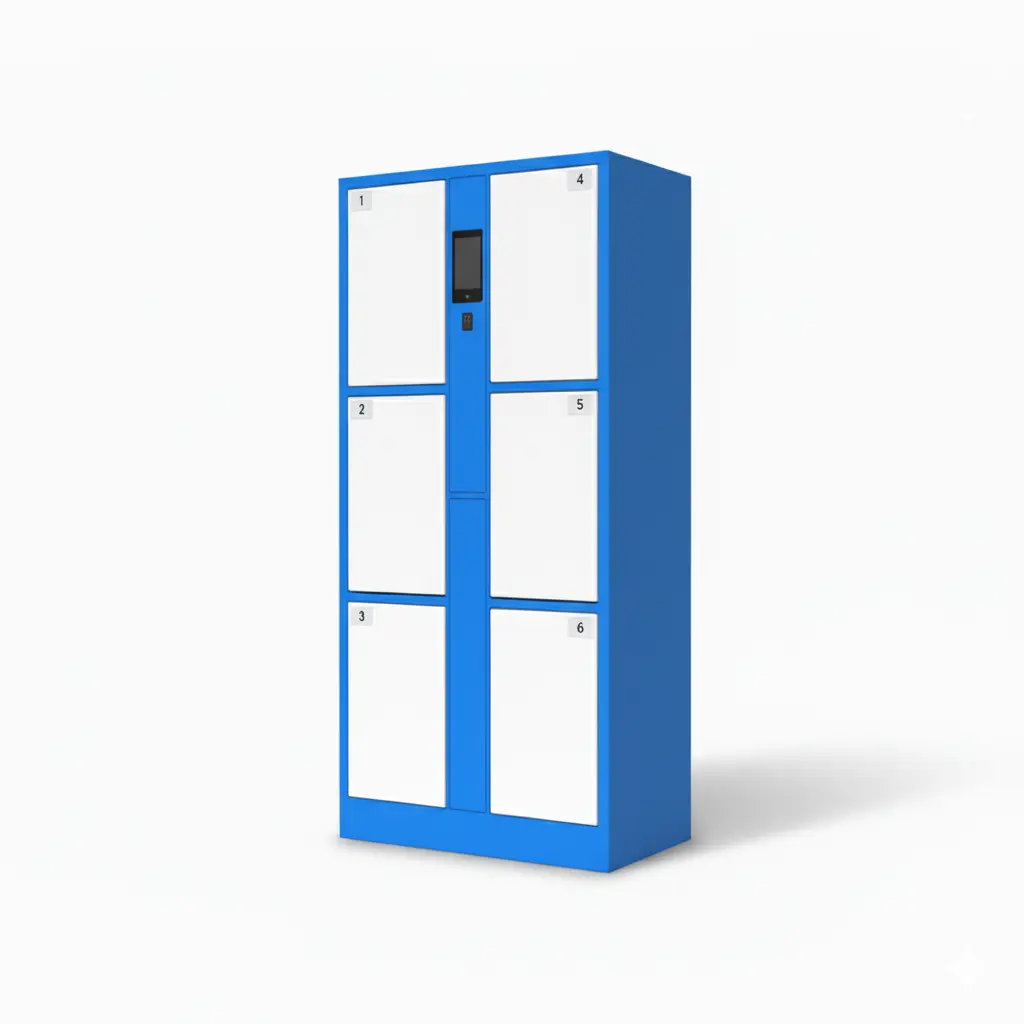
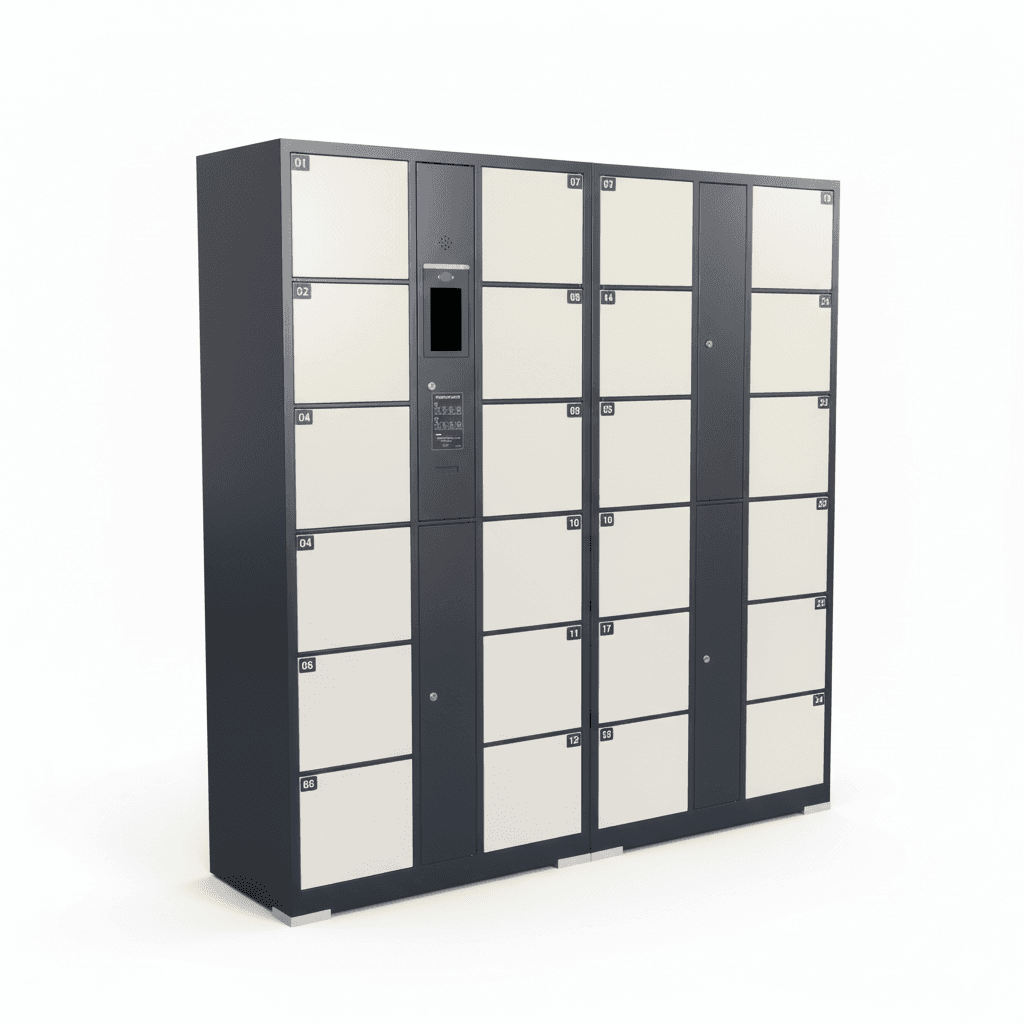
- Compartment mix — one unit can combine large, medium and small compartments. Luggage storage skews larger than parcel lockers, but the ratio depends on whether your customers carry cabin bags or checked suitcases.
- Dimensions — height, width and depth are customisable, and units support modular joining. Starting with one and adding another after real demand data is the normal way to control upfront cost.
- Material and structure — galvanised or cold-rolled steel, standard thickness 0.6–1.2 mm (customisable), powder-coated with anti-rust treatment, and an anti-pry structural design.
- Outdoor sites — waterproof structure, canopy, and dust/moisture-resistant configuration are available.
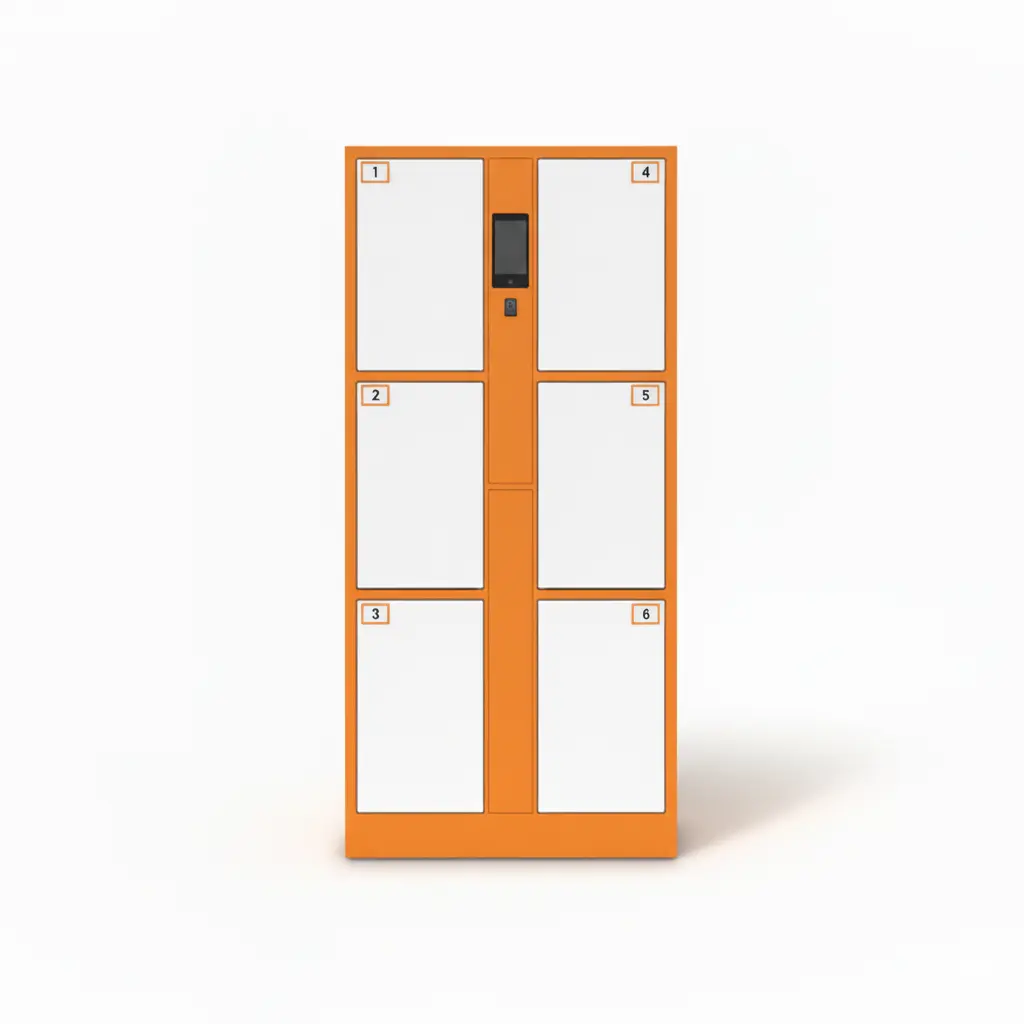
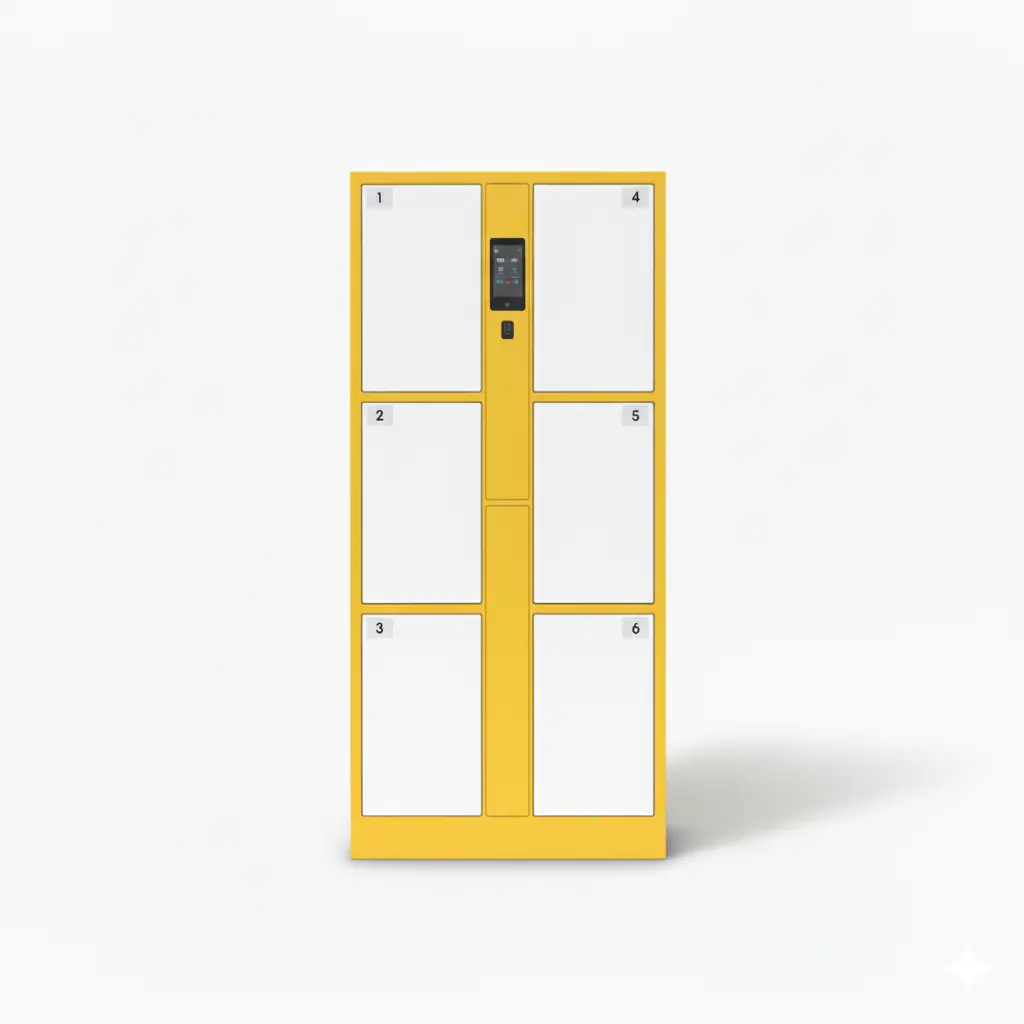
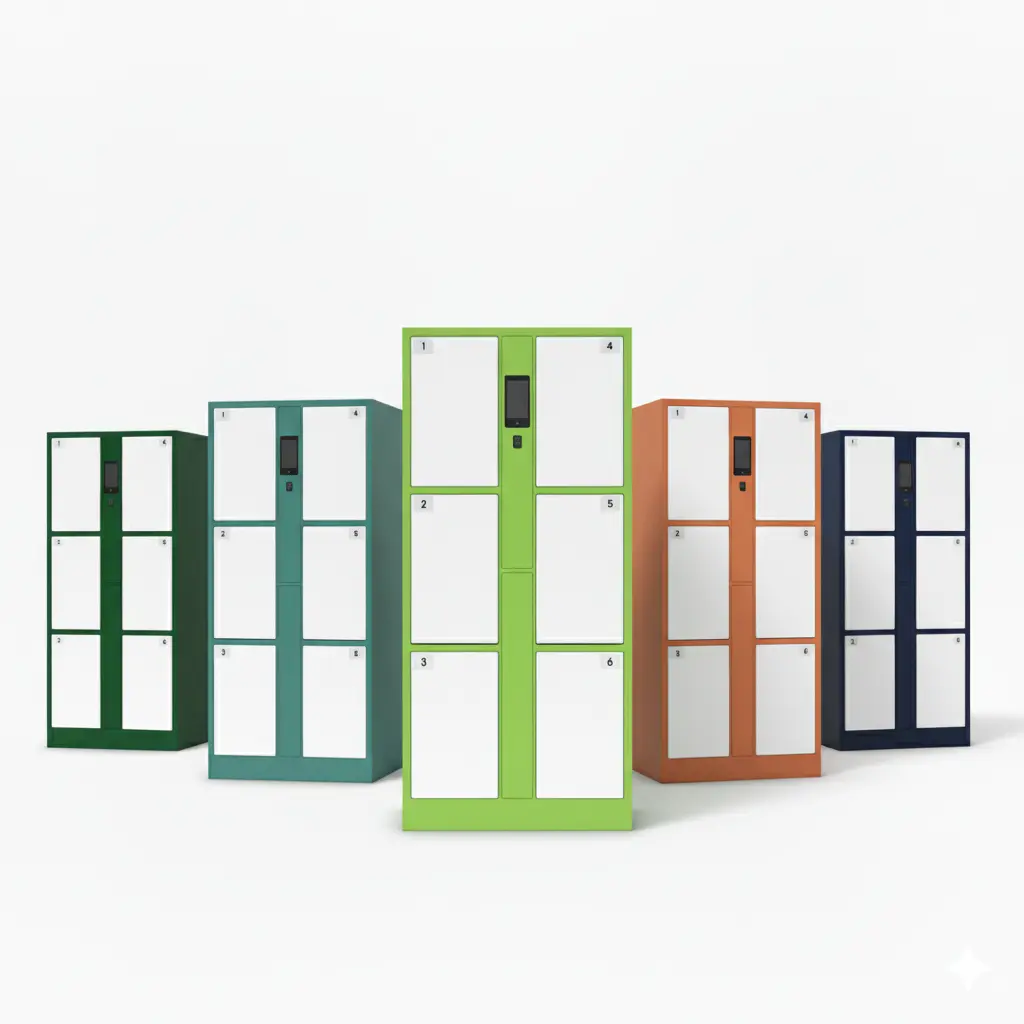
- Appearance — full colour customisation, logo printing, screen printing or wrapping, and a brandable interface. If the site carries a partner's brand, this comes up in every conversation.
3. Power and connectivity — the cabinet works from a standard outlet, with Wi-Fi, wired LAN and 4G. The 4G option matters disproportionately here, because the best storage locations are frequently the ones where no cable can be run. The system runs in the cloud, so no local server is required on site, and we supply the locally appropriate EU plug. Details are in the installation guide.
4. Go live — configure pricing rules, interface language and notifications, run a full deposit-and-pickup test including the overtime and exception paths, then open.
On certification: equipment for the EU market carries CE certification and is supported by an EU Authorised Representative; the German market additionally requires EPR registration. If your landlord or insurer asks for compliance documentation, these can be provided.
On minimum order: the MOQ is one unit. For an operator who wants to prove one site before committing to a network, that often matters more than the price itself.
Pricing models and how to size a site's revenue
Four billing modes are supported, and can be combined:
| Mode | Fits |
|---|---|
| Free storage with overtime charging | Malls and gyms, where storage is a service rather than the revenue line |
| Time-based charging | Standard storage points near stations and attractions |
| Tiered time charging (e.g. first 2 hours at one rate) | Sites with widely varying dwell times |
| Different prices per compartment size | Mixed-size cabinets priced by space occupied |
Payment implementation details — QR payment and temporary PIN behaviour — are covered in pay-per-use smart lockers with QR payment.
How to judge whether a site pays for itself
We deliberately do not publish "payback in X months" figures, because that depends on your location, your pricing and your footfall — any average applied to a specific site is misleading. What we can give is the method. Put your own numbers in.
Revenue at a site over a period comes from three variables:
Usable compartments × turnover rate (uses per compartment per day) × average transaction value
Turnover rate is driven by site footfall and average storage duration — the same 20 compartments produce very different daily volumes at a two-hour average versus an eight-hour one. So the first step is not calculating money, it is estimating two numbers:
- What share of the footfall at this location is carrying luggage and motivated to store it?
- What is the average storage duration for that group?
Those two give a turnover rate; multiply by your intended price for a daily revenue range. On the cost side: equipment (one-off), space (owned or revenue-shared), power and connectivity, and maintenance.
Run one unit for a month or two and use the real numbers before adding capacity or replicating the site — modular joining exists so you need not build for an optimistic estimate on day one. The general sizing method is in our compartment size guide.
Self-operated or host-site partnership?

Storage locations are valuable and usually belong to somebody else. Two common structures:
Self-operated — you rent or own the space; equipment, revenue and operations are all yours. Higher ceiling, but upfront cost and site risk sit entirely with you.
Host-site partnership (revenue share) — you provide the equipment, a hotel lobby, convenience store, gym, car park or mall desk provides the space, and revenue is split. It dominates the expansion phase because you avoid fixed rent, the host gains a service they need not operate, and the marginal cost of the next site is largely the hardware.
Two topics reliably come up: appearance customisation (hosts want the unit to look like their own service — colour and interface branding cover this) and permission separation (hosts want visibility of their site, which a staff-level account provides). As noted above, "host sees only its own revenue" is a custom requirement, not a standard feature.
Exception handling when nobody is on site
Without staff present, exceptions are handled by process and system rather than judgement in the moment. The three most common:
Overtime non-collection — the most frequent. The system keeps charging under the overtime rule and sends reminders, but you need a defined procedure for long-abandoned items: when the compartment is cleared, how contents are held, how the customer is contacted. Write this before opening and display it on the terminal rather than improvising the first time.
Dispute evidence — "something is missing from my bag" is settled by records. Each compartment is independently controlled and every door opening logged, which with deposit and pickup times reconstructs who opened it and when. Sites needing stronger evidence can add optional camera integration.
Equipment faults — compartment status is visible in real time, so a door left ajar or an offline unit surfaces in the backend rather than through a customer complaint. Basic maintenance can be performed remotely.
To be explicit: these lower the cost of proving and resolving a dispute; they do not eliminate disputes. A mature storage point pairs the system with policy — posted rules, liability terms, insurance.
Key takeaways and how to start
- The constraint on a Spanish consigna business is rarely the cabinet; it is implementation, account management and pricing.
- An unattended cycle runs deposit → single-use credential → timing → payment → pickup, with QR, PIN and barcode standard and card or facial recognition optional.
- Multi-site operation needs unified management, exportable order and revenue data, administrator/staff permissions and auditable logs — two levels, not a custom hierarchy.
- A new site is sequenced as location → cabinet configuration → power and connectivity → go live; 4G matters because the best locations often cannot be cabled.
- Four billing modes are available; size revenue as usable compartments × turnover rate × average transaction value, from your own footfall and dwell-time estimates rather than a published payback figure.
- Host-site revenue sharing is the usual expansion structure, and colour and interface branding is what makes it work commercially.
- EU equipment carries CE certification with an EU Authorised Representative, EPR applies in Germany, and the MOQ is one unit — so a single site can be proven before scaling.
A practical order of preparation: pick one location and estimate luggage-carrying footfall and average dwell time; set the compartment mix and overall dimensions, adding weatherproofing and a canopy for outdoor sites; choose a billing mode and size the revenue range with the method above; decide whether payment runs on a Nayax terminal or through your own system via the open API; confirm which compliance documents your site requires; then order one unit and prove the location before replicating it.
Send us the site type, expected compartment count, indoor or outdoor, and your payment requirement, and we will come back within 24 hours with a configuration recommendation and quotation. You can also ask directly by email or WhatsApp for cabinet drawings, API documentation or sizing help.
Related products: smart luggage storage locker for airports and transit hubs and commercial paid storage locker with RFID access.
About Linqu
Linqu (linqubox.com) is a smart locker manufacturer headquartered in Zhengzhou, Henan, China, founded in 2018 and operating a 20,000 sqm factory in Luoyang. We produce luggage and storage lockers, parcel lockers and self-service pickup lockers, with OEM/ODM customisation and open API integration. For storage operators we support cabinet sizing, colour and interface branding, EU payment terminal integration and CE documentation, with quotations within 24 hours.