Spain's self-service laundromats have already gone a long way toward running without staff. Card readers start the machines, customers pay by QR code, and someone can wash a load at two in the morning without a single employee on site.
But there is one category of order a self-service shop cannot absorb: the work that has to leave the premises. Dry cleaning, ironing, duvets, curtains, and repairs all need a human being to collect the items, take them to a plant or back room, process them, and bring them back. So a shop that advertises itself as open around the clock quietly falls back to "whenever the owner happens to be in" for its most profitable services.
Customers behave exactly as you would expect. Someone walks past after work, sees the lights on but nobody at the counter, and that order goes somewhere else. This is why more Spanish laundromat owners are searching for smart lockers para lavanderías — not to make the shop unattended, because it already is, but to give the work that does need a person a drop-off point that never closes. Linqu is a smart locker manufacturer based in Zhengzhou, China, founded in 2018, and we build commercial laundry lockers with integrated payment for laundry and dry-cleaning operators in a number of markets.
Key Takeaways
- Self-service washing and drying already runs 24/7; the services that generate higher margins — dry cleaning, ironing, bulky items — still depend on the owner being present.
- A smart drop-off locker closes that gap: the customer deposits and pays at any hour, the owner collects in batches, and the system issues a pickup code when the order is ready.
- Collection becomes a scheduled batch task instead of an interruption, because the owner opens the compartments remotely on their own route.
- Three siting options serve three different businesses: in-store against a wall, street-facing outside the shop, or a second collection point in a supermarket or residential building.
- Localization is configured per project: Spanish-language screens and messages, SMS pickup codes as standard, standard mains power, and payment or system integration through an open API.
- Large compartments carry the load. Duvets and winter coats consume far more volume than parcel-locker sizing charts suggest, so build the mix from your own order history.
- Start with one cabinet and one or two services for a full month before deciding whether to expand.
Your Laundromat Is Already 24/7 — Your Drop-Off Counter Isn't
It helps to separate the two halves of the business, because they do not have the same opening hours.
- Self-service washing and drying. The customer operates the machine. Genuinely 24/7, essentially zero labour.
- Entrusted services — dry cleaning, ironing, duvets and curtains, alterations. Someone has to receive the items and someone has to hand them back. Real availability equals the hours the owner is in the shop.
For most single shops and small chains, that second category is the one with the higher ticket value and the better margin. Serving it through a counter that is only open part of the day means the most valuable orders are locked inside the least available window.
A smart locker placed inside the shop or on the storefront is aimed at exactly one thing: turning receiving and returning from actions that require a person into actions that do not.

The Drop-Off Loop: From Deposit to Pickup Code
The full cycle is five steps. It is worth reading once from the customer's side and once from yours.
What the customer does
- Selects the service and a compartment size on the cabinet screen, or by scanning a code, and pays.
- The door opens, the items go in, and closing the door completes the order.
- When the work is finished, a pickup code arrives; the customer opens the compartment and collects at any hour.
What you do
- New orders appear in the dashboard with their compartment numbers. You open those compartments remotely and collect in a single pass along your own route — the customer does not need to be there.
- When the order is ready you put it back in a compartment and mark it complete. The system sends the pickup code automatically.
Step four is the one that changes the day. Collection becomes a batch task you schedule — everything from the previous evening gathered when you open in the morning — rather than an interruption every time somebody walks in. The same dashboard logic that runs self-service laundry networks applies here; we have written separately about how self-service laundry locker operations work and about enabling the software system behind them.
One-off customers never need to install anything: a scan to order and a code to collect covers the whole journey. Regulars can be moved onto an app or a membership scheme if you want that, configured during vendor selection.

Where to Put the Cabinet: In-Store, Storefront, or a Second Site
Shop conditions vary enormously across Spain, so the siting decision deserves to be made deliberately rather than by default.
| Placement | Suits | What to watch |
|---|---|---|
| Inside, against a wall | Shops with enough floor width alongside existing washers and dryers | Roughly one wall section; shares the space and the electrical supply already in place. The lightest option to install. |
| Street-facing, outside | Owners who want to receive orders while the shop is closed | Needs a weather-resistant, rust-resistant cabinet, plus lighting and camera coverage at night. |
| A second collection point | Established shops or small chains extending their service radius | The cabinet is a receiving point only; processing stays at the main shop. No second premises, no second employee. |
That third option is worth dwelling on, because it changes what expansion costs. Opening a new collection point stops being "a lease and a member of staff" and becomes "a cabinet." This is the pattern garment-care brands use most often when they build networks, and it is the model behind our coin laundry and dry cleaning locker solution. For unattended outdoor points, a community outdoor laundry locker is the relevant cabinet type.
Two things to settle before committing to an outdoor point. First, whether a street-facing cabinet on your frontage needs municipal or facade permission — rules differ by municipality and autonomous community, so ask before you order, not after. Second, night-time lighting and camera coverage at the location. If neither can be resolved, keep the cabinet inside.
Configuring Smart Lockers for Spanish Laundromats
This is where a locker for a Spanish laundromat differs from a generic one. Each item below states what is standard and what is a project-level configuration, so you can plan accordingly.
- Language. Cabinet screens, SMS wording, and pickup notifications in Spanish. Other official languages of Spain can be configured per project.
- Pickup notifications. SMS pickup codes are standard. WhatsApp notification is available as project-level custom development — it is not an out-of-the-box feature. This is the question Spanish buyers ask first, so we answer it plainly: it can be built, and you should budget development time for it.
- Payment. The cabinet supports QR and online payment, with the pickup code issued after payment clears. Local payment rails — card acquiring, Bizum and similar — are integrated per project through the open API rather than shipped as pre-built connectors.
- Power. Standard mains supply is sufficient; Spain's 230V / 50Hz sits inside the normal operating range and no electrician-level rewiring is implied. Connectivity runs over Wi-Fi or 4G, so the shop's existing network does not need rebuilding. Our installation guide covering power and network requirements goes into the detail.
- Integration with what you already run. We do not offer a pre-built connector for any specific laundry management platform or POS. What we do provide is an open API, so locker orders can be pushed into a system you already use. If integration matters to you, take the API documentation during vendor selection and have it assessed before you commit.
- Records. Pickup codes are single-use, and every deposit and collection is logged with a timestamp and compartment number. Retention periods are configurable per project; arrangements for handling personal data under EU rules are best settled at contract stage.

Space, Power, and Compartment Mix
Three things actually need calculating during selection.
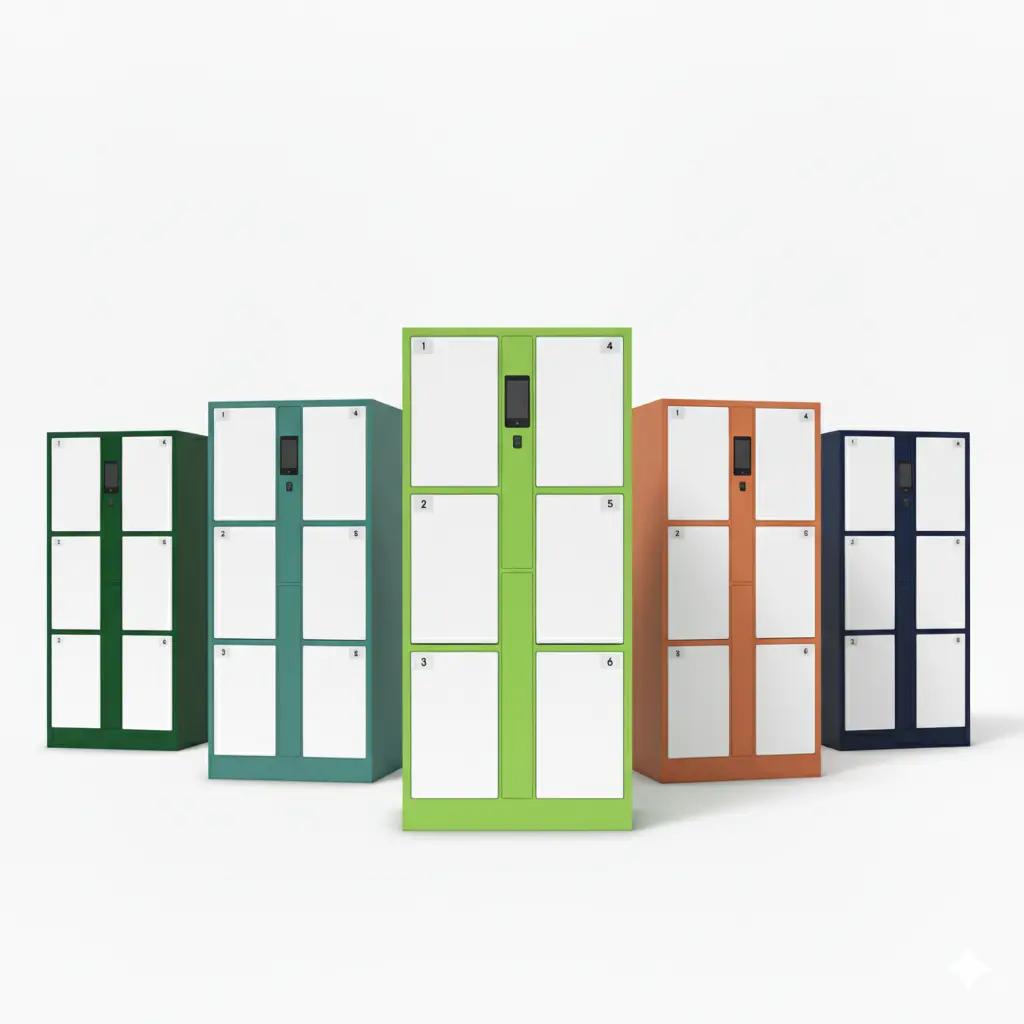
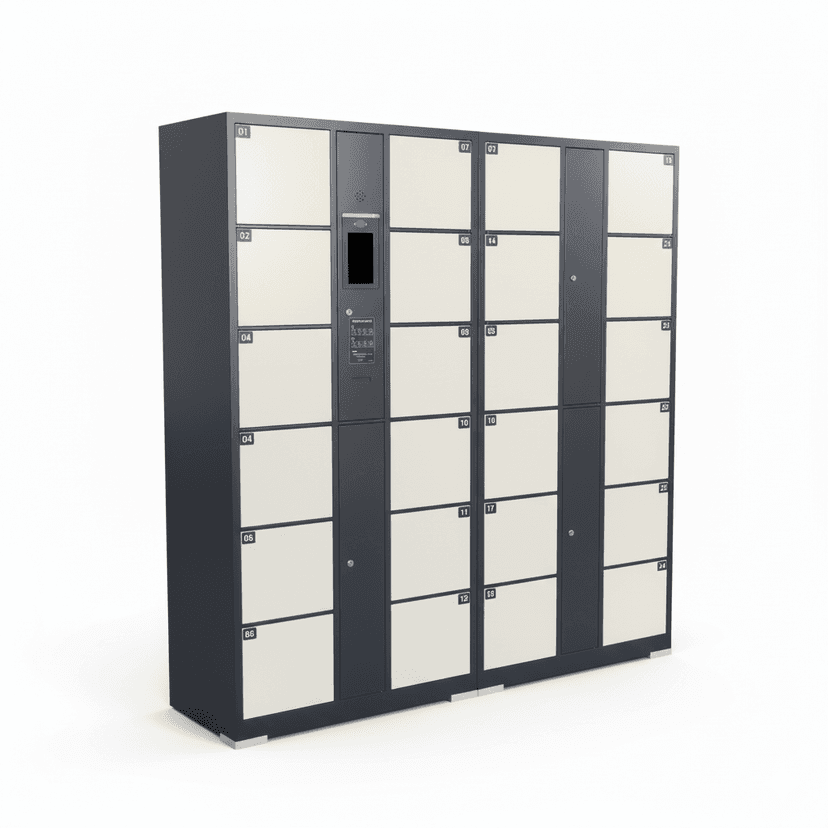
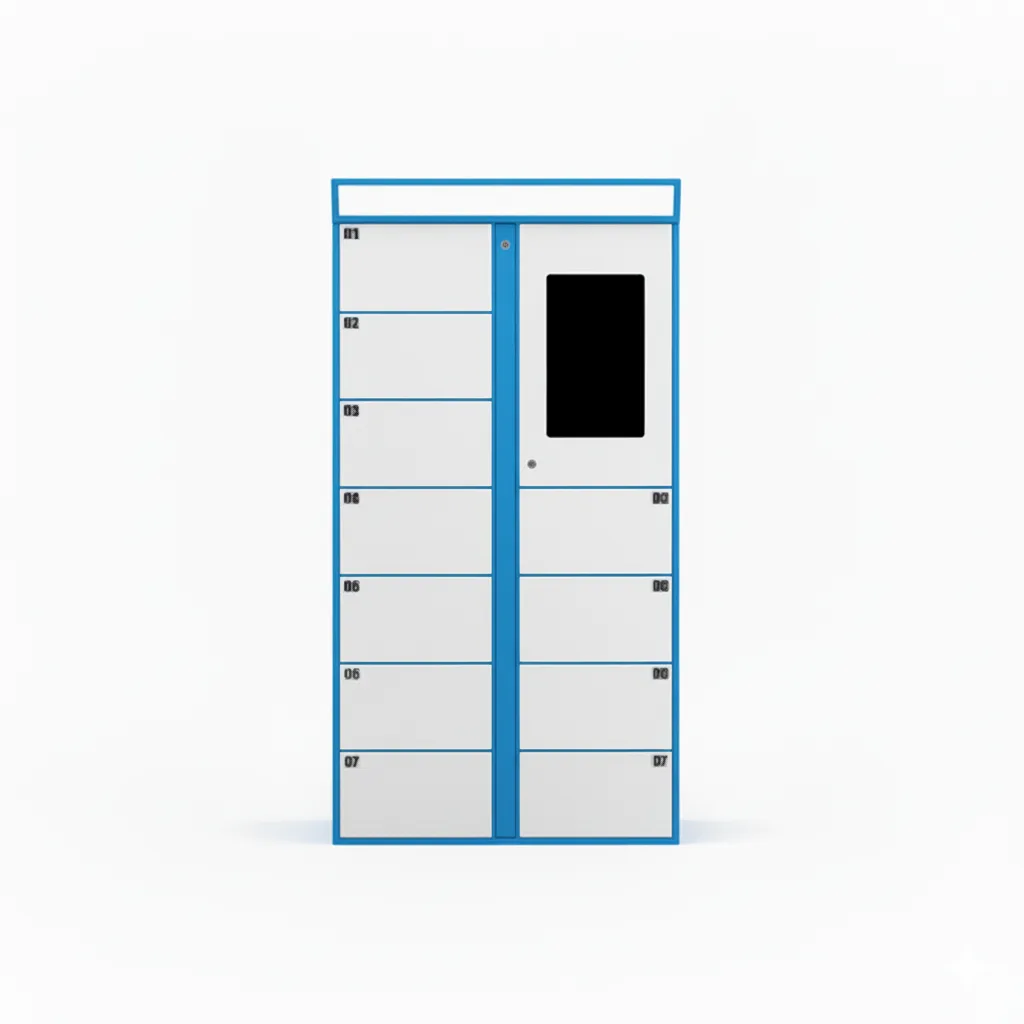
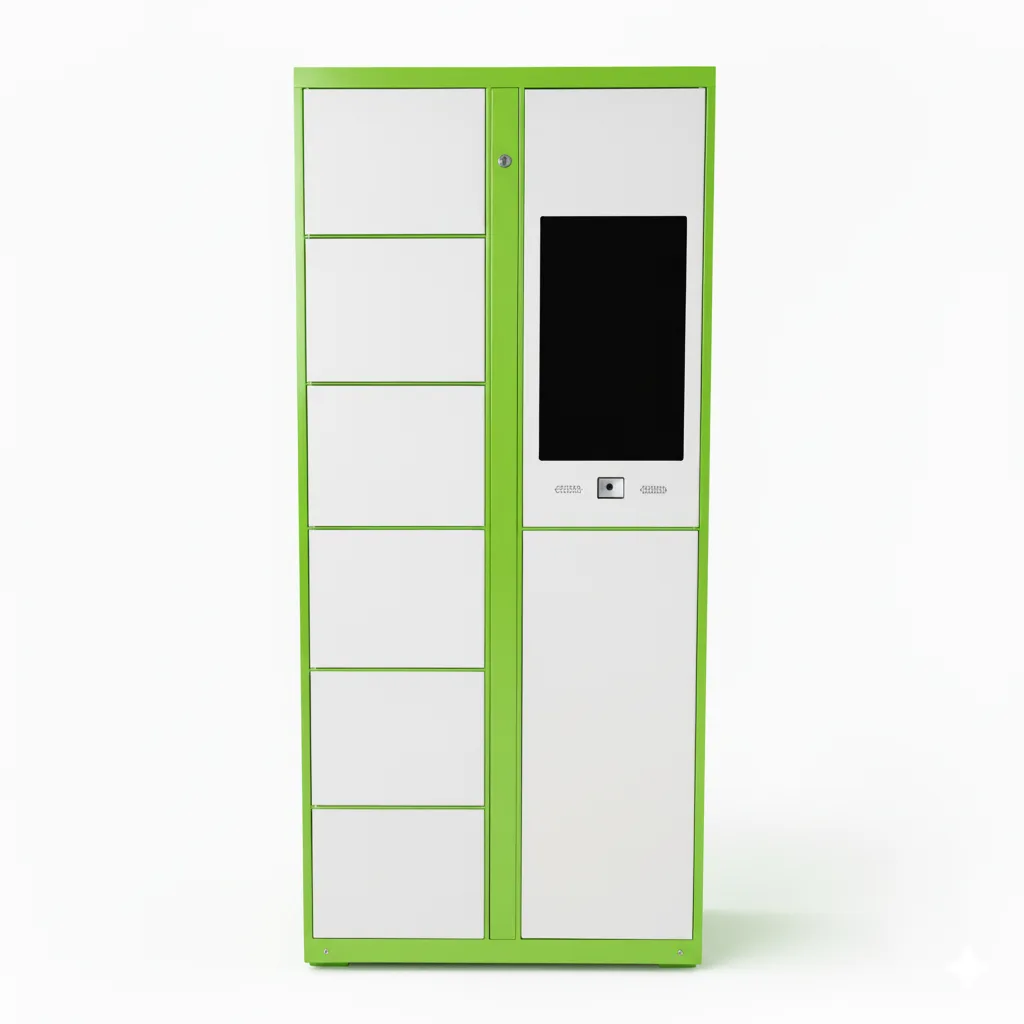
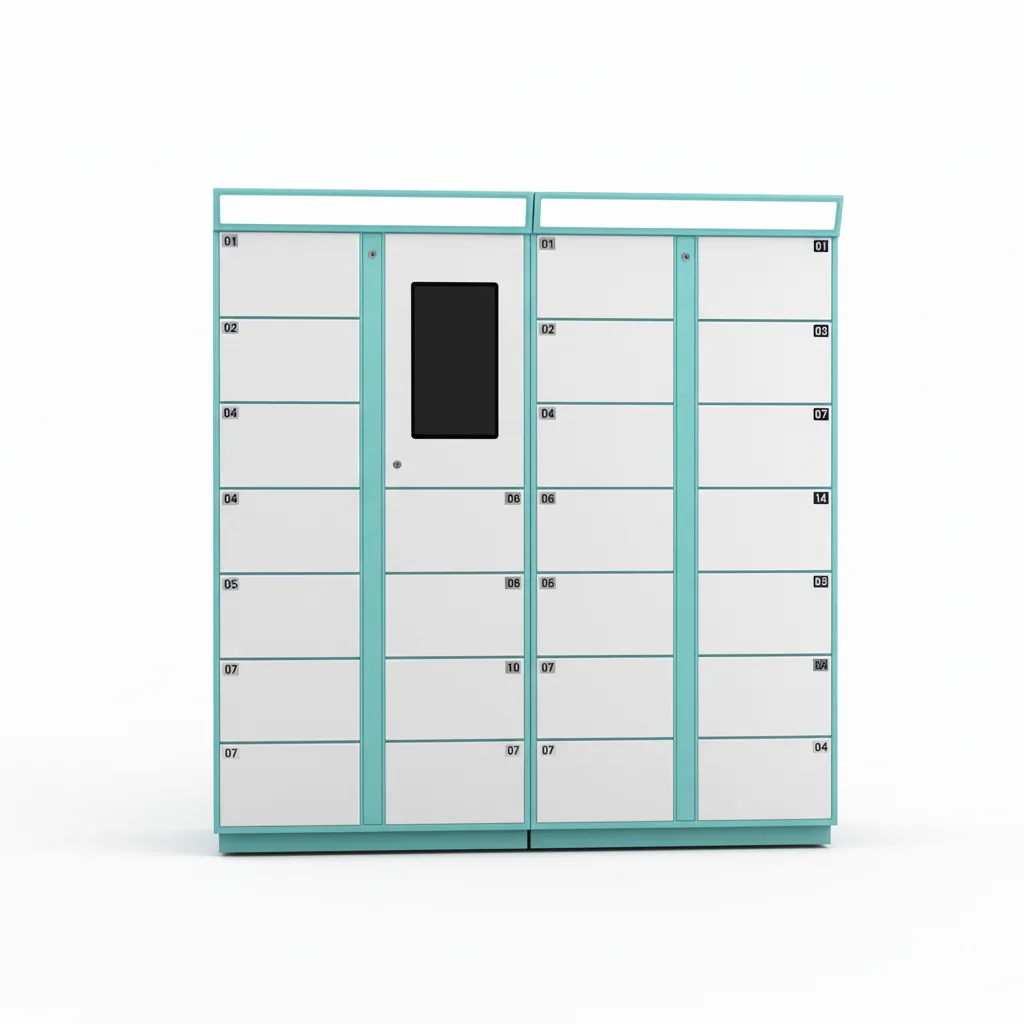
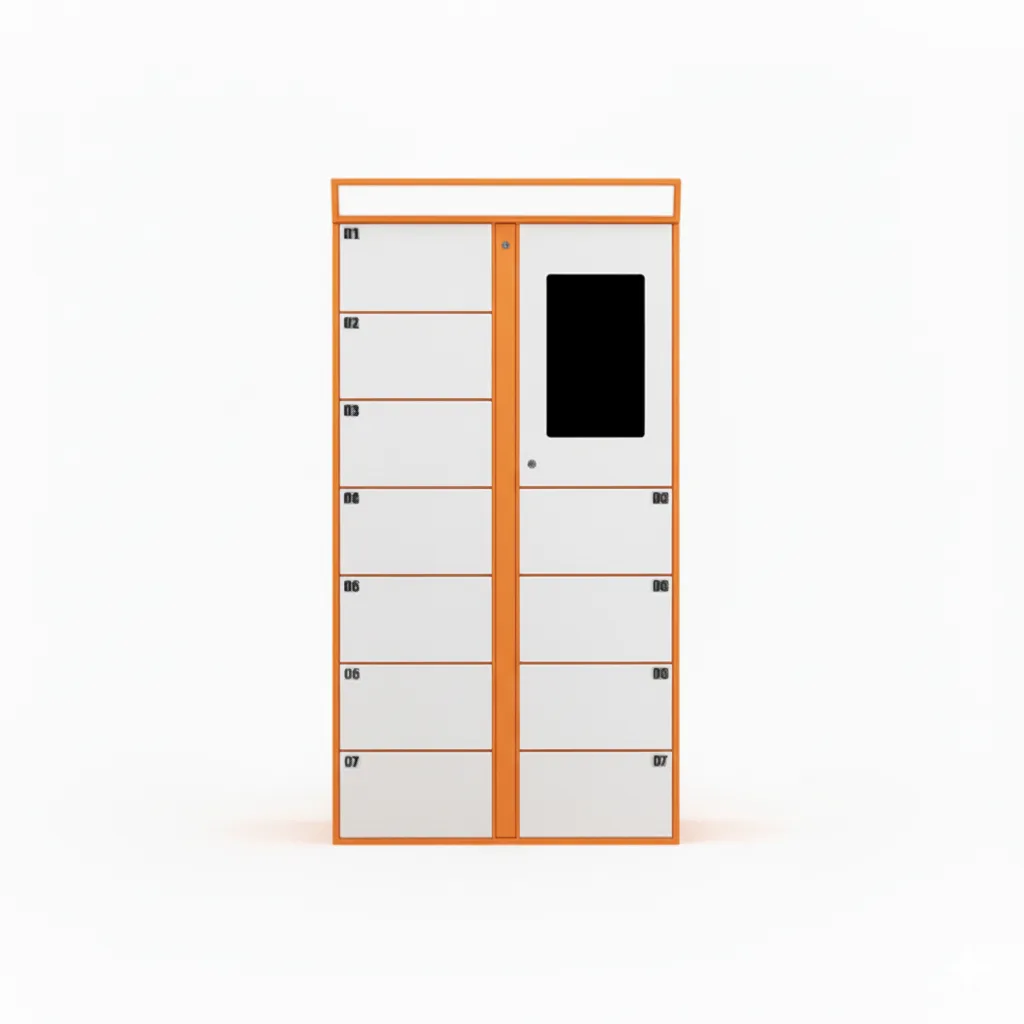
Footprint. Cabinets sit against a wall: one main unit with the screen, plus add-on units clipped alongside it. Total length follows your shop's real dimensions, and the exterior colour and finish can follow your shop identity.
Power and connectivity. Standard mains plus Wi-Fi or 4G. No dedicated circuit installation is implied for an indoor cabinet. An outdoor point additionally needs weather protection and a cable route planned in advance.
Compartment mix. This is the item that gets configured wrongly most often, because entrusted laundry has a completely different volume profile from parcels:
- Large compartments do the heavy lifting. Duvets, curtains, and winter coats take far more space than people estimate.
- Medium compartments handle routine dry cleaning and ironing — shirts, suits, jackets.
- Small compartments see the least use: odd small items and returns.
Do not copy another shop's ratio. Work from the composition of your own entrusted orders over the last three months. Give a vendor your order types and rough volumes and let them propose a configuration — it will beat an estimate made from intuition.
Start With One Cabinet
Rolling out several points at once is not the sensible first move. A workable path looks like this:
- Put one cabinet in your main shop and open only the one or two services you are most confident about — dry-cleaning drop-off, typically.
- Run it for a full month and watch three numbers: the share of orders placed outside opening hours, average time from ready to collected, and compartment turnover.
- If the out-of-hours share is clearly material, then decide whether to add compartments, move to an outdoor cabinet, or open a second point.
All three numbers come out of your own dashboard. You do not need an additional tool, and you do not need to take anyone's industry averages on trust.
Frequently Asked Questions
How much space does a locker bank need? Will it fit in my shop?
Roughly one wall section. A main cabinet with the screen plus add-on units means length and compartment count are configured to your actual dimensions, and the exterior colour can follow your shop's look.
Do I need an electrician to rewire anything?
No. Standard mains power is sufficient — Spain's 230V / 50Hz is within the normal operating range — and connectivity runs over Wi-Fi or 4G rather than depending on the shop network. Outdoor points additionally need weather protection and a planned cable route.
Can pickup notifications go through WhatsApp?
SMS pickup codes are the standard configuration. WhatsApp notification can be built as project-level custom development; it is not an out-of-the-box feature. We state this plainly so you can factor development time into your selection.
Do customers have to download an app?
No. A one-off customer scans to place the order and opens the compartment with a pickup code, start to finish. Regular customers can be put on an app or a membership scheme if you want one.
Can it connect to the laundry management software I already use?
We do not have a pre-built connector for any particular management platform or POS. We provide an open API so locker orders can be pushed into your existing system. If that matters, request the API documentation during selection and have the effort assessed.
How should I configure the compartment mix?
Entrusted orders skew large, so plan on large compartments as the mainstay, medium ones for routine dry cleaning and ironing, and the fewest small ones. Base the ratio on your own order composition over the past three months and ask your vendor to propose a configuration from it.
About Linqu
Linqu (linqubox.com) is a smart locker manufacturer based in Zhengzhou, China, founded in 2018. We produce laundry and shoe-care lockers, parcel lockers, luggage lockers, and self-service pickup lockers, with OEM/ODM and white-label customization for operators in a range of markets.
Tell us your shop type — single site or chain — how many points you are considering, and roughly what your entrusted orders have looked like over the past three months. We will come back within 24 hours with a compartment configuration proposal, cabinet customization options, and a quote. Email service@linqubox.com or reach us through the contact page; drawings and API documentation are available on request.