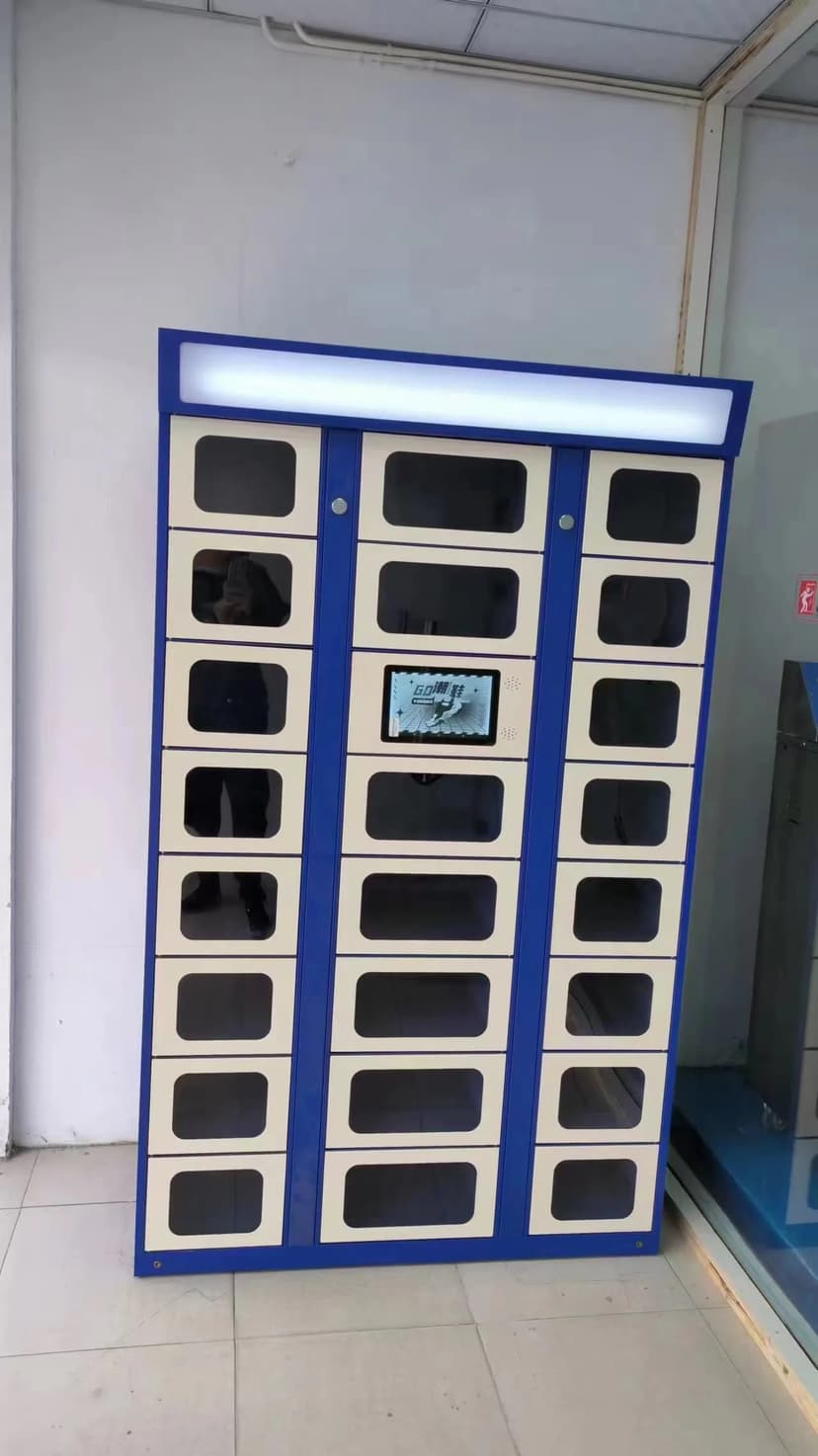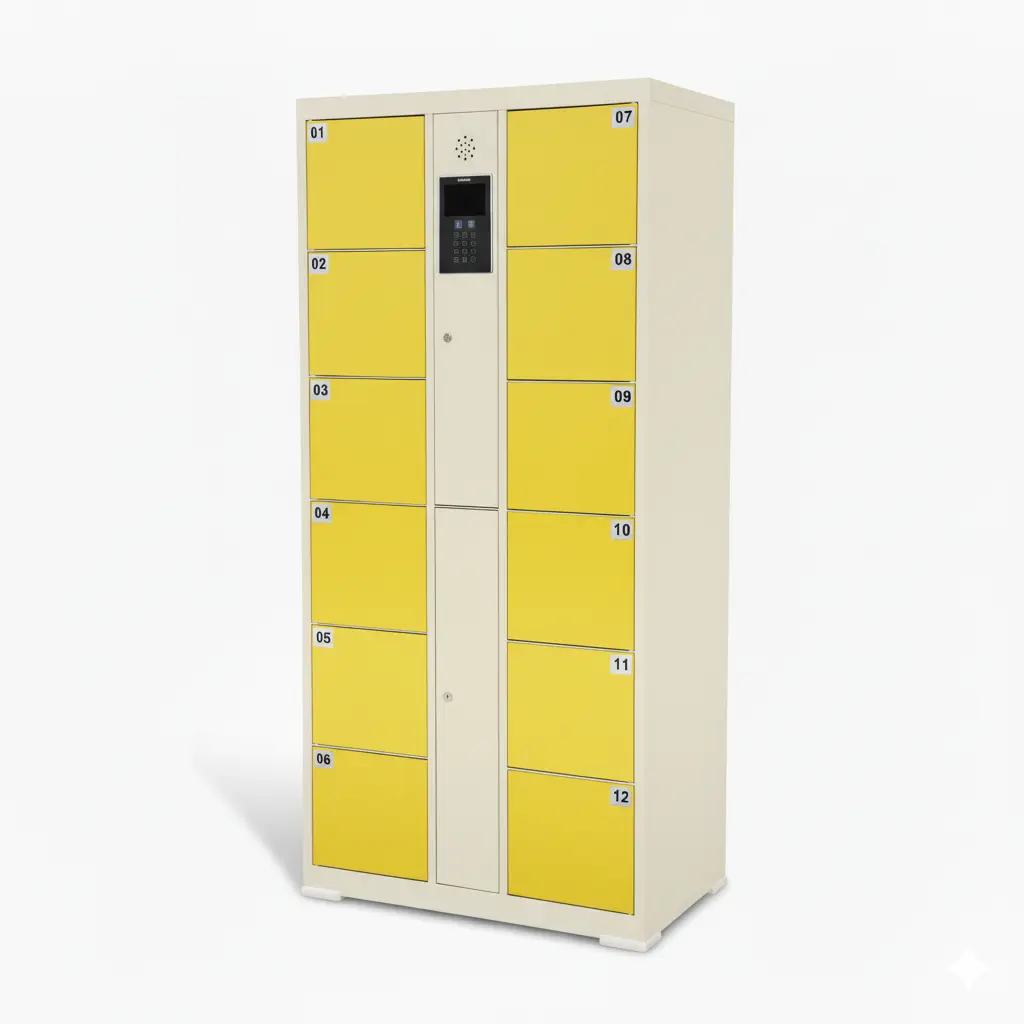
Most venues do not lack lockers. They lack lockers that still get used. Walk through a shopping mall, a cinema lobby, a gym or a bus terminal and you will usually find a bank of cabinets that was installed years ago and has since become dead space — keys get lost, someone has to sit there handing out tokens, there is no way to charge for it, and nobody can tell you who opened which door last Tuesday.
Replacing the whole bank is the obvious answer, and often the wrong one. If the cabinet bodies are structurally sound, the metal or panel work is not the problem. What is actually obsolete is three things: the lock, the way users get in, and the fact that there is no system behind it. This page is about changing those three things and keeping everything else.
A note on scope before you read further. If you are an integrator or manufacturer building a new cabinet from scratch, you want our smart locker hardware package and API solution instead. This page is written for the other reader: the site owner or property operator who already has lockers on the floor.
Which Existing Lockers Are Worth Retrofitting
Not every locker bank should be converted. Being honest about this early saves everyone a wasted site visit, so here is how we screen a project before quoting.
Usually worth retrofitting: the cabinet structure is sound, doors are not warped, door sizes are consistent across the bank, the location sits on a real footfall path, and the bank is large enough to justify the work — as a rough guide, twenty doors or more is where the economics start to make sense.
Usually better to replace: the cabinet is rusted or moisture-damaged, door panels are too thin to carry a lock reliably, door sizes are inconsistent so no single hardware kit fits, the site now needs weatherproof outdoor operation the original cabinet was never built for, or — most commonly — the existing compartment sizes simply do not match what you now want to store.
Needs a physical check: wooden and MDF cabinets. Timber holds a fastener very differently from sheet steel, and whether a given door can carry an electronic lock reliably over thousands of cycles is not something anyone can judge from a drawing. We do not issue compatibility promises for cabinets we have not surveyed.
What a Retrofit Actually Replaces

1. The locks and the lock control layer
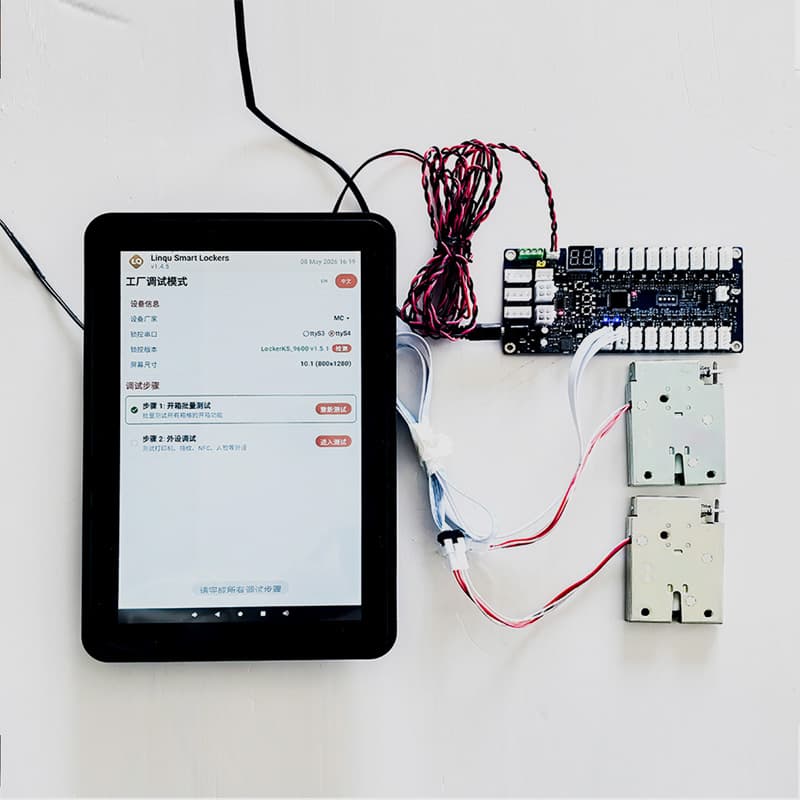
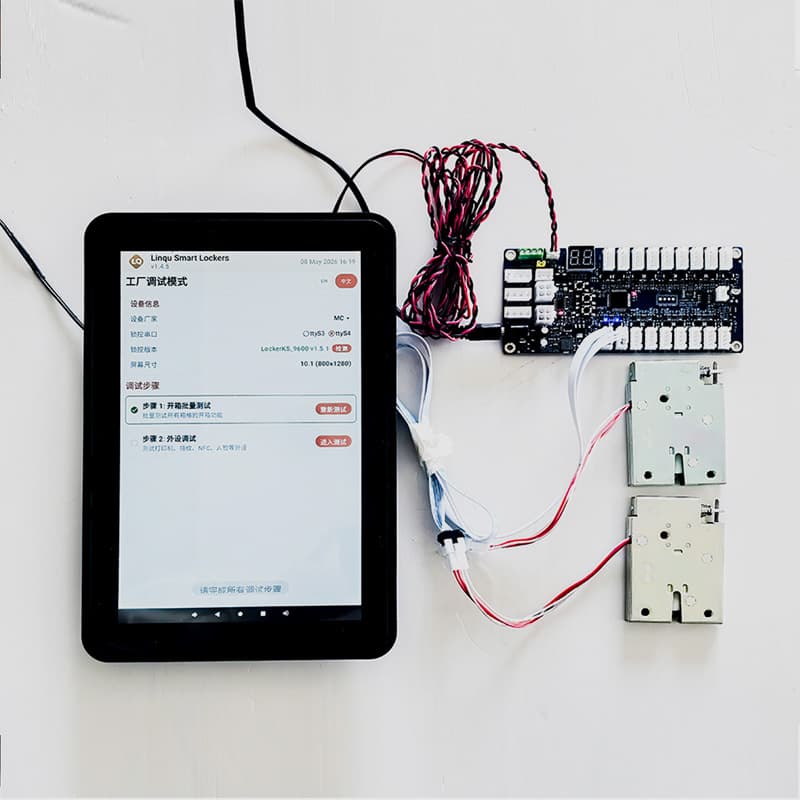
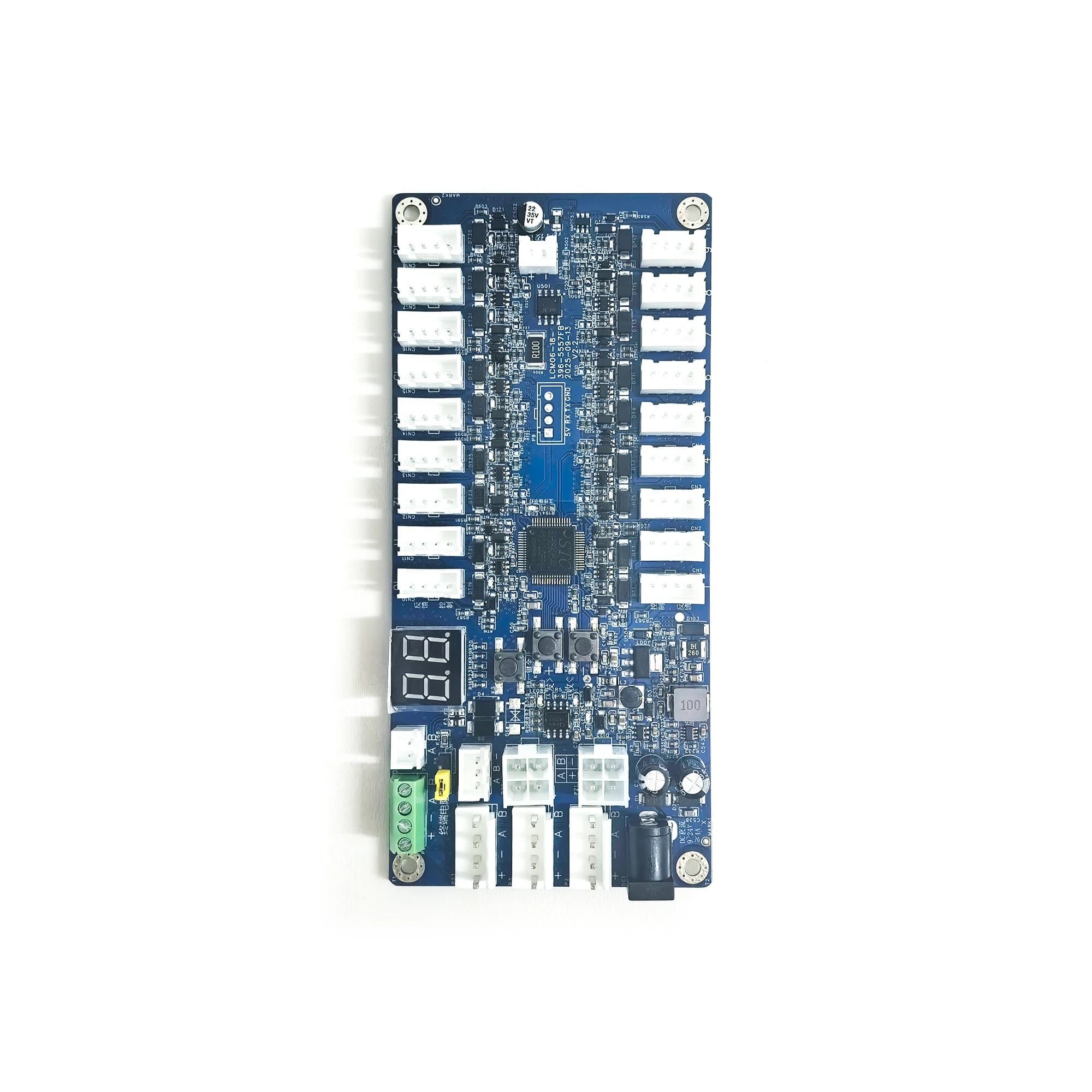
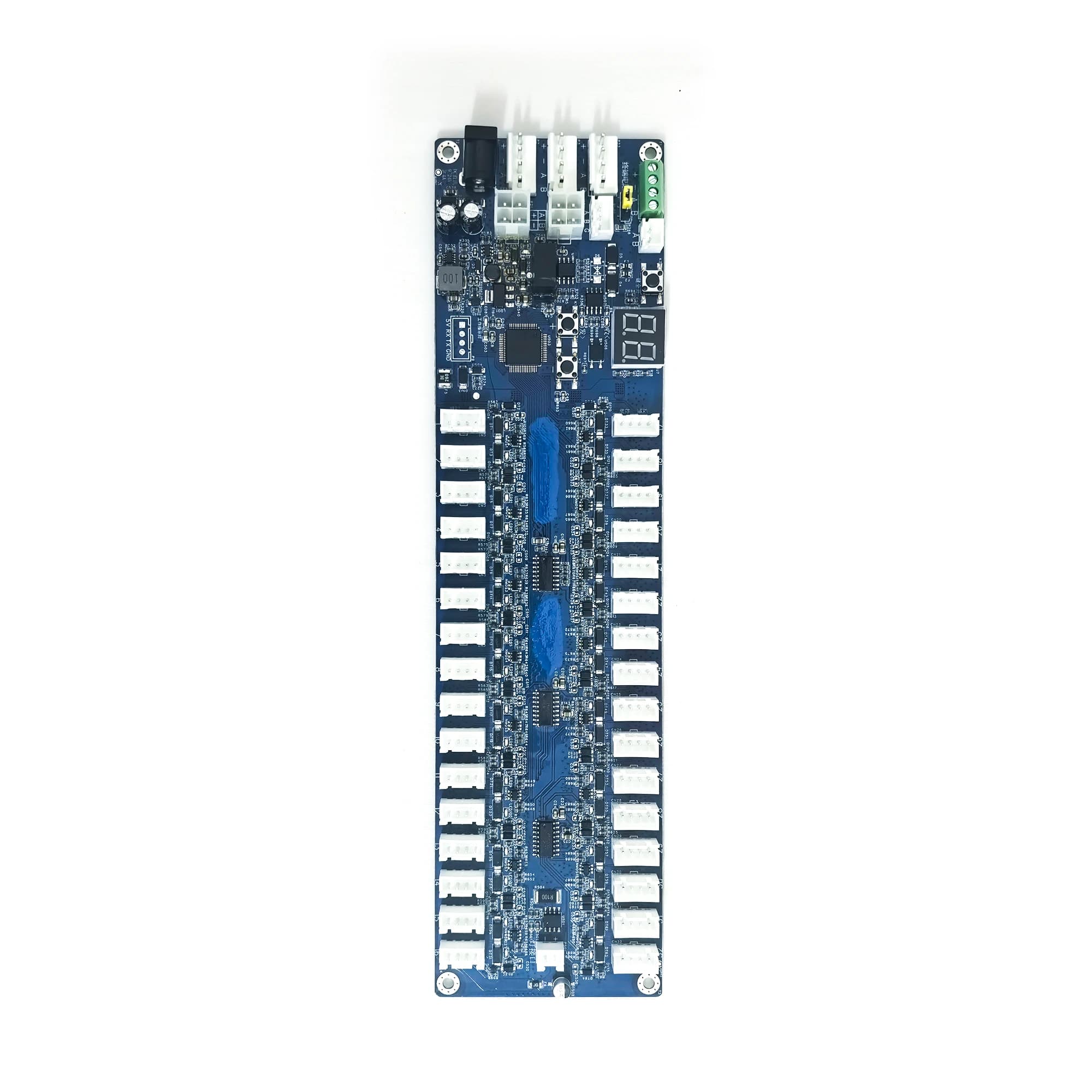
Mechanical locks, coin locks and keypad locks come out; electronic locks go in. Rather than wiring each door independently, doors are driven in groups by a control board — commonly an 18-channel or 32-channel RS485 board running on 9–24V industrial power, combined to match your door count. Cabling runs through the back or side panel of the cabinet, with the boards mounted centrally.
The variable here is always the door itself: lock type, cut-out position, cut-out size, panel thickness and swing direction determine what can be fitted and how much modification each door needs. This is the single biggest reason a site survey comes before a quote.
2. The way users get in

One Android touchscreen terminal serves an entire bank — you do not need a screen per door. It is available in 7", 10" and 21.5" formats depending on how much space the site can give up and how much you want the terminal to double as signage.
Where floor space is tight, or where you would rather not add hardware to a finished lobby, the whole flow can run on the user's own phone instead: they scan a code, the system assigns a door, and they open it from their handset. Credentials can be a QR code, a one-time PIN, or an RFID card where the site already issues membership cards.
3. Payment and the system behind it
This is the part that turns a cost centre into something that pays for itself. Charging models include per-use, per-time-block, tiered duration, or free-for-members with paid access for everyone else. The mechanics of code issuing and timed billing are covered in our article on pay-per-use lockers with QR payment and temporary PIN codes.
On payment integration, the honest answer matters more than a long logo wall: local acquiring is connected through our open API, and which methods can actually be delivered is confirmed per market during scoping. Payment behaviour differs enormously between countries, and a supplier who claims universal coverage up front is usually the one who cannot deliver it later.
For notifications, SMS is standard. Other channels such as WhatsApp can be added as project-specific development rather than something available out of the box.
The management backend covers door status, usage and payment records, overstay tracking and abnormal-opening logs, with multiple sites viewable together.
Pre-Retrofit Site Survey Checklist
Every retrofit quote depends on facts only you can see. Send us this set of information and we can usually come back with a complete configuration and price in one pass instead of three rounds of email.
| Item | What to provide |
|---|---|
| Cabinet | Material, door count, internal dimensions per door, panel thickness, whether sizes are uniform |
| Existing lock | Lock type (mechanical / coin / keypad), cut-out position and size, door swing direction |
| Photos | Full front elevation, one door open, close-up of the existing lock, rear or side view showing cable routing space |
| Power | Nearest power point and distance, whether a dedicated circuit can be added |
| Network | Wi-Fi coverage, wired availability, or whether a 4G router is needed |
| Location | Indoor or semi-outdoor, exposure to sun and rain, relationship to footfall |
| Intended use | What gets stored, peak concurrent demand, whether it will be charged for, target users |
Power and network requirements are covered in more depth in our smart locker installation guide, which applies to retrofits as much as to new installations.
Retrofit or Replace: How to Decide
| Dimension | Retrofit existing cabinet | Replace with new lockers |
|---|---|---|
| Cabinet cost | None | Full |
| Site work | On site, usually phased without full shutdown | Clearance, removal, delivery, possible fit-out |
| Lead time | Driven by component supply | Includes cabinet production |
| Appearance | Keeps existing look, matches the venue | Fully refreshed |
| Compartment sizes | Fixed by the original cabinet | Redesigned for the new use case |
| Outdoor / weatherproof | Limited by the original cabinet | Specify a weatherproof model directly |
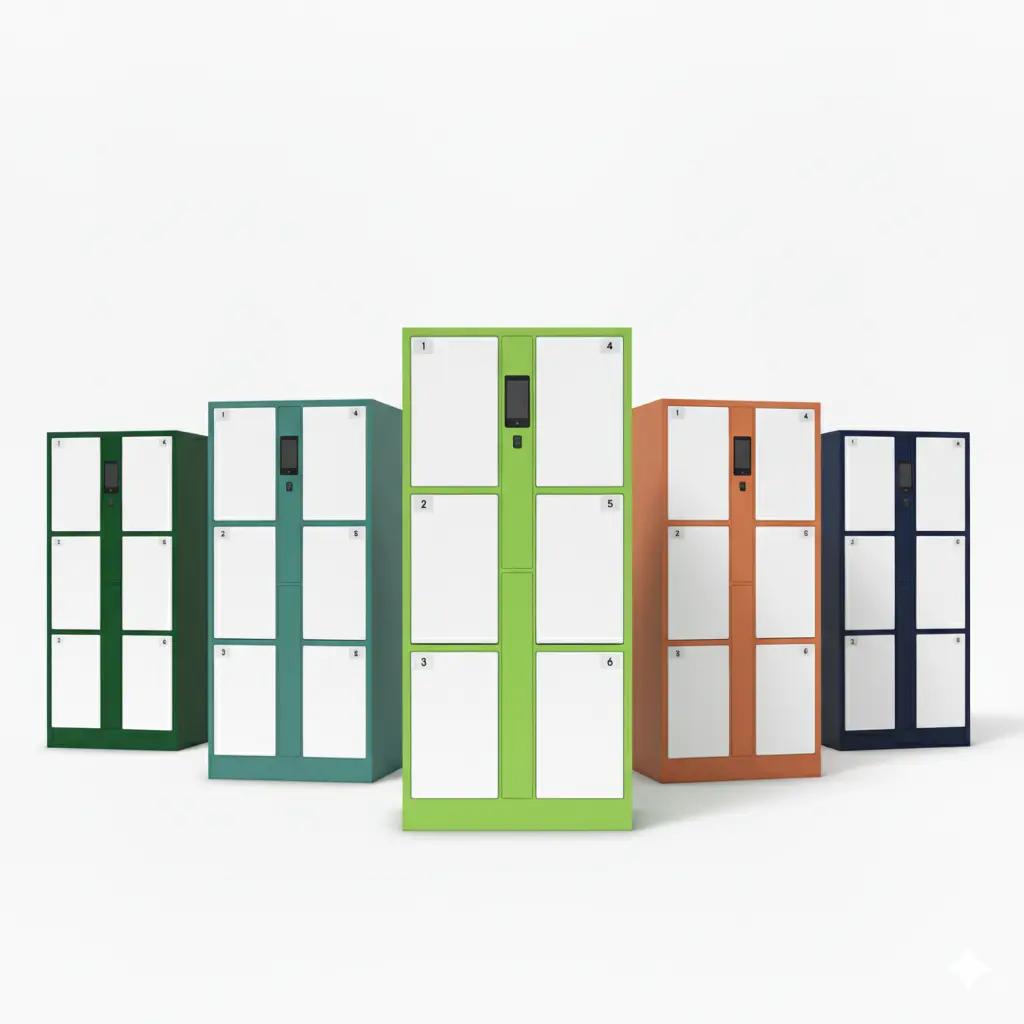
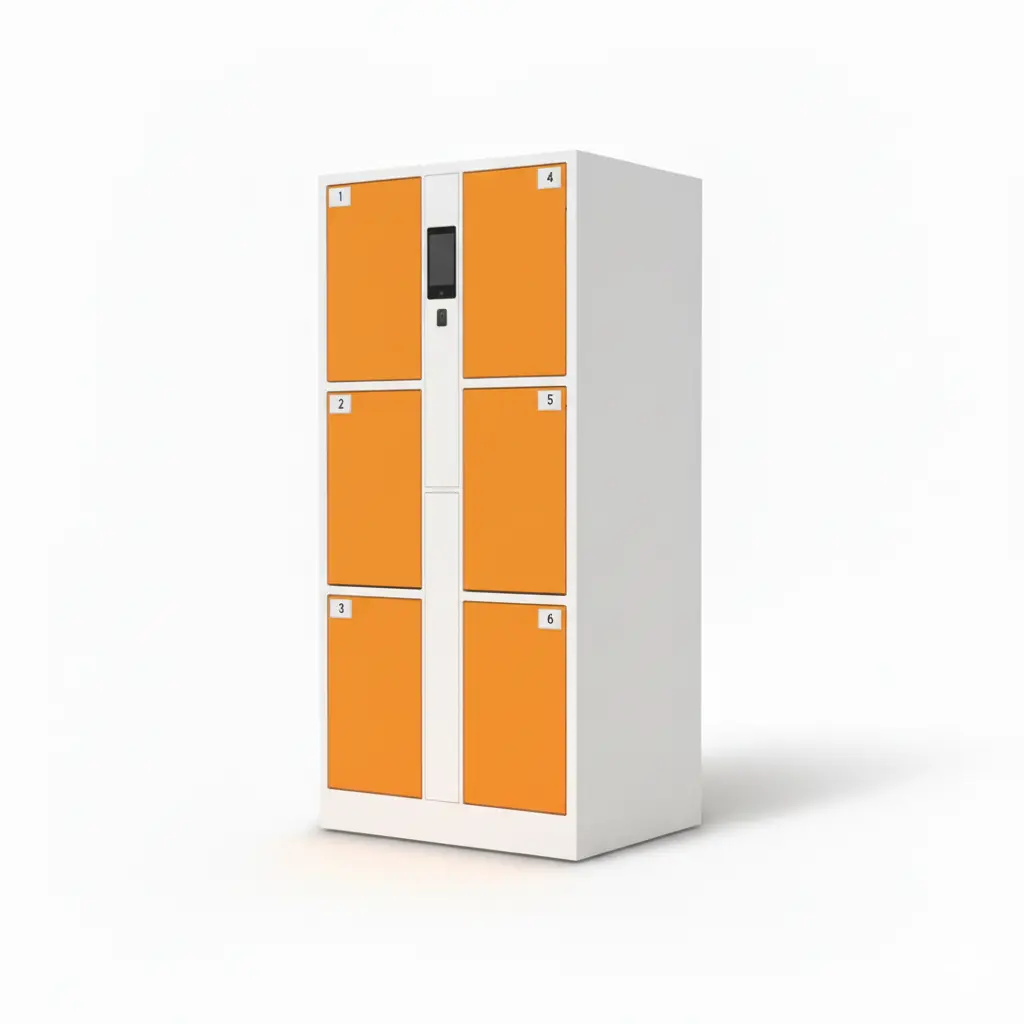
The two rows in bold are where retrofits fail. If your actual problem is "the compartments are the wrong size" or "this needs to survive outdoors", no amount of new lock hardware will fix it, and you should be looking at purpose-built units such as our shopping mall storage lockers with paid access or timed-billing lockers for attractions instead.

Modeling the Return on a Paid Locker Bank
Once a bank can charge, it stops being overhead. Whether it becomes meaningful revenue depends on numbers specific to your site, so rather than quoting someone else's results, here is the model to fill in yourself:
Monthly revenue = usable doors × average daily turns × price per use × operating days × realised utilisation
What moves each input: footfall at that specific spot, whether the bank sits on the natural path or around a corner, whether free alternatives exist nearby, how price-sensitive your visitors are, and — frequently decisive — whether the compartment sizes actually fit what people are carrying.
Average daily turns is the one variable nobody can estimate reliably from a desk, including us. It is also the one that determines the whole result. The sensible way to resolve it is not a better spreadsheet but a pilot: convert one bank of twenty to thirty doors, run it for one to two months, and use your own turnover data to decide whether to roll out across the site. Starting with a single bank also keeps the initial commitment small, which is how most of these projects should begin.
Deployment, Installation and Support
Supply scope covers locks, control boards, terminals, cabling and mounting hardware. Whether on-site installation is included is decided per project: for overseas work, installation is typically carried out by a local integrator or the client's own contractor, with Linqu providing drawings, wiring documentation and remote technical support. We would rather state that plainly than imply a global field-service network we do not operate.
Larger sites are normally converted bank by bank so that most lockers stay in service throughout. Support covers component warranty, spare parts supply, remote assistance, and backend and firmware updates.
Frequently Asked Questions
Can electronic locks be fitted to wooden or MDF lockers?
Sometimes. It depends on panel thickness and how well the material holds a fastener under repeated use. This must be confirmed on a physical sample — send close-up photos of the door edge, the existing lock cut-out, and a measurement of panel thickness, and we can tell you quickly whether it is viable.
How long will the lockers be out of service?
Conversions are phased by bank. A single bank is typically measured in hours; the total for a site depends on door count and site access.
Do we have to install a screen?
No. A scan-only entry point works without any terminal — users complete the whole flow on their own phone. A screen is worth adding where you want walk-up usage from visitors who have not pre-booked, or where the terminal also serves as signage.
Can it accept our local payment methods?
Local acquiring is integrated through our open API, with deliverable methods confirmed per target market during scoping.
Can we keep using our existing membership cards to open doors?
Often yes, depending on the card technology and protocol. Send us the card specification and we will confirm before you commit to anything.
About Linqu
Linqu is a smart locker manufacturer based in Zhengzhou, China, producing lockers and locker components from a 20,000 sqm factory since 2018. Because we make the lock control boards, terminals and cabinets ourselves, we can supply at whichever level a project actually needs — a full cabinet, a component kit for an existing bank, or an OEM/white-label build for an integrator. Retrofit projects sit naturally in the middle of that range.
Next step: fill in the site survey checklist above and send it with your photos. We respond to retrofit enquiries with a configuration and indicative pricing within 24 hours. If you would rather validate compatibility first, ask us for a sample lock and control board to test against one of your existing doors before committing to the full bank.