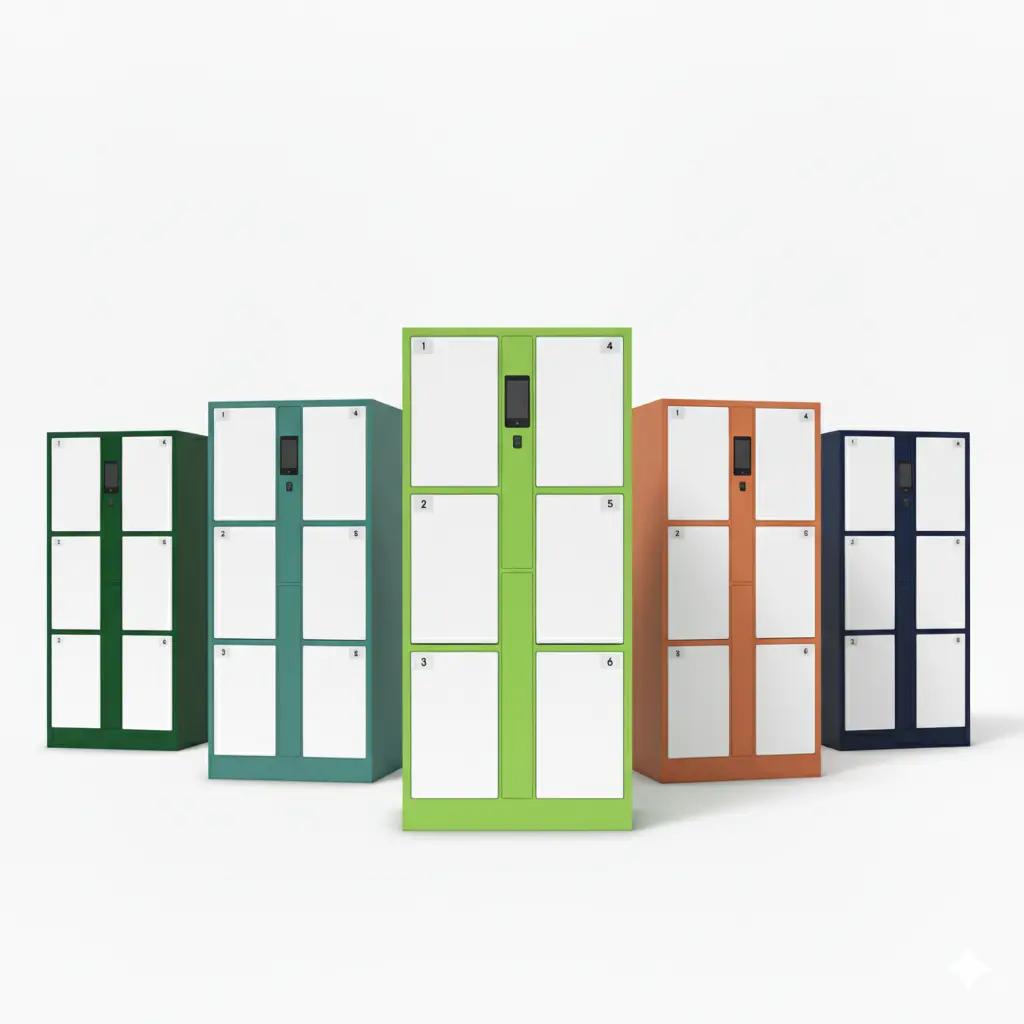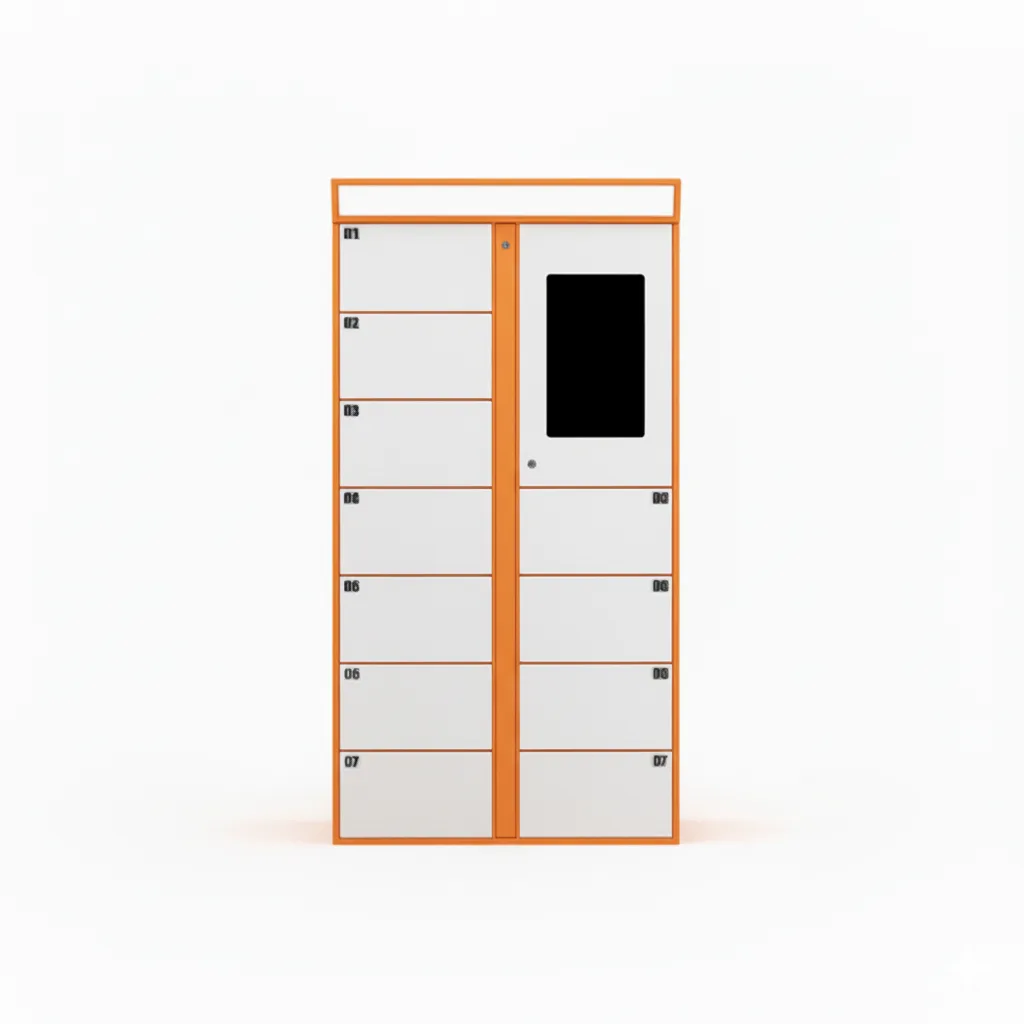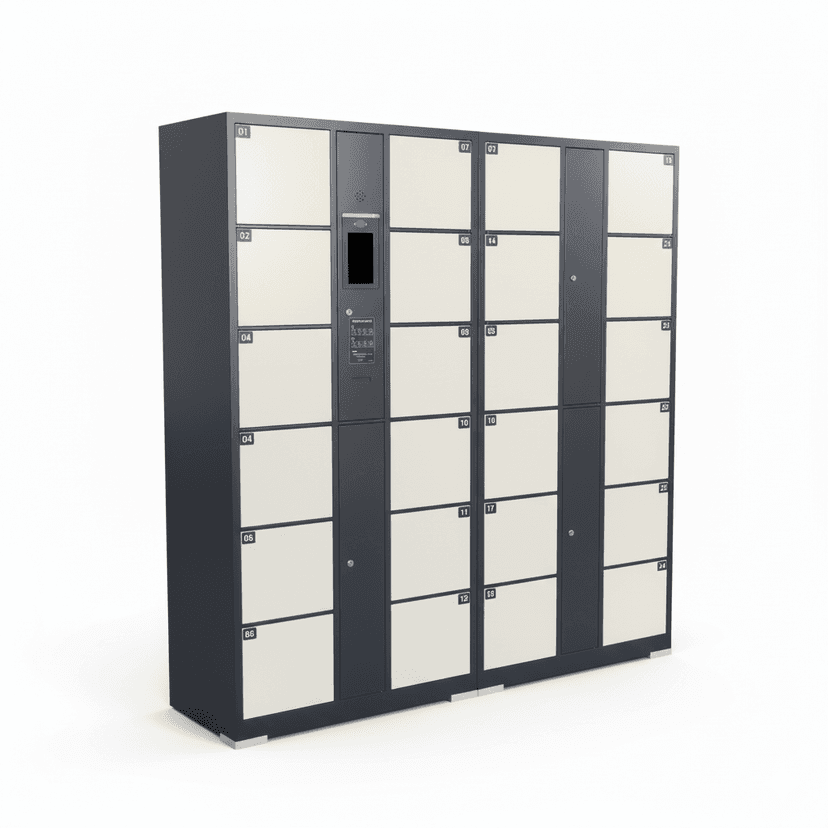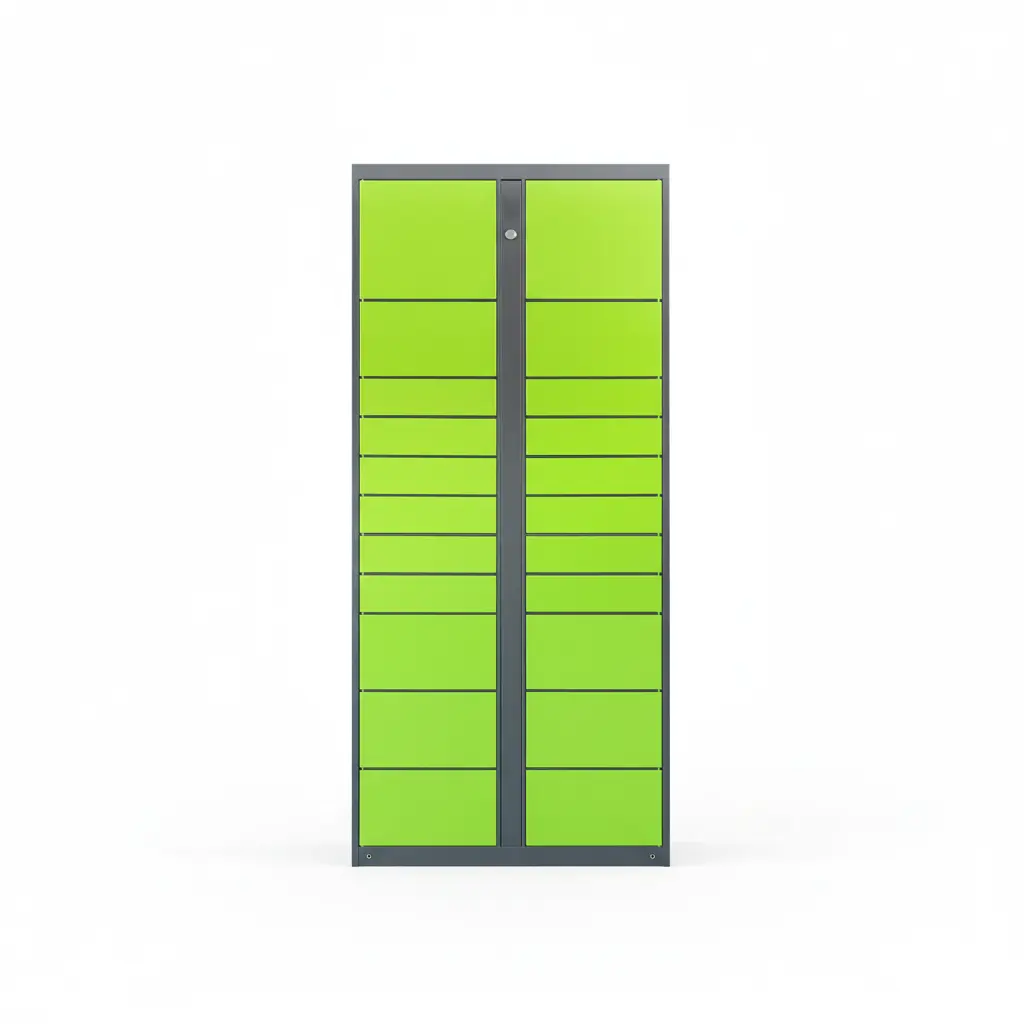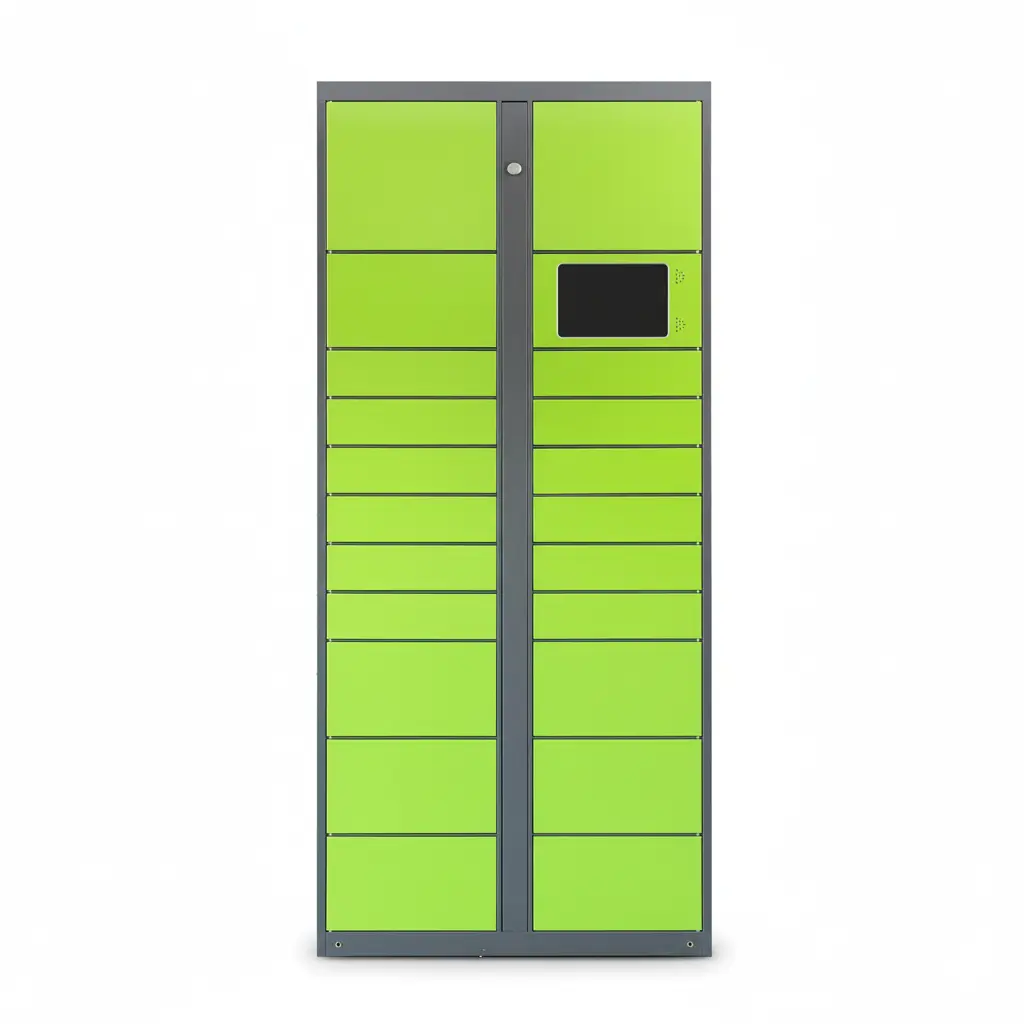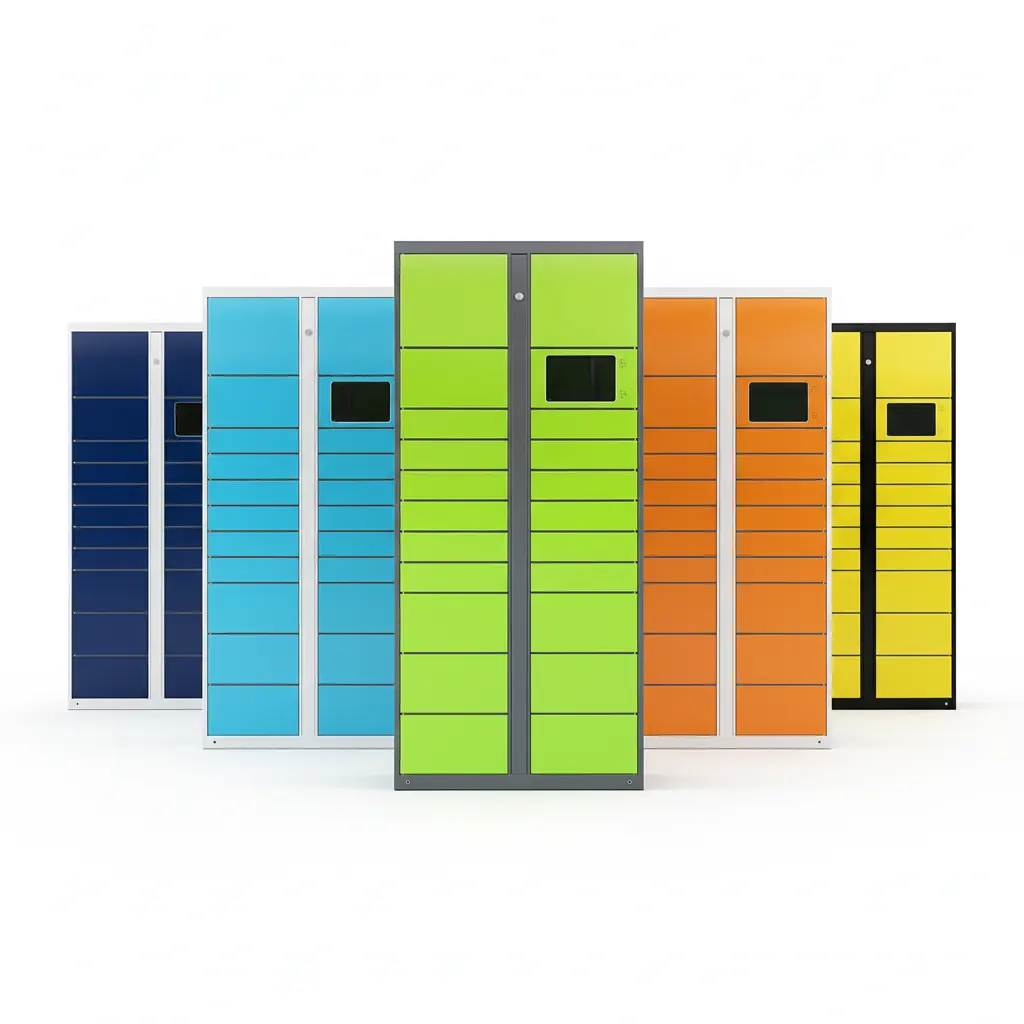
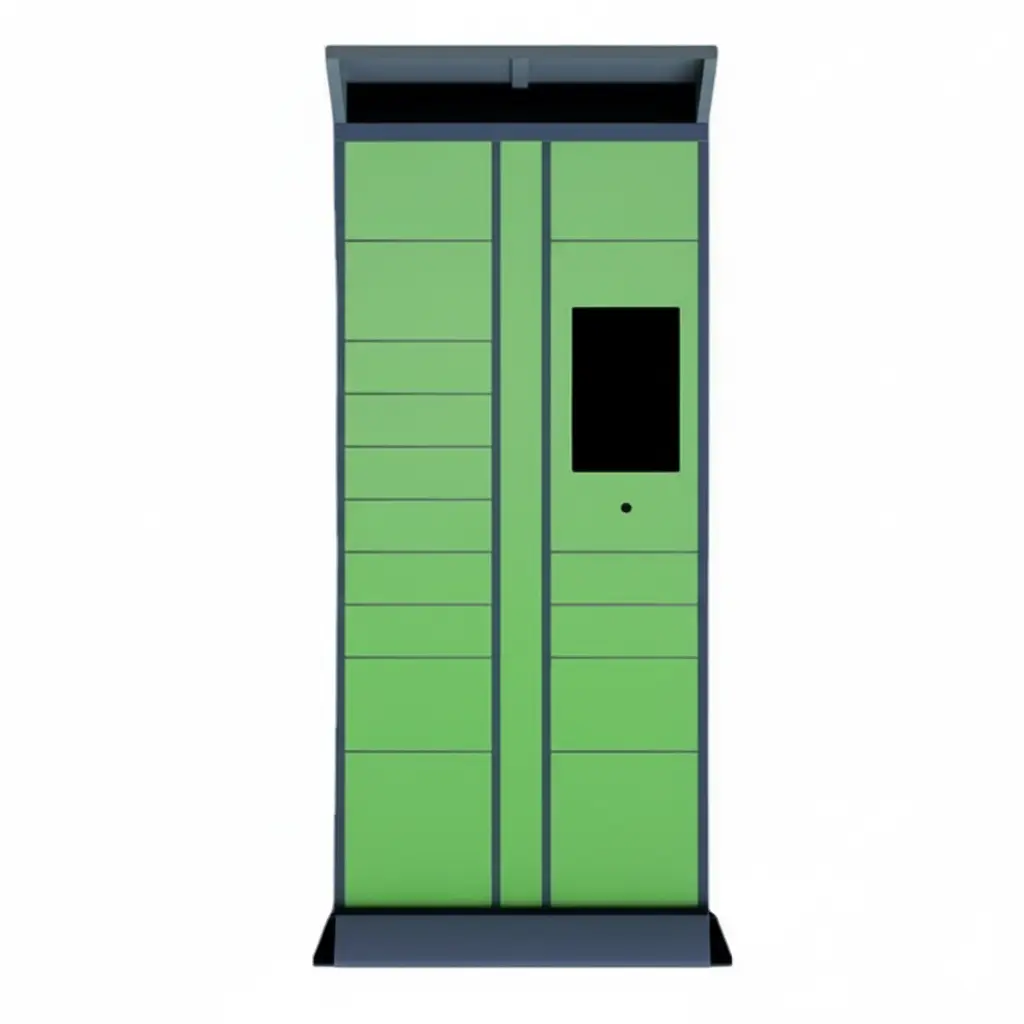
Office buildings are quietly drowning in packages. Personal e-commerce orders shipped to the workplace, B2B parts deliveries, employee meal kits, and cross-tenant courier drops have collided in a lobby that was designed for two FedEx envelopes a day. The mailroom that handled it for the last three decades is either gone, understaffed, or buried in unclaimed boxes. An office package locker — sometimes called an employee package delivery solution or a multi-tenant office building parcel locker — restores order with a self-service pickup network that integrates directly with building access control.
This guide is written for property managers of multi-tenant office buildings and Facilities and IT leaders at single-tenant headquarters. It covers the package problem, how cloud-connected office lockers work, multi-tenant vs single-tenant configurations, building access integration, sizing per 100 employees, and the cost model — buy, rent, or subscribe.

The Office Package Problem — Lobbies, Mailrooms, and Lost Deliveries
Walk into a Class A office building lobby on a Tuesday afternoon and you will see the same pattern in every market: a stack of Amazon boxes against a wall, a clipboard at the security desk for tenants to sign for B2B deliveries, and at least one resigned-looking mailroom attendant trying to match boxes to suite numbers. The pain points roll up under three headings:
Lost or mis-delivered packages. Couriers leave parcels at the security desk; security hands them to the wrong tenant; the rightful tenant calls the property manager three days later. Insurance and goodwill costs add up fast.
Lobby congestion and brand damage. Stacked packages in a Class A lobby contradict every other premium signal — the marble floor, the leasing brochure, the $4,000 chandelier. Tenants on tour see the chaos and price it into renewal negotiations.
Employee productivity drag. Manual notification flows ("hey, your package is at the front desk") cost an estimated 10–15 minutes per employee per delivery in foot traffic and interruption. At 50 deliveries per floor per week, that is real time.
For property managers, the question is no longer whether to deploy office package lockers, but how to roll them across a portfolio without disrupting tenants.
How Office Package Lockers Work
An office package locker is a network of compartments installed in the lobby, mail room, or freight elevator vestibule. The workflow:
Couriers — UPS, FedEx, USPS, DHL, Amazon Logistics, local carriers — scan a barcode at the touchscreen. The system identifies the recipient by suite number or employee ID and assigns an open compartment of the right size.
The recipient is notified via email, SMS, or workplace chat (Slack, Teams) that a package has arrived. Notifications include a one-time PIN, QR code, or a one-tap deeplink to the company app.
The recipient walks to the locker, scans or enters the code, and the compartment opens. Doors with electronic locks (≥150 kg pull strength) close the loop with the management system.
Audit logs capture every event — courier drop, recipient pickup, alarm, tamper attempt — for property management and tenant reporting.
For lobbies that need 24/7 access, the network can be split: an after-hours pickup locker sits outside the secure perimeter so couriers and recipients can use it without staff, while sensitive deliveries route to a staffed indoor zone during business hours.
Multi-Tenant vs Single-Tenant Building Configurations
The single biggest design decision is whether the locker network is shared across tenants or carved into private banks per tenant.
| Configuration | Best For | Cost Allocation |
|---|---|---|
| Shared network (multi-tenant pool) | Mixed-use buildings with 5+ tenants of varying size | Pro-rata charge based on monthly delivery volume |
| Private bank per tenant | Anchor tenants with confidentiality requirements (legal, finance) | Direct lease line item on tenant invoice |
| Hybrid (shared + private) | Large buildings with one major anchor + multiple smaller tenants | Anchor pays private bank capex; shared pool pro-rata for the rest |
| Single-tenant HQ | Corporate headquarters, single occupant | Single capex on Facilities budget; no allocation needed |
For most Class A multi-tenant buildings, the hybrid model wins: it gives the anchor tenant the privacy story they want for renewal, while the shared pool absorbs the long tail of small tenants efficiently.
Cloud-Connected Lockers + Building Access Control Integration
The lockers must talk to the systems that already run the building. The non-negotiable integrations:
Building access control (BAC): Recipients who already badge into the building should not need a second credential to open their compartment. Best-in-class deployments link the locker to the building's HID, Kastle, or Brivo system so a single badge tap covers both the turnstile and the locker.
Tenant directory / SSO: Microsoft 365, Google Workspace, or Okta integration so the courier can pick a recipient by typing the first letters of a name and the system resolves it to the correct suite, employee ID, and contact channel.
Property management system (PMS): The locker exposes per-tenant volume and dwell-time reports to the property's PMS for billing, lease compliance, and tenant satisfaction reporting.
Workplace chat: Notifications delivered into Slack or Microsoft Teams for high-engagement employee communication, not just SMS.
For deployments where the building does not have a modern access system, our cloud-managed office parcel locker ships with a standalone management UI and a REST API that any building's IT team can wire up later. For sites that need a simpler residential-style flow, the same family includes an apartment parcel locker with SMS that drops in without requiring SSO infrastructure.

Sizing Guide — How Many Compartments per 100 Employees
The most common deployment mistake is undersizing. Use this rule of thumb as a starting point and adjust for the specific tenant mix:
Small mailroom (≤100 employees): 18–24 mixed compartments (60% small for envelopes/standard parcels, 30% medium, 10% large).
Mid-size building (100–500 employees): 60–80 compartments per locker bank, with 1 bank per 100–150 employees within walking distance of every elevator.
Large multi-tenant building (500–2,000 employees): Distributed network of 3–6 banks, sized per floor cluster; minimum 1 bank per 150 employees plus 20% buffer.
Single-tenant HQ (1,000+ employees): Centralized mailroom locker bank plus floor satellites; expect 0.7–1.0 compartments per employee in peak season (December gift-buying, summer prime-day promotions).
Compartment dwell time matters: if employees pick up within 4 hours, a smaller bank rotates fast enough to handle 3–4× its compartment count daily. If recipients leave packages overnight, the bank effectively becomes storage and you need 1:1 sizing.
Cost Model — Buy, Rent, or Subscribe
There are three procurement patterns, and the right one depends on portfolio size and capex flexibility.
| Model | Per-Bank Cost | Best For |
|---|---|---|
| Outright purchase (capex) | $10K – $25K capex + $40–80/month software | Single-tenant HQs, owner-occupied, long horizon |
| Lease (3–5 year term) | $300 – $700/month all-in | Property managers who want opex line item |
| Subscription / Locker-as-a-Service | $0 capex + $1.50–4 per package handled | Mixed-use portfolios with variable tenant volume |
For most multi-tenant office buildings the lease model wins because it converts a capex justification into a 36-month opex line item, which is easier to flow through to tenants in CAM (common area maintenance) charges. For single-tenant HQs the outright purchase is usually 25–35% cheaper over a 5-year window.
Before quoting, audit your current package volume for two weeks. Most property managers find their actual volume is 30–50% higher than the security desk log shows, because couriers drop and run without scanning. The locker rollout normalizes the data and turns "we get a lot of packages" into a real number you can plan against. For deployment-day specifics — power, network, and freight elevator considerations — see our smart locker installation guide.

Office package lockers are no longer the residential-locker story bolted onto a workplace. They are now a standalone category with workplace-specific integration patterns, sizing logic, and procurement models. The buildings that move first will reset tenant expectations on what a Class A lobby looks like.