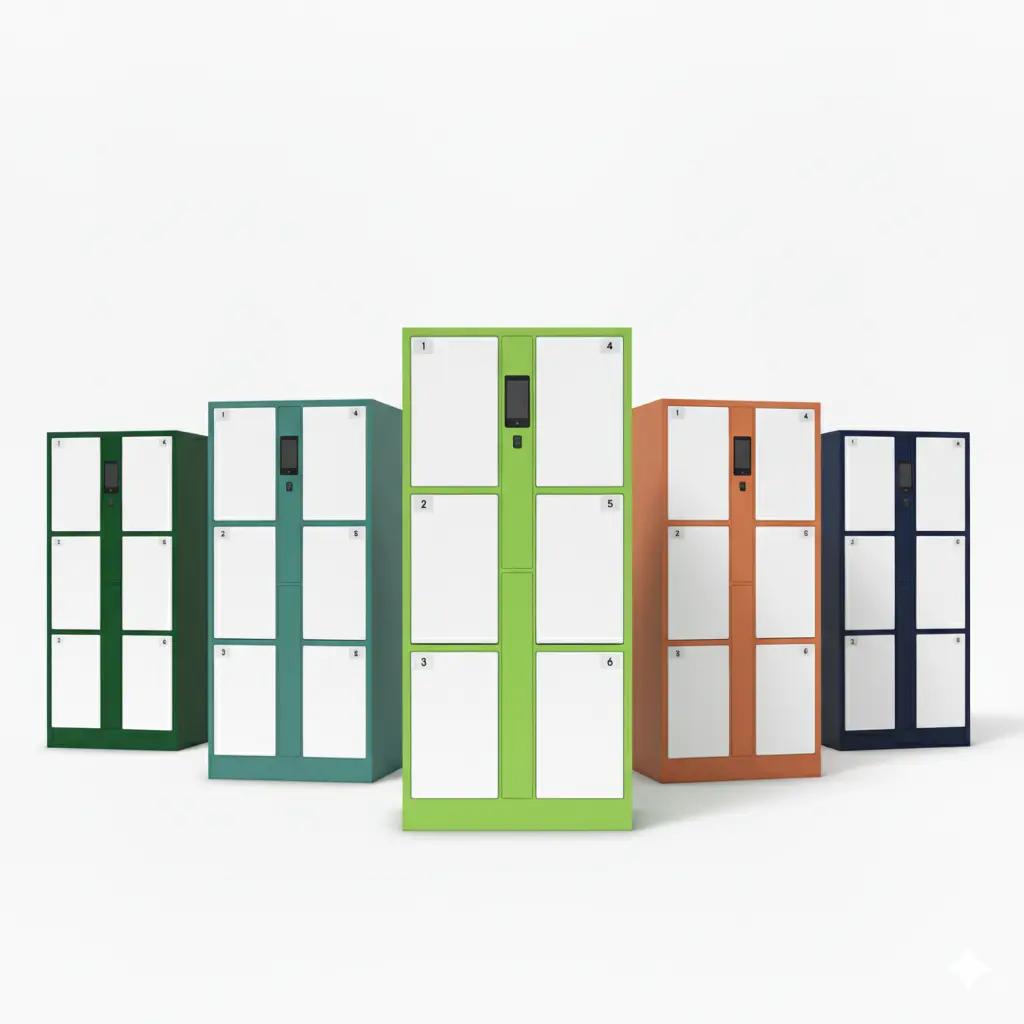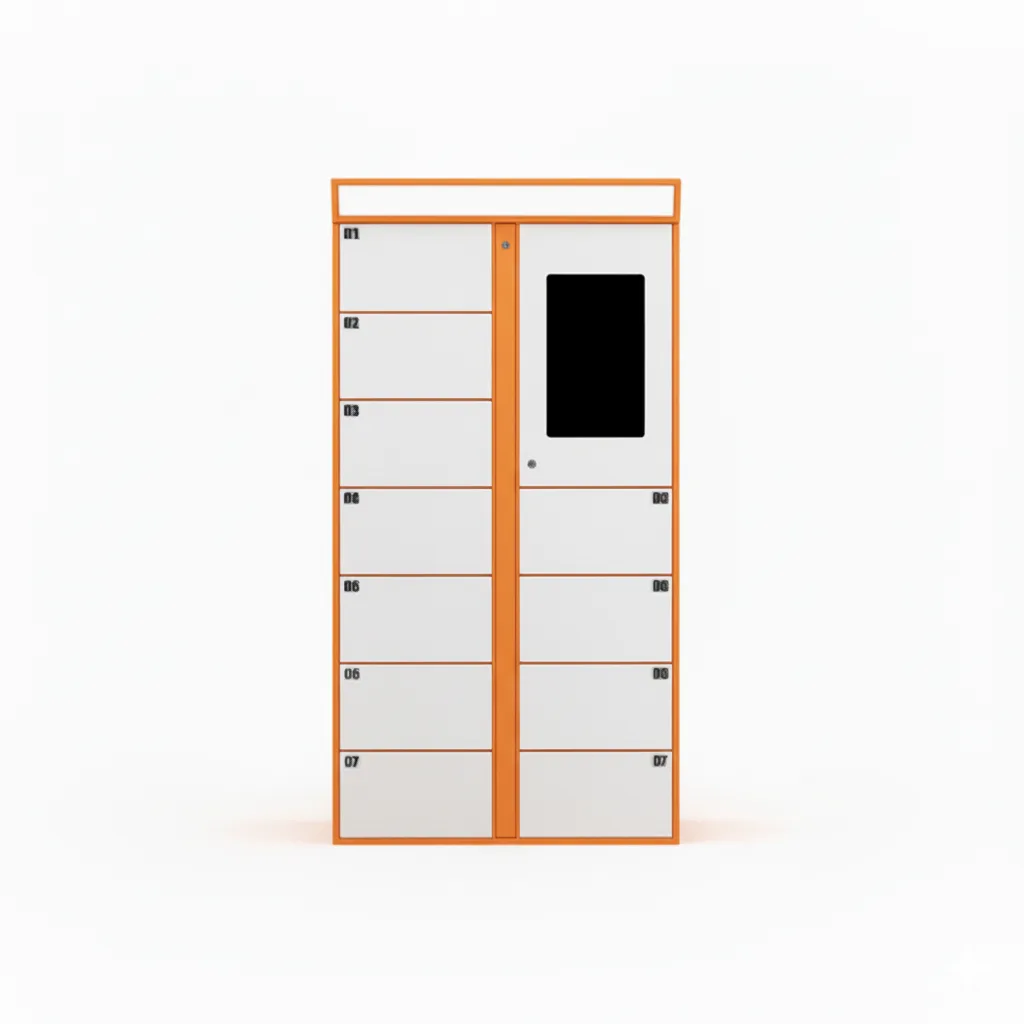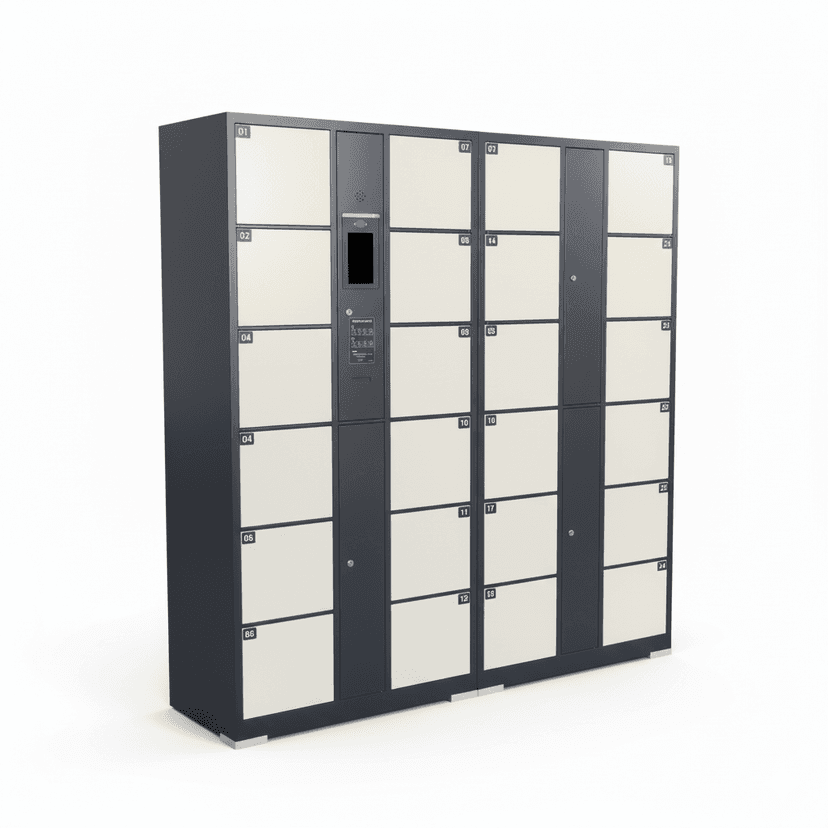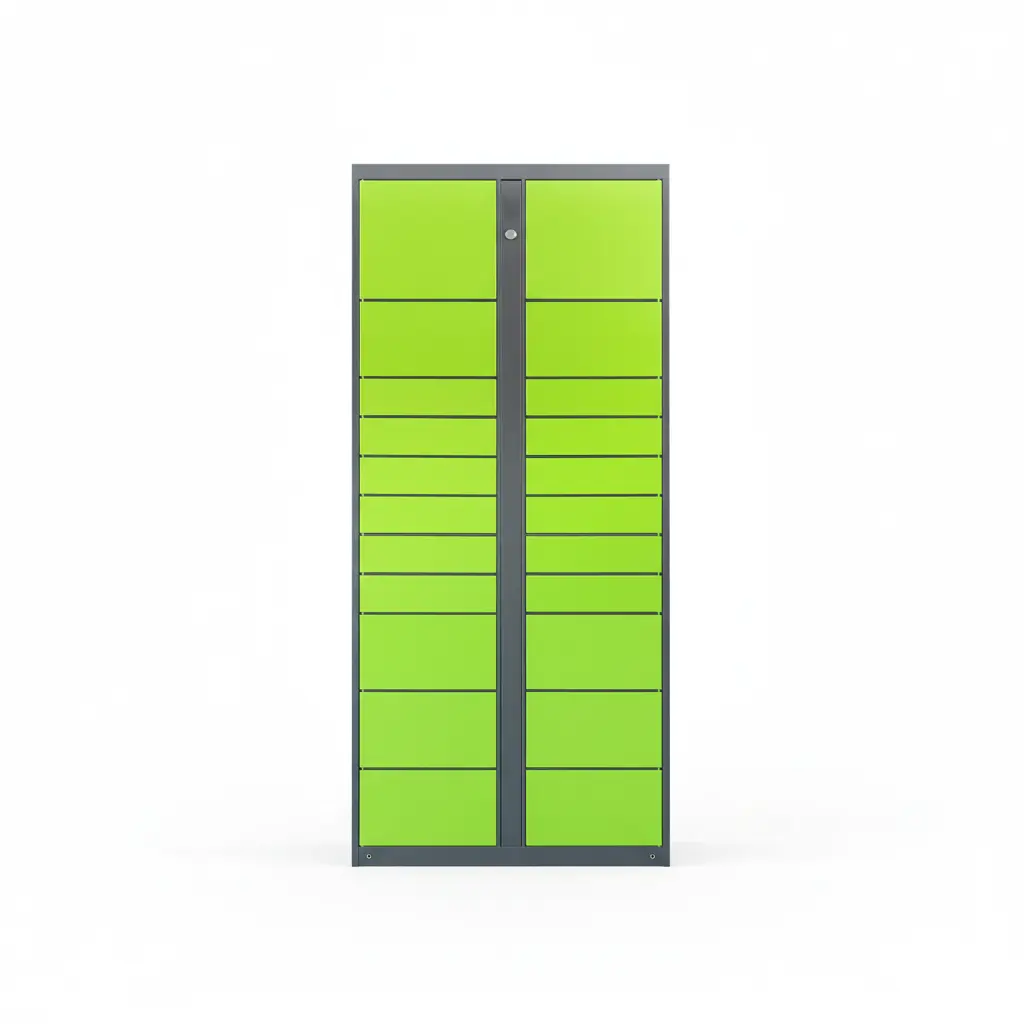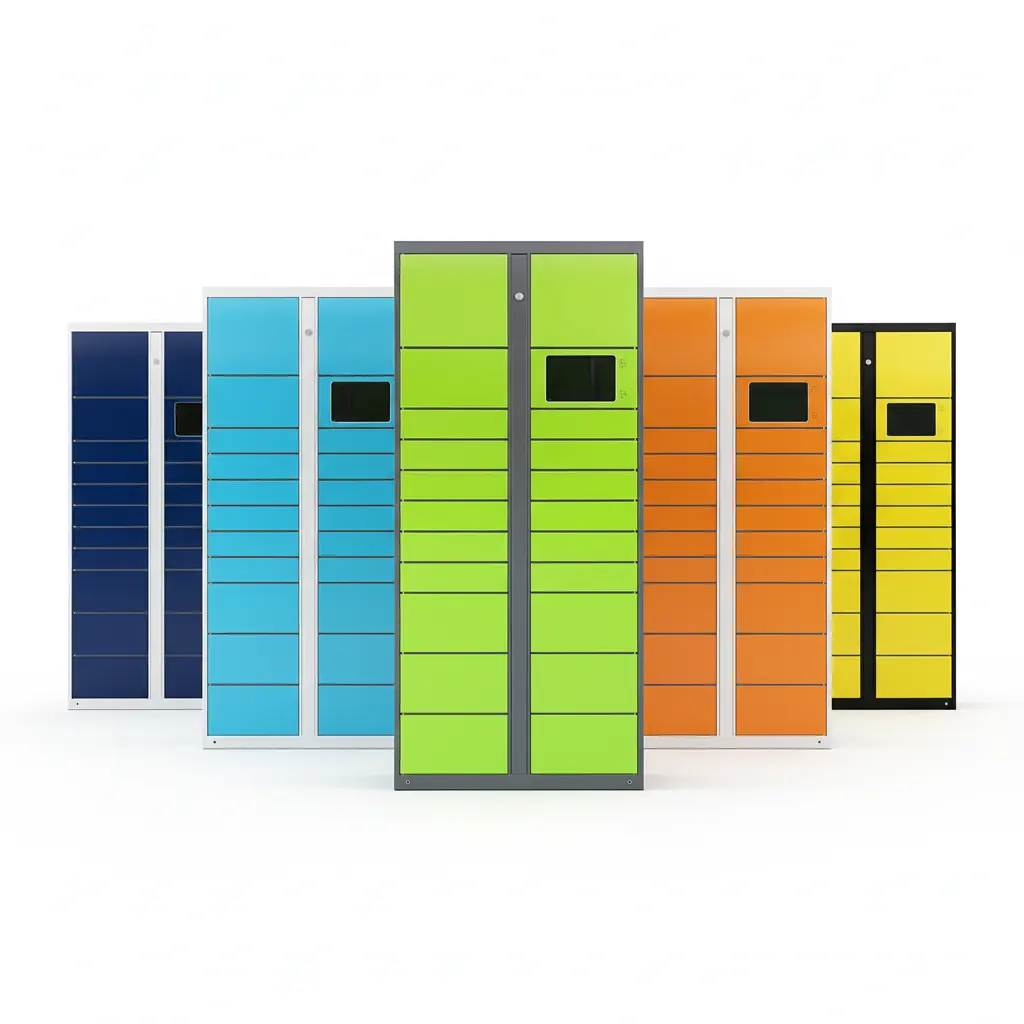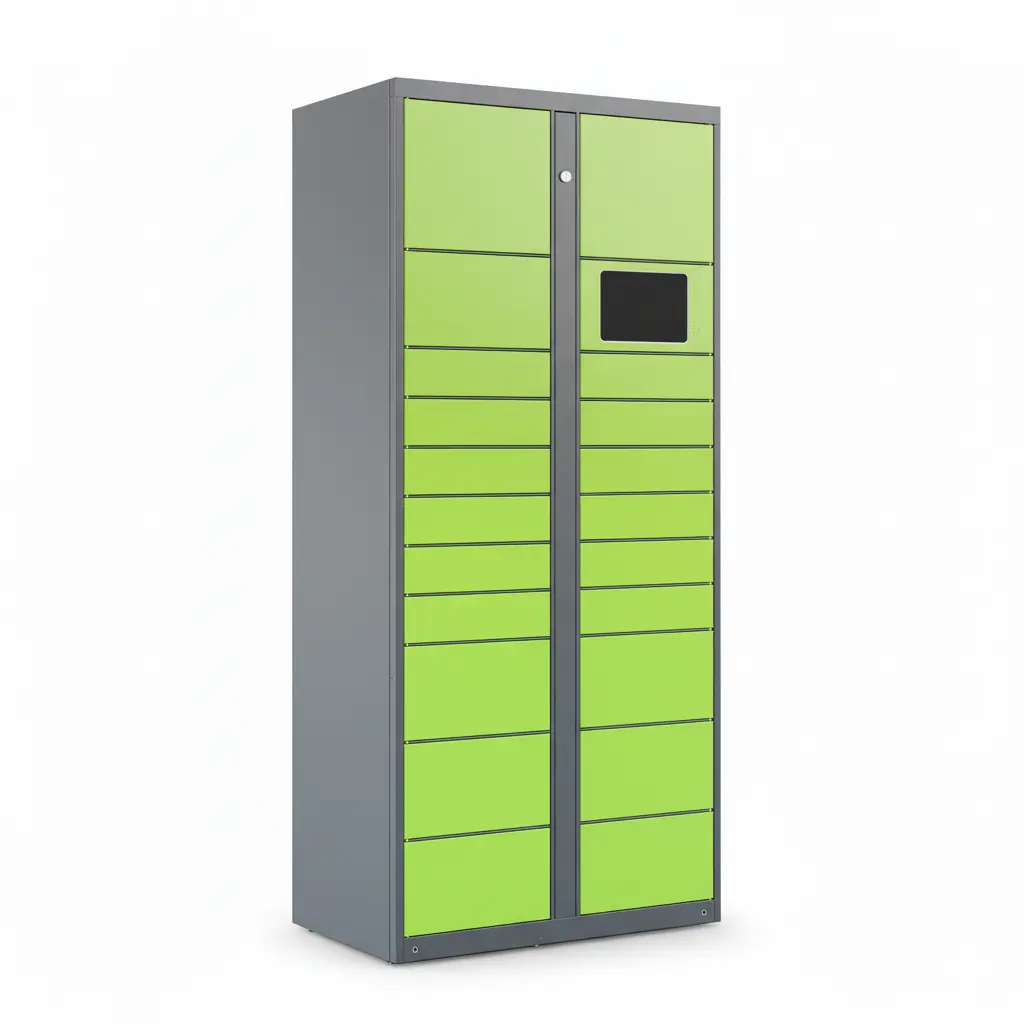
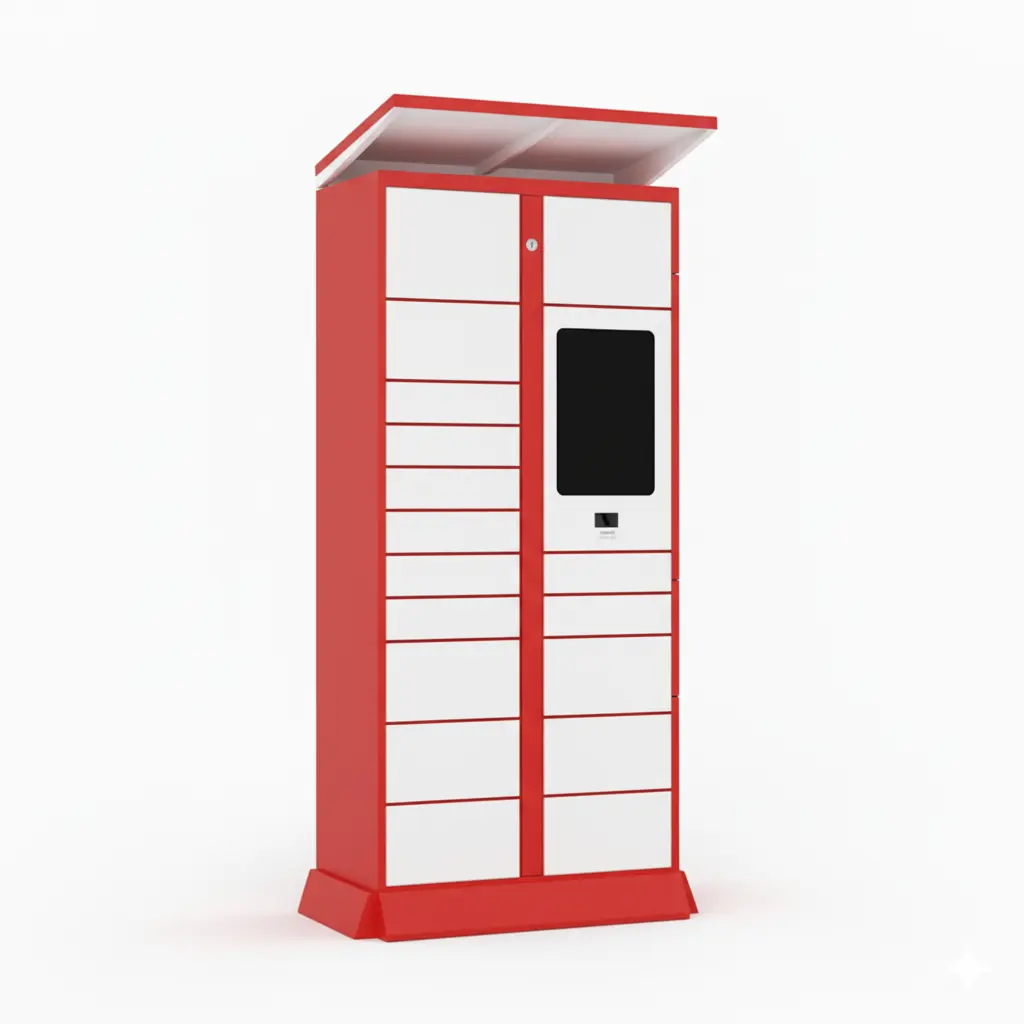
The package volume hitting US and UK student housing has roughly doubled in five years, and the average dorm mailroom — designed for envelope-only mail in 2008 — is now wedged shut by stacked Amazon boxes, prescription deliveries, meal kit drops, and the occasional drone-delivered electronic. College dorm parcel lockers are how housing operators are getting back in front of the problem in 2026.
This buyer's guide is written for university housing directors, residence-life leaders, and procurement teams comparing vendors. It walks through why dorm mailrooms are failing now, how to spec the compartment mix for a dorm-specific delivery profile, the indoor vs outdoor decision on campus, integration with student ID and university SSO, the summer-break installation timeline that does not exist anywhere else in commercial real estate, and cost-per-bed benchmarks operators are seeing.

Why Dorm Mailrooms Are Failing in 2026
The 2008-era dorm mailroom was a wall of small post boxes plus a counter for the occasional package. The 2026 dorm gets:
An average of 2.4 packages per student per week during the school year, with peak weeks (move-in, finals, holiday returns) hitting 5+ per student.
A radically wider size profile — envelopes, shoebox-sized standard parcels, large textbook orders, and oversized monitor or mini-fridge shipments.
Multiple carriers — UPS, FedEx, USPS, Amazon Logistics, plus on-campus prescription delivery from CVS/Walgreens.
Students who refuse to come pick up packages in the four-hour staffed mailroom window because they have class, work, or extracurriculars.
The result: piles of unclaimed packages on the mailroom floor, lost or mis-delivered prescriptions, parent complaints to the bursar's office, and an RA workforce that has effectively become an unpaid mailroom staff. Operators implementing parcel lockers are reporting 40–60% reduction in mailroom labor and near-zero "where is my package" tickets.
Dorm Parcel Locker Configuration — Compartment Mix for Mixed Sizes & Envelopes
The dorm package profile is unique. Most office or apartment locker compartment mixes do not work for dorms. The right starting mix:
| Compartment Size | Internal Dim | % of Total | Use Case |
|---|---|---|---|
| Envelope (XS) | ~30×25×8 cm | 25–30% | Letters, prescription bags, financial aid checks, debit cards |
| Small (S) | ~30×25×20 cm | 35–40% | Standard Amazon shipments, meal kits, single-shoebox |
| Medium (M) | ~45×35×30 cm | 20–25% | Textbooks in bulk, multi-item orders, dorm decor |
| Large (L) | ~60×45×40 cm | 10–15% | Monitors, small appliances, mini-fridges, bedding |
| Oversize / overflow | Open shelf or kiosk pickup | 5% | Boxed mattresses, bicycles, large furniture (handled by RA notification) |
The envelope-class compartment is where most dorm deployments under-spec. Universities report that envelope-only deliveries (financial aid, signed forms, prescription pouches) account for 25–30% of total volume but are routinely blocked when the locker only stocks small/medium/large compartments. Specify XS compartments explicitly.
Indoor vs Outdoor Placement on Campus
The campus deployment decision has its own quirks. The patterns we see:
Residence hall lobby (indoor): Most common. Operates inside the secure perimeter, leverages existing student ID badge access, no weather concerns. Best for traditional residence halls with one main entrance.
Outdoor between dorms (24/7 access): Increasingly popular for new-build student housing. Couriers drop without entering the building, students retrieve at any hour. Requires IP65 weatherproof rating and anchor-bolt-to-foundation mounting.
Mailroom annex: Replace or supplement the existing mailroom. Lockers handle 80% of volume; staffed counter handles oversize and signature-required.
Apartment-style residence (decentralized): Smaller locker banks per residence cluster, sized for that cluster's population. Better student experience but more capex.
The choice often hinges on whether the campus security model includes the locker location inside the badge perimeter. For more on the indoor/outdoor decision tree applicable beyond campus, see our outdoor vs indoor smart locker guide.
Integration with Student ID and University SSO
Universities are not regular corporate buyers. The integration requirements are sharper:
Student ID badge tap: The student should not need to remember a separate PIN if they already badge into the building. Prefer a vendor with native HID iCLASS, CSN-based, or mobile credential support.
SSO via SAML / Shibboleth: University identity providers are different from corporate Okta/Azure AD. Confirm vendor supports university-flavored SAML and Shibboleth, not just generic SAML.
Banner / PeopleSoft / Workday Student integration: Tying the locker to the SIS for student-specific entitlements (e.g., athletics-only lockers for varsity teams).
Housing portal integration: Notifications surface inside the university's housing portal or app, not as random SMS.
Privacy compliance: FERPA in the US, GDPR in EU campuses. Ask the vendor for documented data-handling agreements compatible with the institution's privacy office.

Installation Timeline During Summer Break
The summer-break window is the only realistic install timeline for most campuses. The 2026 calendar that experienced operators run:
October — January (current academic year): Audit current package volume, RFP shortlist, vendor selection, contract.
February — April: Site survey, electrical/network design, custom hardware spec frozen.
May: Manufacturing of custom configuration. Vendor lead time 30–45 days for standard, 60 days for fully custom.
Mid-June: Hardware arrival on campus. Coordinate with campus facilities for delivery (loading dock access, freight elevator booking, summer staff schedules).
Late June — July: Installation, integration with badge system and SSO, smoke testing with summer session students.
Early August: Soft launch with summer term and orientation participants.
Late August (move-in): Full go-live coinciding with peak package volume.
Missing the May manufacturing slot pushes you to a Fall break or Winter break installation, which is a much harder window because students are present and package volume is high. Lock in vendor capacity by January for the following August deployment.
Cost per Bed Benchmarks and Procurement Models
The numbers operators are seeing in 2026 procurement:
Outright purchase: $80–150 per bed for the locker hardware, plus $15–30/year per bed for software and SLA. Best when housing has a long capex horizon and stable enrollment.
Lease (3–5 year): $25–45/year per bed all-in. Easier through procurement when capex is constrained.
Subscription / Locker-as-a-Service: $30–60/year per bed plus per-package usage in some models. Aligns vendor with growth.
For comparison, the manual mailroom labor cost most universities calculate is $50–110 per bed per year (RA hours plus mailroom staff allocation). That makes lockers cash-flow positive in year one for most institutions.
Vendor Selection Checklist
Before signing a PO, verify against this dorm-specific checklist:
Manufacturer, not a reseller — direct factory access avoids reseller margin and slow customization cycles.
Documented experience with at least 5 dorm or campus deployments. Get reference customers in the same enrollment band.
Custom compartment mix (especially XS envelope-class — see above).
SSO/SAML/Shibboleth integration documentation, not just a "we support it" claim.
FERPA / GDPR data handling agreement template.
30-45 day manufacturing lead time committed in writing for the May window.
On-site installation team, not freight-only delivery.
Spare parts SLA: locks, screens, printers stocked regionally for sub-72-hour replacement.
Outdoor IP65 if you are deploying in unconditioned spaces.
OEM/ODM customization on color and silkscreen for university branding.
For dorm-specific procurement we offer the campus student parcel locker with student ID and SSO integration out of the box. For the broader campus solution that bundles parcel, storage, and charging into one network, see our university campus smart locker solution.

Dorm parcel lockers are no longer a 2018-era pilot category. They are a mature campus infrastructure decision with a clear cost-per-bed model, a defined installation window, and an integration story that works with university identity systems. The institutions that lock in vendor capacity early get the August deployment slot. The ones that wait until April end up scrambling for a winter-break install.