On this page
- Country / region
- Malaysia
- Project
- Malaysia · Shoe Cleaning Service Brand
- Published
- Jul 29, 2026
The Challenge
Shoe care is a trust business: customers hand over sneakers worth hundreds of dollars to a service provider they may never meet. As this Malaysian brand expanded, it was caught between trust and cost:
- Open stores, and expansion stalls: every new location means rent and staff wages. For a service with a moderate ticket size and frequency, the traditional storefront model caps how fast you can grow;
- Skip the store, and trust is gone: a pure door-to-door pickup model saves rent but loses the physical storefront customers can see and touch — without one, brand trust is hard to build, and customers hesitate to hand over valuable sneakers;
- Schedules never match: drop-off and pickup times are highly scattered, fixed store hours rarely fit customers' routines, and the hand-over process still ties up staff.
The brand needed a location format that could act as a trust-building storefront without rent or on-site staff.
The LinQu Solution
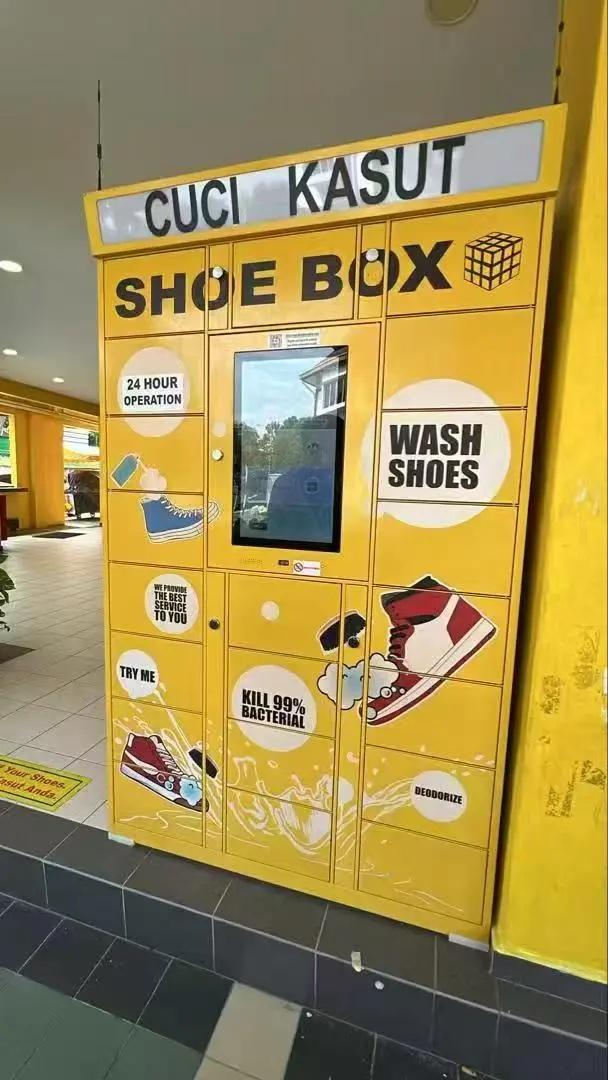
The brand adopted LinQu smart shoe cleaning lockers as its standardized service point — not a locker inside a store, but the locker as the store itself.
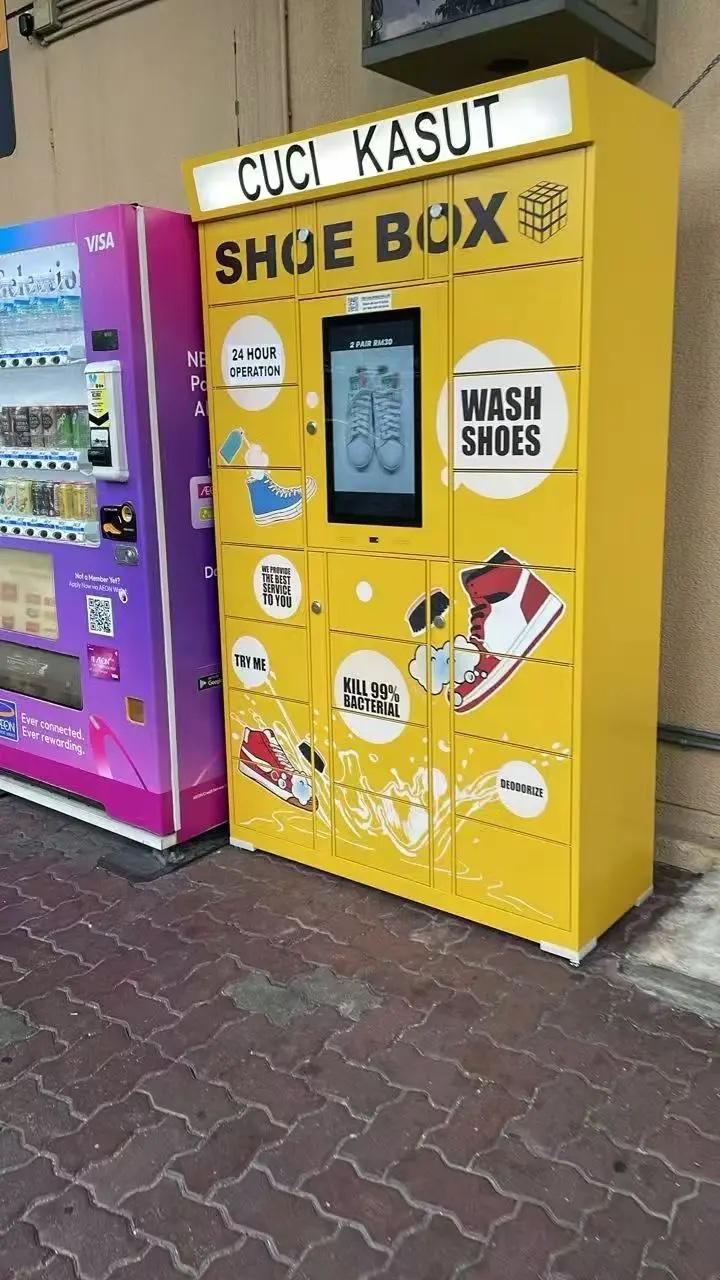
Deep brand customization: the locker is the billboard. A bright yellow branded cabinet with an illuminated header sign reading “CUCI KASUT” (shoe washing) in Malay tells passers-by exactly what it does; the brand name and logo take the most visible spots, and the service promises are printed right on the cabinet — 24-hour operation, kills 99% of bacteria, deodorizing care. Placing one locker completes a location's opening, signage and advertising in a single move.
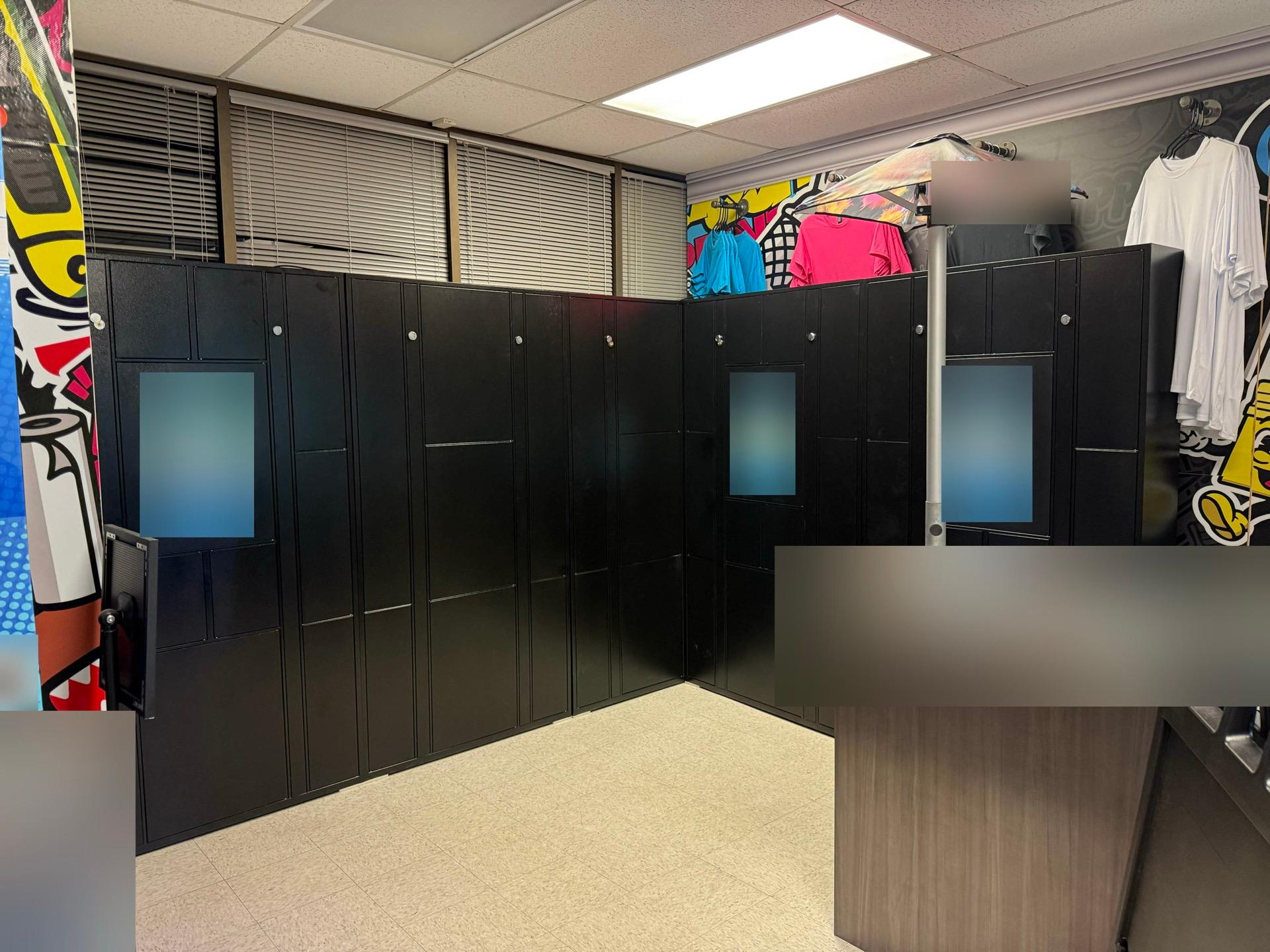
A scan-to-drop-off loop, fully unattended. Customers scan at the central touchscreen to open a compartment, drop off their shoes and place an order; the service team collects on scheduled routes, cleans centrally and returns the shoes to the locker; the system then notifies customers to pick up with a code. Compartments of multiple sizes surround the central screen to fit different shoe types and order volumes, while the screen loops package pricing (such as two pairs for RM30) — turning every walk-by into a quote.
Locations follow foot traffic, with a footprint small enough for almost anywhere. Both proven placement formats are in real operation: covered shophouse corridors provide all-weather service, while outdoor units stand right beside vending machines, blending into well-established local self-service habits. One locker-width of space is all it takes to open a new point.
Local adaptation out of the box. Payments run through aggregated gateways covering Malaysia's mainstream payment platforms; power is adapted to the local 220–240V / 50Hz standard with Type G plugs.
Results
- The branded locker became a physical trust anchor: instead of a faceless door-to-door service, customers see a storefront with a name, a promise and a permanent presence — significantly boosting brand credibility;
- The cost of opening a new location dropped from renting a shop and hiring staff to placing one locker, freeing expansion from rent and payroll and helping the brand extend coverage fast;
- Drop-off and pickup run 24/7 on self-service, so customers are no longer bound by store hours and the team only runs scheduled collection routes — maximizing labor efficiency;
- Crucially, the model goes beyond shoes: the locker's ordering system natively supports laundry, shoe cleaning, dry cleaning and more, and multi-size compartments hold garments, shoes and bulky items — one locker can carry multiple service lines. In motorcycle-centric Malaysia, helmet cleaning is another high-frequency need, and the same scan-to-drop-off, clean-centrally, coded-pickup loop applies as-is;
- For buyers evaluating LinQu, this case shows a repeatable playbook: shoe care, laundry, dry cleaning, helmet cleaning, shoe repair and other local services can all expand through branded unmanned locker storefronts — cabinet customization, scan-to-open, order notifications, local payment and power adaptation, delivered end-to-end by LinQu.